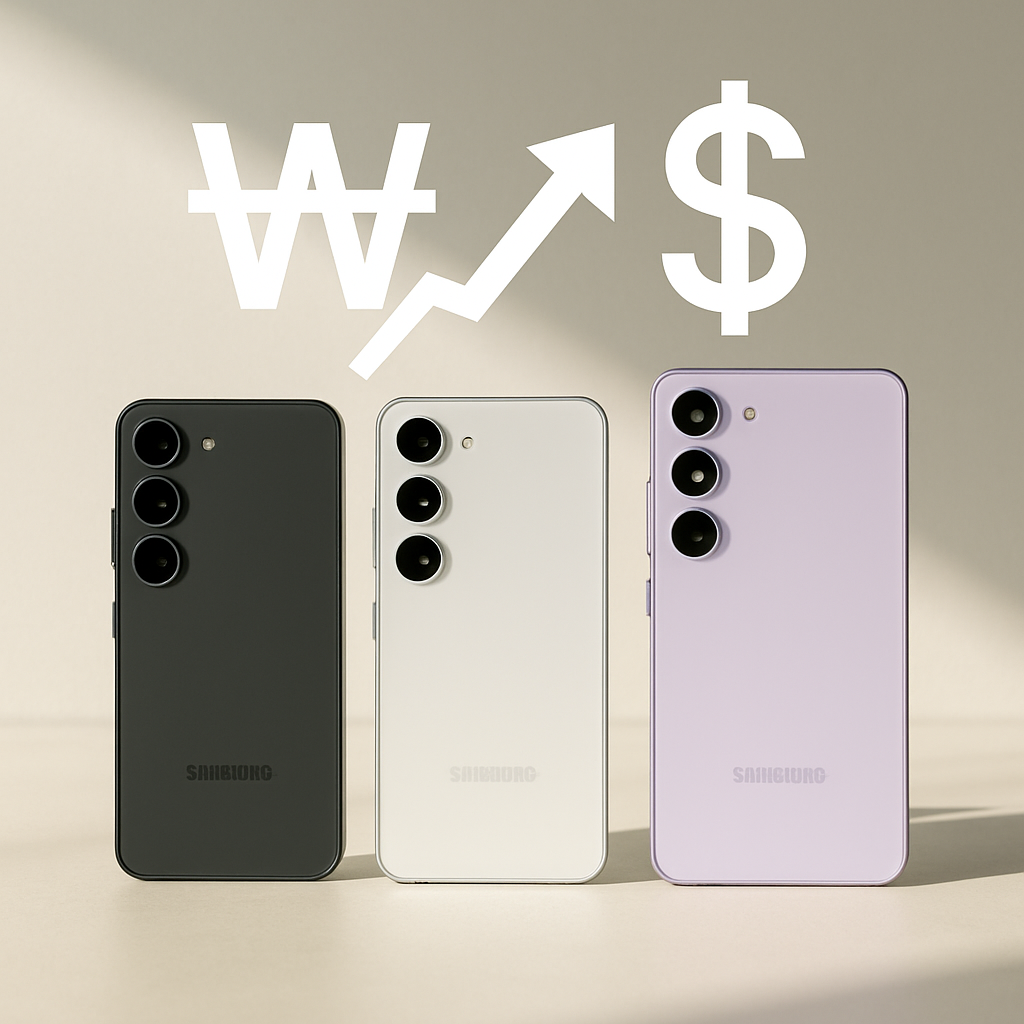
Samsung is reportedly preparing to increase prices across its Galaxy S26 series by roughly $100 when the new pricing takes effect October 1. The adjustment would mark another climb in flagship smartphone costs as manufacturing expenses—particularly for components—continue to rise.
What’s changing and where
At launch earlier this year, the Galaxy S26 lineup came with modest price increases over its predecessor for the base and Plus versions, while the Ultra remained at the same level. Specifically, the base S26 started at around $899, the S26+ at approximately $1,099, and the Ultra version came in at $1,299. Now, in Samsung’s domestic market of South Korea, all three models are set for steeper pricing.
The reported new prices in won are:
- Galaxy S26: rising from ~1,254,000 won to 1,403,600 won (about $930 ➝ $1,040)
- Galaxy S26+: from ~1,452,000 won to 1,601,600 won (~$1,077 ➝ $1,188)
- Galaxy S26 Ultra: from ~1,797,400 won to 1,947,000 won (~$1,334 ➝ $1,444)
These changes reflect increases of ~$100 across all models, aligning Samsung’s strategy with recent pricing decisions by Apple and others in the premium smartphone segment.
Reasons behind the hike—and what Samsung says
Two key pressures are fueling this move: the acceleration in component costs and competitive benchmarking. Apple’s recent price increases—such as those for the iPhone 18 Pro and even the iPhone 17 with a $100 bump—are being cited as a factor pushing Samsung to consider similar adjustments. The iPhone lineup now starts at $899 in the US and 1,450,000 won in South Korea, illustrating how pricing trajectories are shifting industry-wide.
Samsung has publicly responded, noting that nothing has been finalized. The company said it is evaluating whether to adjust Galaxy S26 series prices in light of rising costs—especially for components—but no formal announcement has been issued.
Will this affect prices globally?
While the current changes are confirmed for South Korea starting October 1, it’s unclear if the United States or other international markets will follow suit. If Samsung imposed similar $100 increases in the US, Galaxy S26 models could end up more expensive than current iPhones, which might disrupt competitive balance and customer expectations.
This trend of rising flagship pricing isn’t new, but it’s accelerating. The global smartphone industry has been facing inflationary pressures, supply chain disruptions, and an ever-present need to invest in new technologies. When heavyweights like Samsung and Apple start increasing sticker prices, it tends to set a broader tone—other manufacturers have little choice but to consider similar steps. In the coming weeks, it’ll be important to watch for official signals from Samsung in other markets, especially the US, to understand whether consumers worldwide should brace for steeper costs for premium devices.