Volvo Secures U.S. Approval to Continue Selling Connected Vehicles Amid Regulatory Challenges
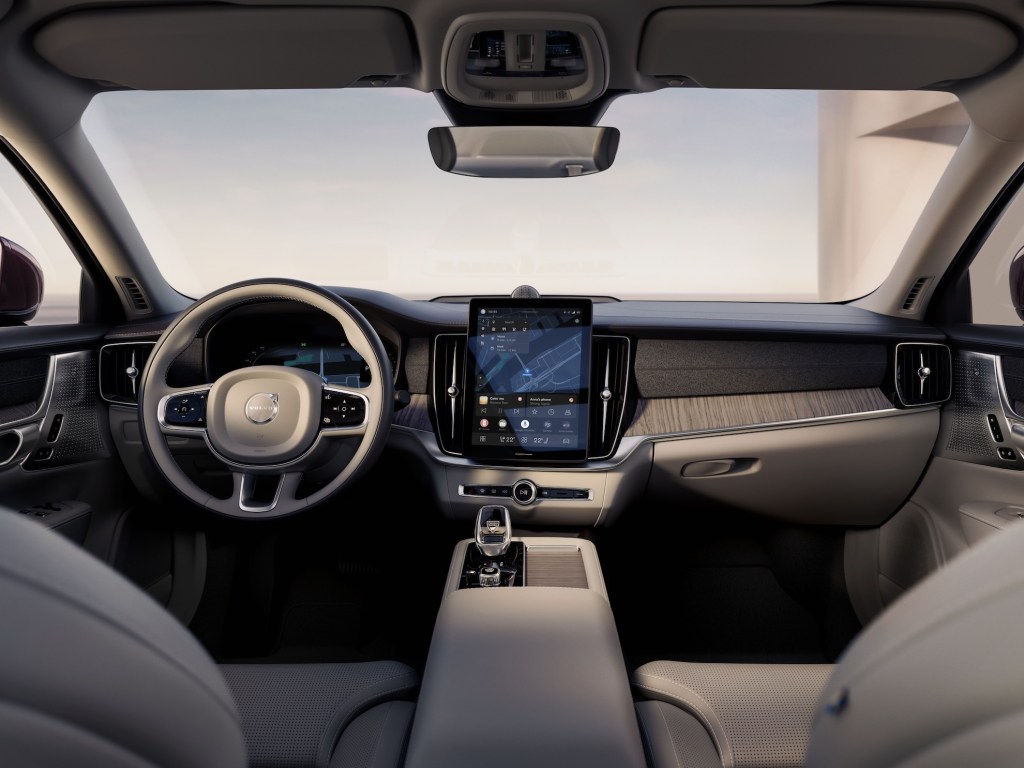
In a significant development for the automotive industry, Volvo Cars has obtained authorization from the U.S. Department of Commerce to continue importing and selling vehicles equipped with Chinese-developed connected car technology in the United States. This decision comes amidst stringent regulations aimed at mitigating national security risks associated with foreign technology in connected vehicles.
Background on Regulatory Measures
In January 2025, the Biden administration implemented rules prohibiting vehicles equipped with software and hardware developed and maintained by Chinese companies from entering the U.S. market. These regulations were introduced due to concerns that such technologies could pose threats to national security. The restrictions were set to commence with the 2027 model-year vehicles for software components and extend to hardware components by the 2030 model year.
Volvo’s Position and Response
Volvo Cars, a Swedish automaker majority-owned by China’s Geely Holding, found itself directly impacted by these regulations. Despite manufacturing primarily in Sweden, Volvo’s ownership structure and its manufacturing operations in China placed it under the purview of the new rules. Notably, Volvo’s EX90 model is assembled at its factory in South Carolina, USA, highlighting the company’s significant investment in the American market.
In response to the impending restrictions, Volvo engaged in constructive discussions with the U.S. Department of Commerce and other officials. These dialogues focused on the company’s governance, technological frameworks, and data security measures. As a result of these negotiations, Volvo received specific authorization to continue its operations involving connected car technology in the U.S.
Implications for Volvo’s U.S. Operations
With this approval, Volvo is poised to advance its expansion plans within the United States. In September 2025, the company announced intentions to commence production of two additional vehicles—the XC60 midsize SUV and a new hybrid model—at its South Carolina facility. Furthermore, in March 2026, Volvo revealed plans to relocate all production of the Polestar 3, an electric vehicle from its sister company Polestar, to the same U.S. factory. Previously, the Polestar 3 was also produced in Chengdu, China.
Broader Industry Impact
The regulatory framework, titled Securing the Information and Communications Technology and Services Supply Chain: Connected Vehicles, places significant emphasis on the potential threats posed by automated driving systems developed by companies with Chinese affiliations. Under these rules, Chinese firms are prohibited from testing autonomous vehicles on U.S. roads. This directive affects several companies, including Baidu’s Apollo Autonomous Driving LLC, Pony.ai, and WeRide, all of which had permits to test their autonomous vehicle technologies in California.
Conclusion
Volvo’s successful negotiation with the U.S. government underscores the complexities of global automotive operations amid evolving regulatory landscapes. By securing the necessary authorization, Volvo not only safeguards its current market presence but also sets a precedent for other automakers navigating similar challenges. This development highlights the delicate balance between technological advancement, international business relations, and national security considerations in the modern automotive industry.