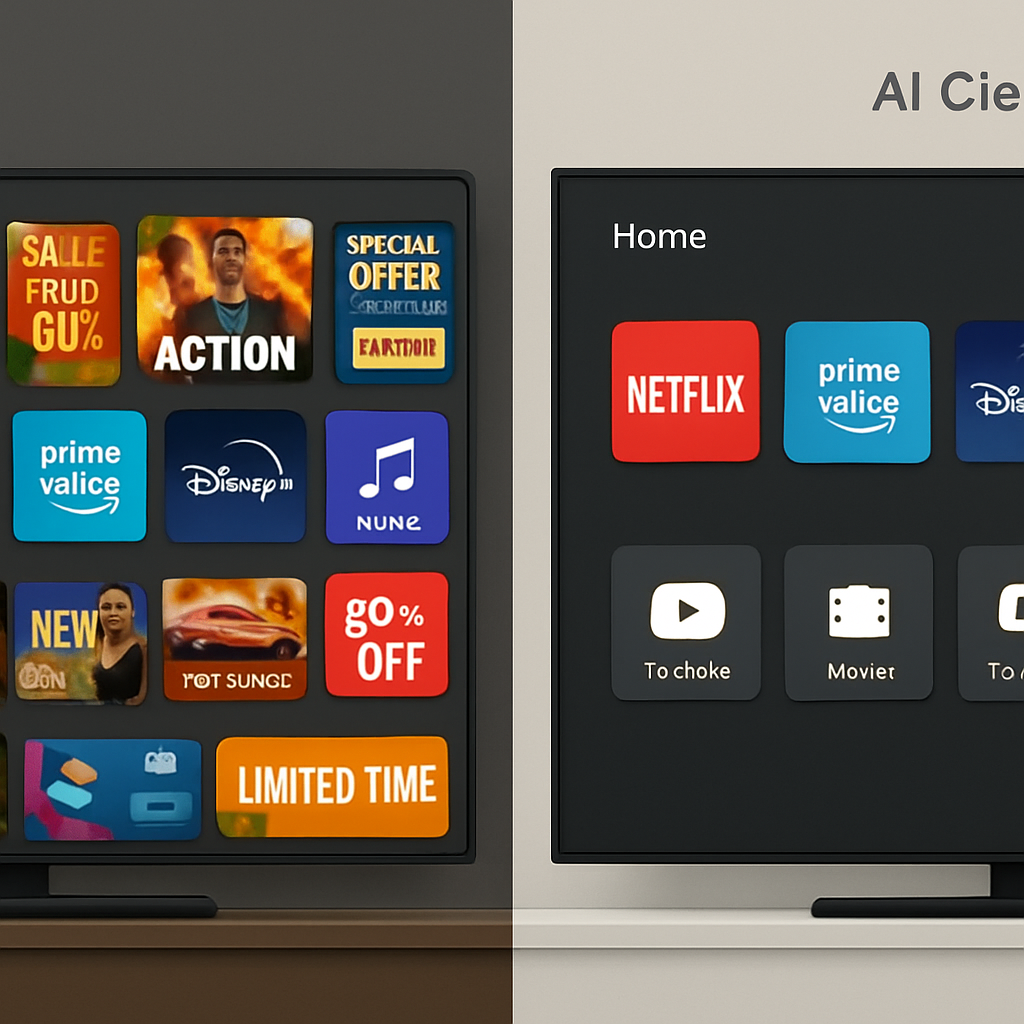
Smart TVs are getting stripped down and simplified thanks to a new trend where users employ AI tools to remove unwanted features like ads, tracking, and slow interfaces. Developers have started sharing utilities—such as “dumbtv” and “cleanyourtv”—that let owners regain basic control over their TVs and restore the viewing experience to what they see as essentials: apps, HDMI inputs, and nothing more.
What people are doing
The “dumbtv” project aims to eliminate embedded ads, surveilling features, and force-installed updates. It has been successfully tested on various platforms including Fire TV Editions and Android/Google TV sets from manufacturers like Sony, TCL, Xiaomi, Philips, Hisense, and Nvidia’s Shield. The setup involves pointing an AI agent to its GitHub repository, letting it guide the process.
“cleanyourtv” takes a similar approach, allowing smart TV users—particularly those with Android TV or Google TV devices—to connect over Wi-Fi and remove bloatware. It replaces the default launcher with one styled after Apple TV and customizes the home screen to include only desired apps. Root access isn’t required, and everything can be reverted to the original state if needed.
Why it’s happening and the risks involved
Many consumers are frustrated with built-in ads, tracking via Automatic Content Recognition (ACR), and laggy interfaces. The discontent has spurred this “vibe-coding” movement to redesign how the home screen works and how fast devices respond. Examples have gone viral on social platforms, with reports of users cutting out dozens of preinstalled apps, speeding up launch times, and styling what remains.
That said, not everything goes smoothly. Some users report AI agents failing to follow simple prompts, mistakenly disabling essential system components, or even bricking devices during the process. Others highlight partial failures or uncertainty in recovery, though some tools do offer a return to factory settings. For those avoiding full AI-led hacks, traditional launcher replacement apps like ATV Launcher, Projectivity Launcher, or FLauncher are still viable options.
This trend could shake up the smart TV ad industry, especially companies that monetize through data collection, personalized ads, or interface ads on home screens. If a large number of consumers adopt these minimalist setups, revenue models based on dynamic ads and tracking may face meaningful disruption.
Analytical angle: This shift toward “dumb” smart TVs underscores a broader consumer backlash against pervasive surveillance, forced ads, and software lock-in. It illustrates how AI tools are lowering barriers to customizing closed hardware ecosystems. What to watch for: whether manufacturers will respond by tightening firmware security, offering opt-out features, or redesigning software contracts. The way smart TVs evolve in the coming years may hinge on this tug-of-war between control, privacy, and monetization.