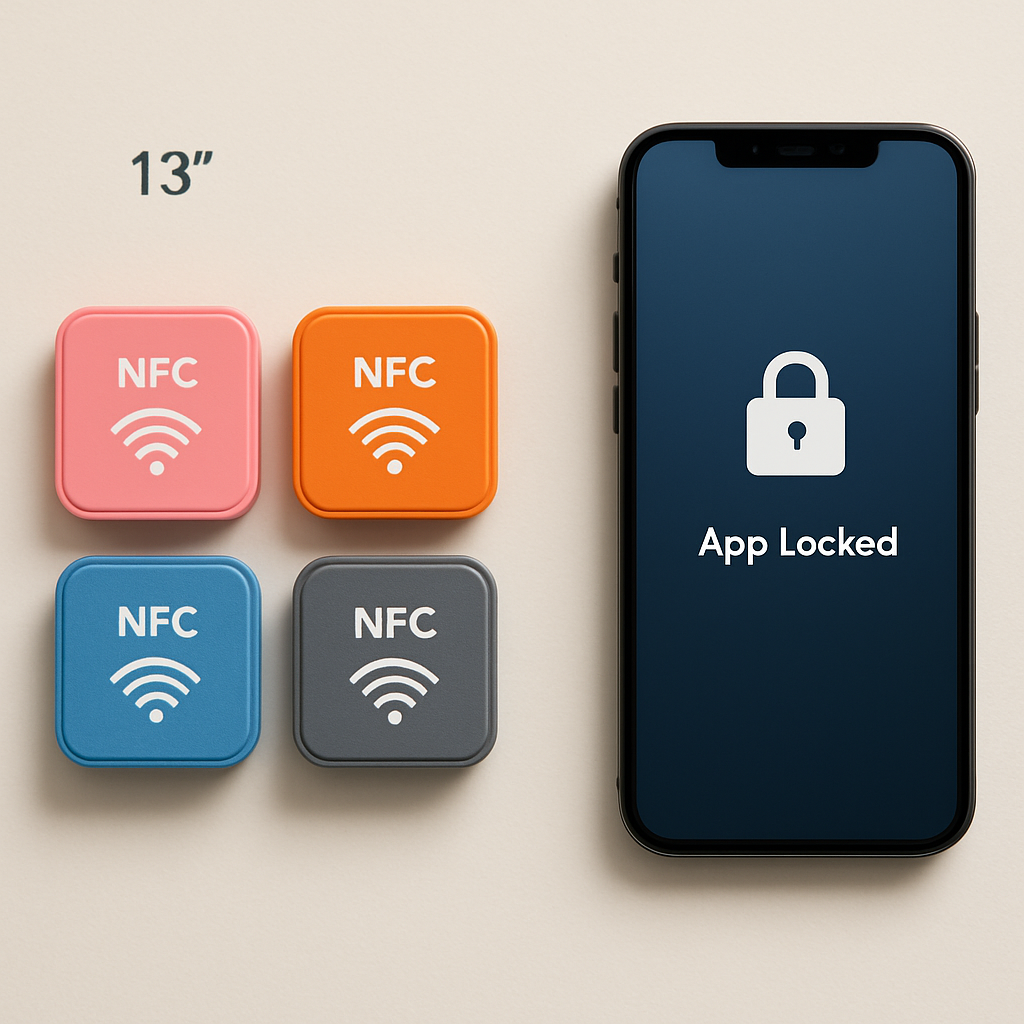
Managing screen time has become a significant challenge in today’s digital age, with many individuals struggling to curb their usage of addictive applications. Traditional screen-time management tools often rely on self-discipline, providing reminders or timers that users can easily dismiss. Recognizing this limitation, Autonomous has introduced the Autonomous Key, a physical NFC device designed to help users control their app usage more effectively.
The Autonomous Key operates by pairing with a companion application on your smartphone. Once set up, it allows users to lock specific apps that they find distracting. To regain access to these locked apps, users must physically scan the NFC key with their phone. This process unlocks the apps for a predetermined session lasting up to 60 minutes, after which they automatically relock. By requiring a tangible action to access these applications, the device adds a layer of intentionality, making it less likely for users to engage in impulsive app usage.
One of the standout features of the Autonomous Key is its affordability. Priced at just $9, it offers a cost-effective solution compared to competitors like Blok ($29), Unpluq ($26.50), and Brick ($59). While some alternatives, such as Brick, provide additional functionalities like Sleep Mode and the ability to block in-app purchases, the Autonomous Key focuses on delivering core app-locking capabilities without the added expense.
The device itself is compact, measuring approximately three inches in length, making it convenient to carry or store. It is compatible with smartphones running Android 8.0 or later and iPhones with iOS 15 or later. The companion app enhances the user experience by offering AI-powered insights into app usage patterns. It tracks metrics such as the frequency of unlocking distracting apps, the duration they remain accessible, and peak usage times. Notably, the AI provides feedback with a touch of humor; for instance, if a user frequently unlocks apps shortly after locking them, it might suggest placing the key in a less accessible location to increase its effectiveness.
Unlike many app-blocking solutions that require subscriptions or premium tiers to access full features, the Autonomous Key offers its complete functionality without additional costs. Furthermore, a single key can be paired with multiple devices, making it a practical option for individuals with multiple phones or families seeking a shared solution.
During testing, some users reported occasional challenges with the NFC scan requiring multiple attempts to register. This minor inconvenience suggests that while the device is effective for locking non-essential apps, it might not be ideal for applications that require frequent and immediate access, such as messaging or email.
Concerns about losing the key have also been addressed. If the key is misplaced while apps are locked, the current solution involves uninstalling and reinstalling the companion app. If the apps are unlocked, users can simply remove the key from their account. Autonomous has acknowledged this issue and is developing a backup unlock method, which is expected to be available in a future update.
Currently in its beta phase following a successful Kickstarter campaign, the Autonomous Key began shipping earlier this month. It is available in five colors: pink, orange, blue, gray, and brown, allowing users to choose a variant that suits their personal style.
In an era where digital distractions are pervasive, the Autonomous Key offers a tangible and affordable solution to help individuals regain control over their app usage. By introducing a physical barrier to accessing addictive applications, it encourages more mindful engagement with technology, potentially leading to improved productivity and well-being.