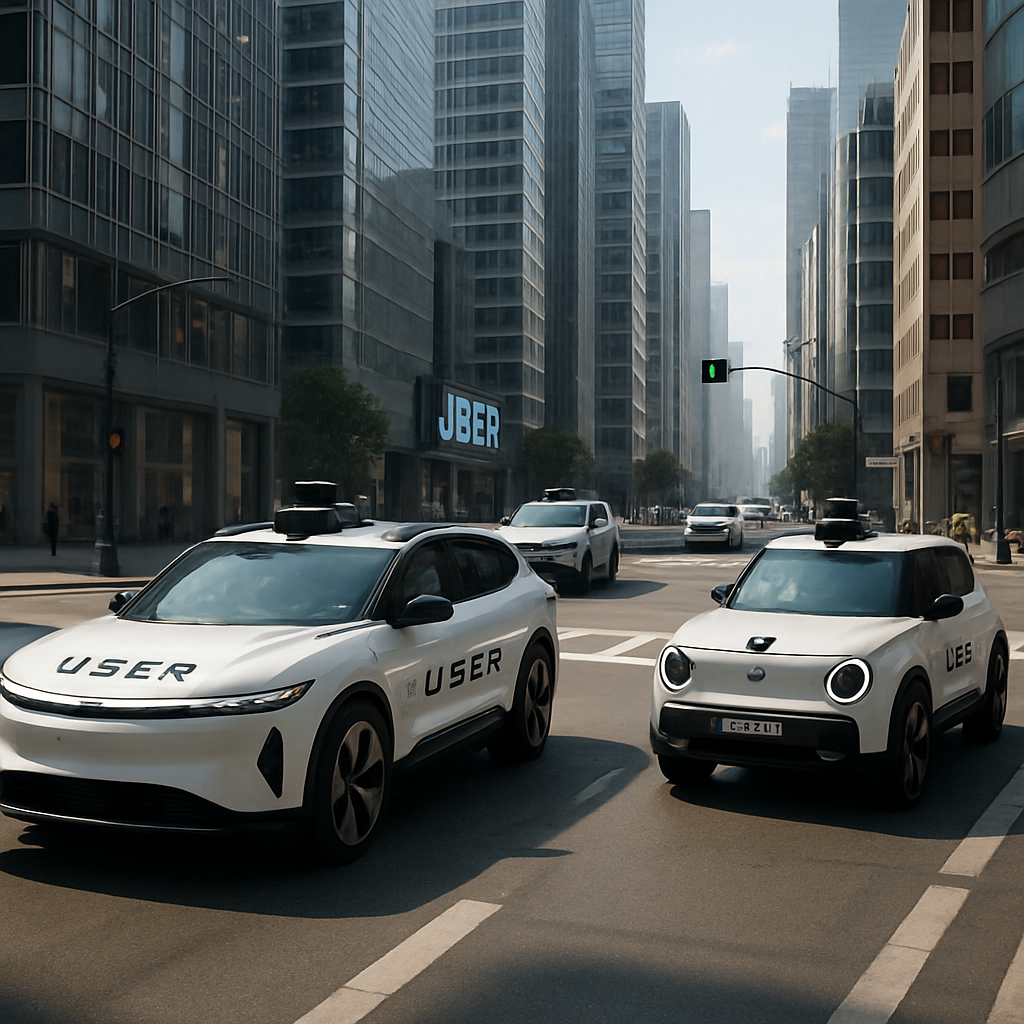
Uber has significantly expanded its autonomous vehicle (AV) partnerships, collaborating with over 30 companies globally in the past two years. This strategic shift marks a departure from its earlier approach of developing in-house AV technology.
Historically, Uber’s journey into autonomous vehicles began in 2014 with the establishment of Uber Advanced Technologies Group (ATG). The company recruited top talent from Carnegie Mellon University’s robotics program and, in 2016, acquired Otto, a self-driving truck startup. However, a series of setbacks, including a fatal crash in 2018 and legal challenges, led Uber to divest from ATG in 2020, selling it to Aurora Innovation while retaining an equity stake.
Since then, Uber has adopted a partnership-driven strategy to integrate autonomous technology into its services. Notable collaborations include:
Key Partnerships and Investments
In July 2025, Uber invested $300 million in Lucid Motors and committed to purchasing at least 20,000 Lucid Gravity SUVs over six years. These vehicles will be equipped with Nuro’s autonomous systems, aiming to launch a premium robotaxi service in major U.S. cities by 2027.
In March 2026, Uber partnered with Rivian to develop thousands of robotaxis based on Rivian’s upcoming R2 SUV. The deal, valued at up to $1.25 billion, includes an initial purchase of 10,000 autonomous R2 vehicles, with plans to expand to 25 cities across the U.S., Canada, and Europe by 2031.
Uber has also collaborated with Chinese AV startup Momenta to test robotaxis in Munich, Germany, starting in 2026. This partnership signifies Uber’s commitment to expanding its autonomous services into the European market.
Data Collection and Support Initiatives
To support its AV partners, Uber launched the AV Labs division in January 2026. This initiative focuses on gathering real-world driving data to enhance the development and deployment of autonomous technologies. By June 2026, Uber plans to deploy 500 data-collection vehicles, such as sensor-equipped Hyundai Ioniq 5s, to collect valuable driving data for its partners.
Additionally, Uber introduced the Autonomous Solutions division in February 2026, offering comprehensive support services for operating robotaxis, self-driving trucks, and delivery robots. This division aims to streamline the integration of autonomous vehicles into Uber’s platform.
Uber’s strategic shift from developing in-house autonomous technology to forming diverse partnerships underscores its commitment to integrating AVs into its services. By collaborating with a range of companies and investing in supportive infrastructure, Uber positions itself as a central player in the evolving autonomous transportation landscape. This approach not only accelerates the deployment of AVs but also allows Uber to adapt to regional markets and technological advancements effectively.