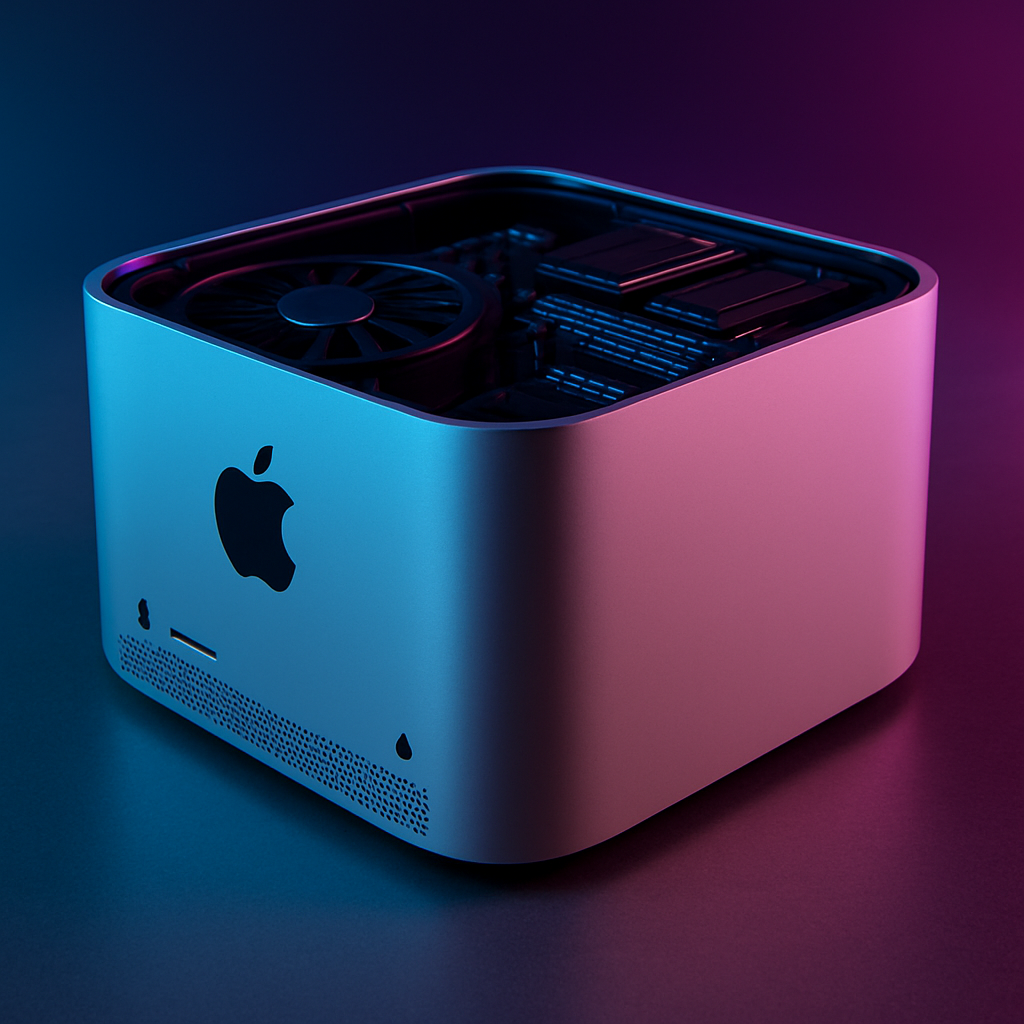
Apple is preparing to update its Mac Studio lineup this fall, marking the first refresh since early 2025. The current top-tier Mac Studio still utilizes the M3 Ultra chip, as the company did not release an Ultra variant of the M4. The forthcoming update is expected to introduce significant enhancements.
Fall 2026 Refresh
Initially slated for mid-2026, the Mac Studio refresh faced delays due to a global memory shortage. The updated models are now anticipated to debut as early as October. The new Mac Studio will feature the M5 Max and M5 Ultra chips, with the M5 Ultra potentially supporting up to 768GB of RAM. However, supply constraints may impact the availability of this memory capacity.
The M5 Ultra chip is expected to offer up to 36 CPU cores and 80 GPU cores, delivering substantial performance improvements over the existing M3 Ultra model. Pricing adjustments are also likely. Previously, the M4 Max and M3 Ultra variants were priced at $1,999 and $3,999, respectively. Following recent price increases, these models now cost $2,499 and $5,299. The M5 models may see further price hikes.
Looking Ahead to 2028
Apple has plans for another Mac Studio update in 2028, introducing the M7 Max and M7 Ultra chips. This generation is expected to make significant strides in AI performance, enhancing the device’s capability to handle on-device large language models (LLMs). Design modifications are also under consideration, though specific details remain undisclosed.
Notably, the M7 Ultra Mac Studio is projected to include a new heatsink design for improved sustained performance and may support up to 1.5TB of RAM. This would match the memory capacity of the 2019 Mac Pro, which also supported up to 1.5TB. Based on current memory pricing, upgrading from 128GB to 1.5TB could cost approximately $35,000, excluding necessary CPU upgrades.
These developments underscore Apple’s commitment to advancing its desktop offerings, catering to professionals who require high-performance computing solutions. The anticipated enhancements in processing power and memory capacity are poised to meet the growing demands of intensive workloads, particularly in AI and machine learning applications.