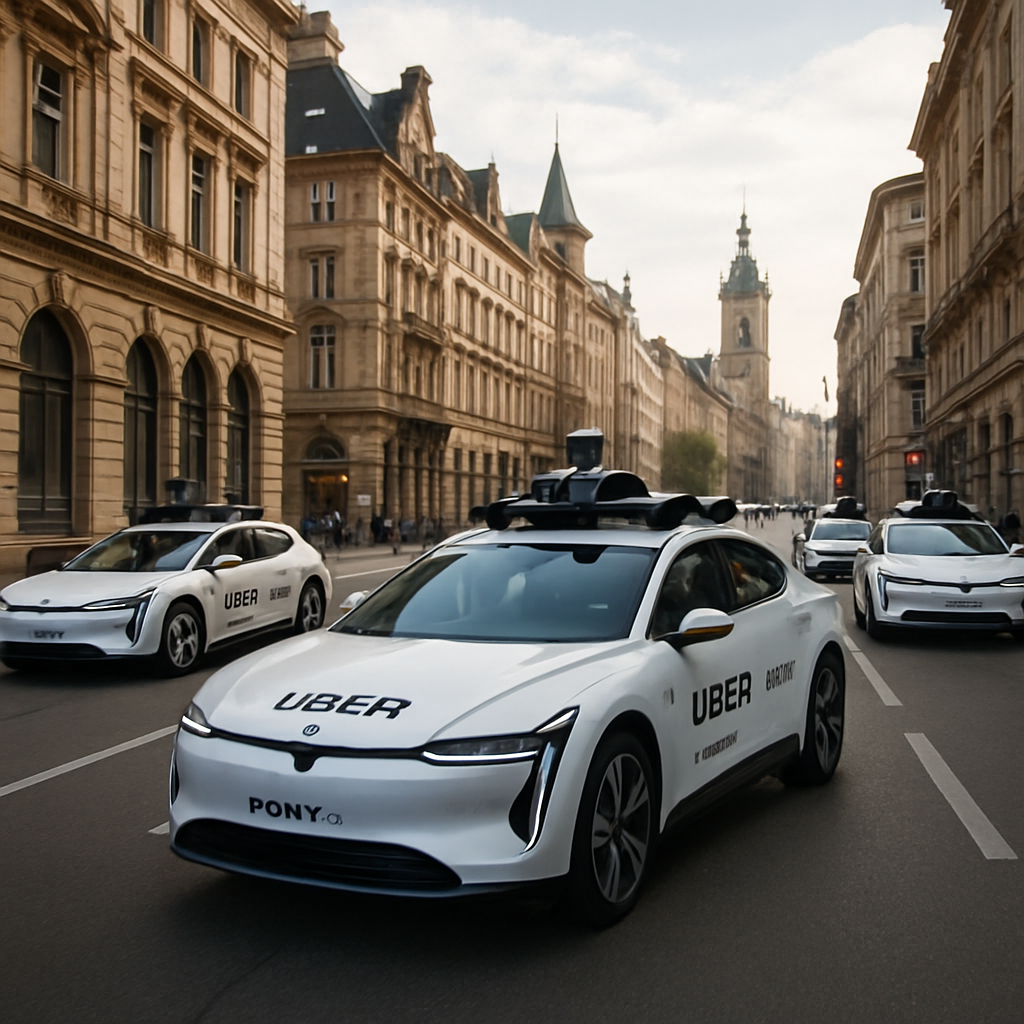
Uber and Chinese autonomous vehicle manufacturer Pony.ai have announced plans to introduce 2,000 robotaxis in four European cities. This initiative marks a significant expansion of their existing partnership, aiming to establish a substantial presence in the emerging robotaxi market.
While specific details such as the timeline and the exact cities for deployment remain undisclosed, the companies have indicated that information will be released in phases. The collaboration will see Pony.ai providing the autonomous driving technology, with Uber leveraging its extensive ride-hailing platform to facilitate operations. Fleet management responsibilities, including maintenance, cleaning, and charging, are expected to be handled by local partners, and fleet ownership may vary depending on the market.
This European venture builds upon the partnership established in May 2025, which initially focused on the Middle East. Earlier this year, Uber and Pony.ai announced plans to launch a commercial robotaxi service in Zagreb, Croatia, in collaboration with local company Verne.
Uber has been actively forming alliances with various autonomous vehicle companies to expand its global footprint in the robotaxi sector. Notably, the company has partnered with over 30 autonomous vehicle firms, including collaborations with Momenta to test autonomous vehicles in Germany and with WeRide to expand robotaxi services across 15 cities.
Pony.ai, headquartered in Guangzhou, China, has been rapidly advancing its autonomous vehicle operations. The company has launched services in four Chinese cities and has secured partnerships with local transportation authorities to extend its robotaxi services to European and Middle Eastern countries, including Qatar.
The deployment of 2,000 robotaxis in Europe signifies a major step forward in the adoption of autonomous ride-hailing services on the continent. As Uber and Pony.ai continue to expand their collaboration, the success of this initiative could serve as a catalyst for broader acceptance and integration of autonomous vehicles into urban transportation networks. Observers will be keenly watching how these services are received by the public and how they navigate the regulatory landscapes of the selected European cities.