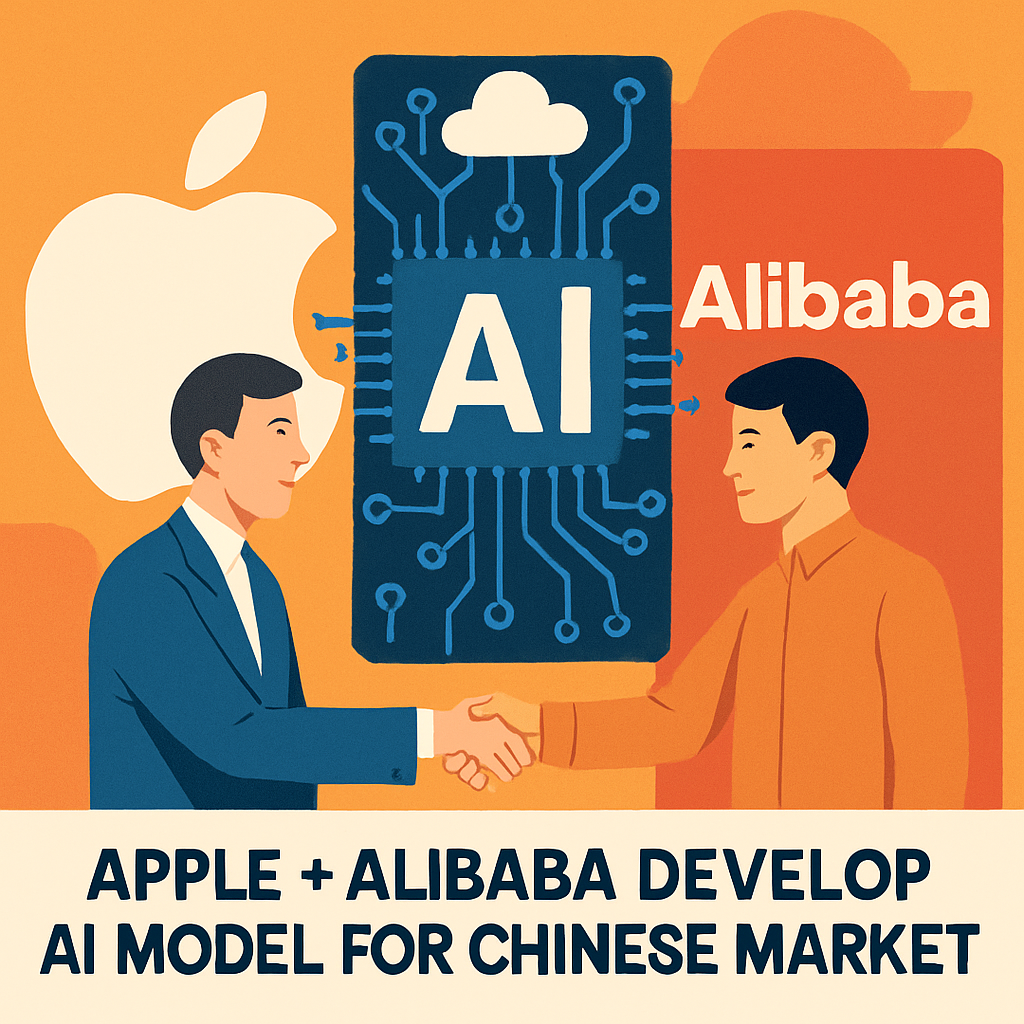
Apple is set to introduce its Apple Intelligence service in China, utilizing a proprietary large language model (LLM) developed in collaboration with Alibaba. This strategic move marks a departure from Apple’s previous reliance on Google’s Gemini technology for its AI services in other regions.
In the United States and various other markets, Apple Intelligence has been powered by Google’s Gemini technology. However, for the Chinese market, Apple has opted to create its own LLM, trained in partnership with Alibaba. This decision aligns with China’s stringent regulatory environment concerning AI technologies and data privacy, which often necessitates foreign companies to collaborate with local firms to ensure compliance.
Apple’s collaboration with Alibaba is not unprecedented. In February 2025, Apple announced a partnership with Alibaba to develop AI features tailored for Chinese iPhone users. This initiative aimed to navigate the complex regulatory landscape in China by leveraging Alibaba’s established presence and expertise in the region.
Despite these efforts, the rollout of Apple Intelligence in China has faced challenges. In March 2026, the service was briefly and prematurely launched without obtaining the necessary government approvals, leading to its swift withdrawal. Subsequently, in July 2026, China’s cyberspace regulator granted approval for Apple Intelligence to be registered for use on iPhones within the country, marking a significant step toward its official release.
Apple’s decision to develop a proprietary LLM for the Chinese market underscores the company’s commitment to adhering to local regulations and addressing the unique needs of its user base in China. By collaborating with Alibaba, Apple aims to deliver a seamless and compliant AI experience to Chinese consumers.
This development highlights the complexities global tech companies face when expanding AI services into markets with stringent regulatory requirements. Apple’s approach—developing region-specific AI models in partnership with local entities—may serve as a blueprint for other companies navigating similar challenges. As Apple Intelligence prepares for its official launch in China, it will be crucial to monitor how this strategy influences user adoption and the broader AI landscape in the region.