Y Combinator’s newest Demo Day brought an unusually heavy dose of deep tech. Several startups stood out in VC conversations this week — not just for their bold ideas, but also for grounded valuations and early customer traction.
Meet the Most Buzzed-About Startups
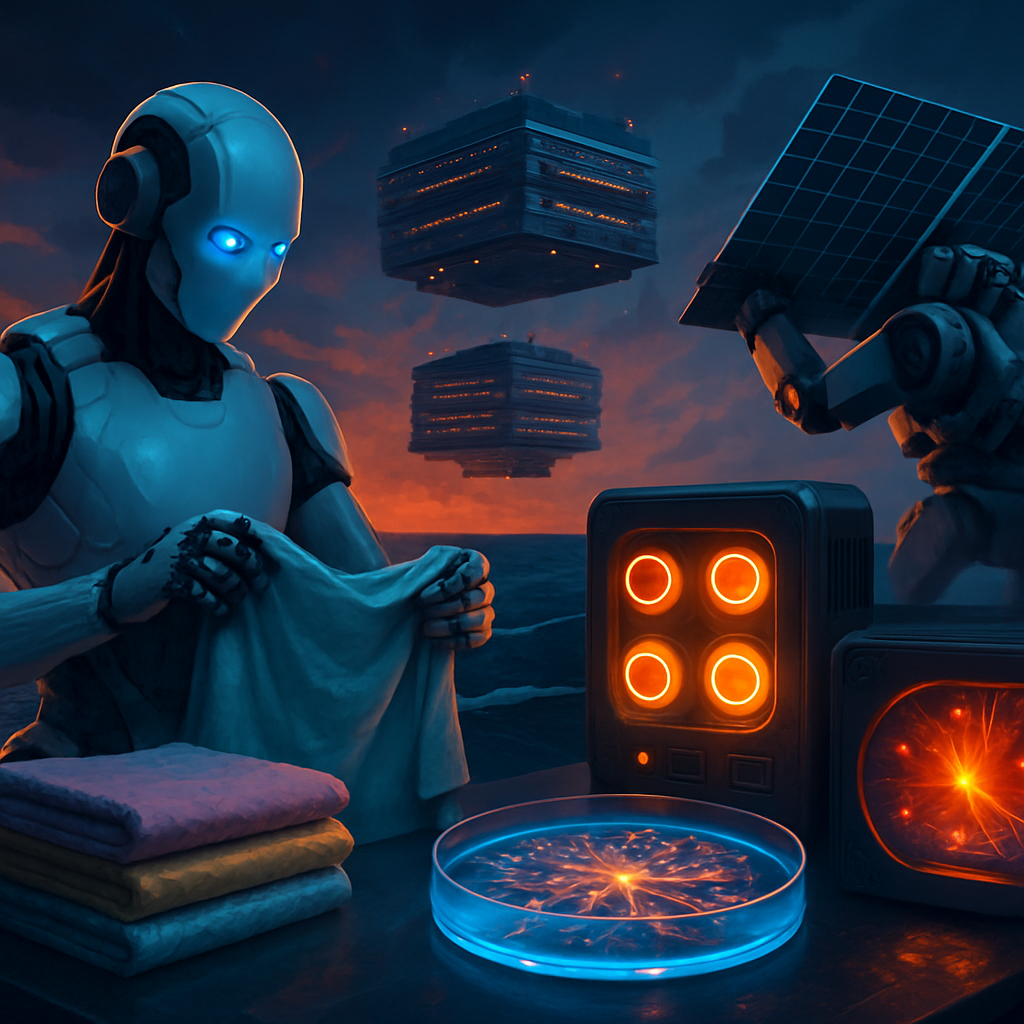
Atomarine aims to put data centers out at sea, using seawater for cooling. It plans a gas-powered pilot by 2028 and wants to transition to floating nuclear power ships by 2032. Already, it claims over $4 billion in potential demand from letters of intent, making it one of the most highly valued in the cohort.
Dipole Labs tackles the data transfer energy cost inside AI data centers. Its optical switch design skips conversion from light to electricity and back, helping GPU clusters communicate faster and with much less heat buildup.
Isengard Industries designs jet-powered strike and counter-drones, built locally in allied countries. Founded by defense veterans, it’s already hitting $10 million in revenue, aiming to undercut traditional prime contractors with lower costs and faster local production.
Lamb Labs is working on custom inference chips that have fixed AI model weights embedded in silicon. This “Model Processing Unit” approach sidesteps memory bandwidth bottlenecks and cuts power consumption during inference.
Praxis AI pens its niche in the data needed for robot learning. It partners with businesses to collect real-world video and work data in hundreds of environments. Its asset is defining which tasks are best for humans vs. which to delegate to robots.
Nori just launched, and already it has earned nearly $500,000 in sales. It’s a humanoid robot, priced around $1,600, designed for everyday jobs like cleaning and folding. Users control it via laptop app — a big attempt to make personal robotics affordable.
Cosmic Robotics builds autonomous robots to lift heavy objects. With $25 million in contracts through 2027, it’s already installing solar panels across the U.S. Its roadmap includes contributing robotic tech toward future Mars colonial infrastructure, with exploratory mission goals around 2028.
Parasma is eyeing human brain cells as compute hardware. The startup explores whether cultures of neural tissue could one-day offer more efficient alternatives to conventional AI hardware for model training and inference.
Waddle Labs layers LLM agents over an API so developers can control robots via natural language. Its agents generate control code, test execution, and onboard hardware — all in about 20 minutes. It’s positioning itself as the “Claude Code” for robotics.
What Makes This Cohort Different
This batch stands out for the depth of its ambition. Projects span from floating nuclear data centers to biologically powered compute systems. That signals fresh confidence in climate, energy, robotics, and computational hardware. At the same time, valuations appeared more cautious and deal terms more realistic than in recent years.
Another trend: many of these companies already have meaningful revenue or significant customer interest. Atomarine, Isengard, and Cosmic have letters of intent or contracts in the millions, while Nori has made real weekly sales already, despite its early stage.
Execution remains a looming challenge. Heavy infrastructure, new materials, energy sources, and regulatory hurdles await. Concepts like brain-cell processors or nuclear floating platforms demand big investments and risk takers. But VCs seem willing to back the daring ideas if there’s traction and disciplined growth.
Big ideas matter again in startup land — but this time, paired with real sales, grounded technology, and pragmatic timelines. What to watch: who can execute in 2028 and 2032, what regulatory clearance looks like for nuclear and biologics, and whether robotics and power hardware prove durable businesses — or just impressive dreams.