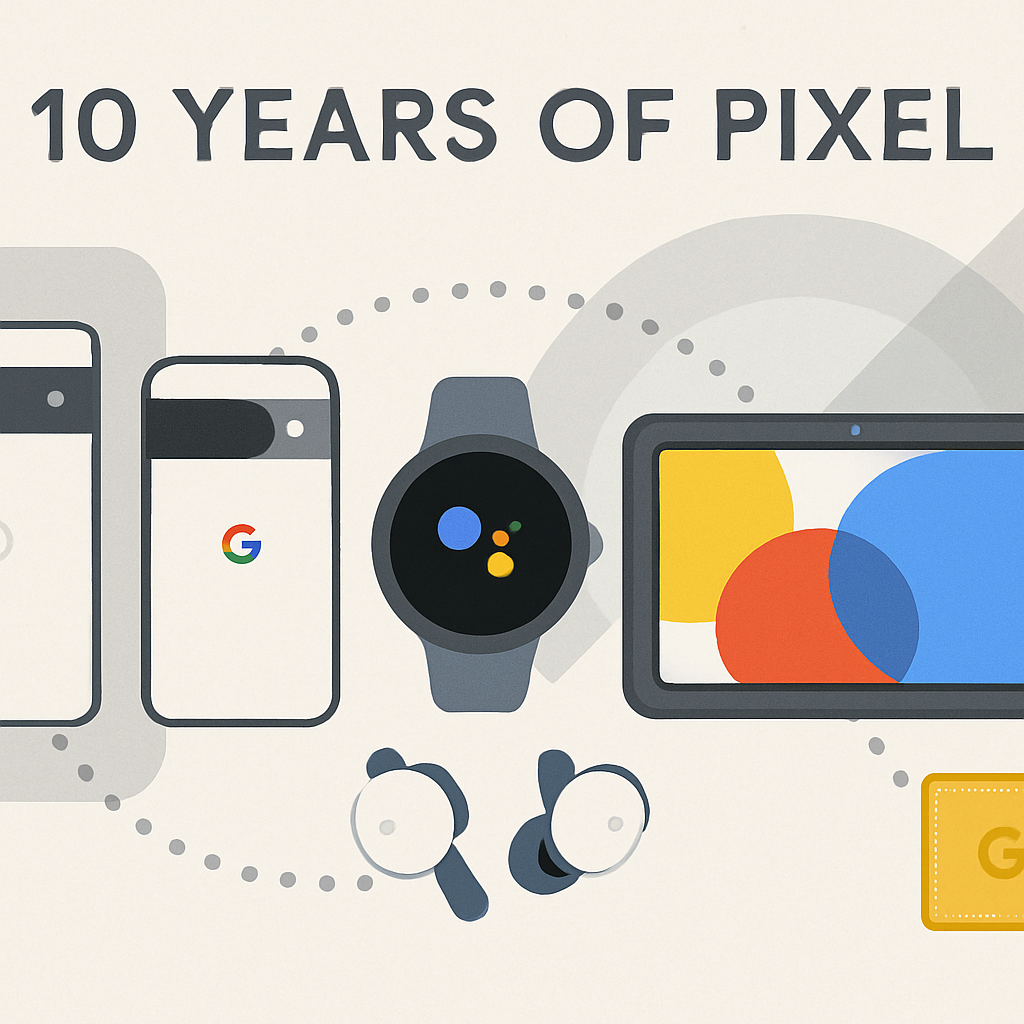
On October 4, 2016, Google launched the first Pixel—an evolution of the Nexus line—marking the start of what has become a decade of innovation and identity under the Pixel brand. From its origins, Pixel aimed to set new Android standards: excellent camera performance, swift software updates, and experience deeply rooted in Google’s vision. Over the years, that vision has expanded dramatically. Today, the Pixel line includes not only flagship phones, but wearables, earbuds, tablets, and increasingly, bespoke silicon. Add in service integrations like Gemini, and the brand’s scope has never been greater.
Early Roots: Hardware with Intent
Pixel began humbly: devices built by HTC, sold as hardware showpieces more than market dominators. What set them apart were two things—camera prowess that often outshined rivals, and Android updates arriving well before they did on other phones. But leadership and consistency would take time. Stumbles — like issues in Pixel 2 and 3 models — taxed hardware quality. Global supply chain troubles hit Pixel 5 during the pandemic. And tougher criticism came with regard to modem performance and other internal components when Tensor first appeared in Pixel 6.
Growth, Scope, and the Search for Maturity
By the time the Pixel 6 rolled out, Google had embraced designing its own silicon. That shift wasn’t just about performance—it was about controlling the experience end to end. Alongside phones, Google pushed into wearables with the Pixel Watch, re-entered tablets, and developed earbuds—all under the Pixel umbrella. But these moves haven’t always succeeded: tablets flopped, earbuds are fine but don’t brand-destroy rivals, and the Pixel Watch has remained visually static since its debut in 2022.
Market presence remains patchy. Despite notable year-over-year growth in 2026, Google still holds only a modest share of most smartphone markets—including its strongest, the U.S. What Pixel may lack in sales volume, it makes up for in influence. Through design language, software polish, and tight integration with Google’s services—now led by AI efforts like Gemini—it has built a reputation of thoughtful cohesion rather than scattershot innovation.
It wasn’t until the Pixel 8 line in 2023 that many felt Google truly hit its hardware stride. That was when critics and customers alike saw its internal components, screen quality, and exterior build finally match the long-awaited polish of its software. Since then, iteration has focused more on refining design than overhauling it—Pixel 11 continues a style set by Pixel 6, the Pixel Watch hasn’t strayed much from its 2022 look, and no successor to the Pixelbook is yet visible.
Still, Pixel’s path hasn’t been without drama. Early missteps undermined consumer confidence. Delays in platform updates or hardware flair left opening doors for rivals. Yet through it all, Google’s commitment to features gaps—camera, AI, integration, and software support—has carved a niche. Even as some product lines failed, others established staying power.
Today, Pixel is arguably more predictable than ever: customers generally know what they’re getting, whether it’s in terms of hardware design, update cadence, or software polish. That stability wasn’t always guaranteed. Despite ongoing challenges—like keeping up with high-end components or expanding international sales—Pixel has matured into one of Google’s most defined and enduring product offerings.
Analytically speaking, Pixel’s legacy is one of transformation. It transformed from a modest reference point for Android excellence into a full ecosystem with identity. What matters going forward is whether Google can balance incremental refinement and consumer expectations. Keeping up in camera innovation, AI integration, and hardware quality will define whether Pixel remains a benchmark—or just another brand with promise but limited reach.