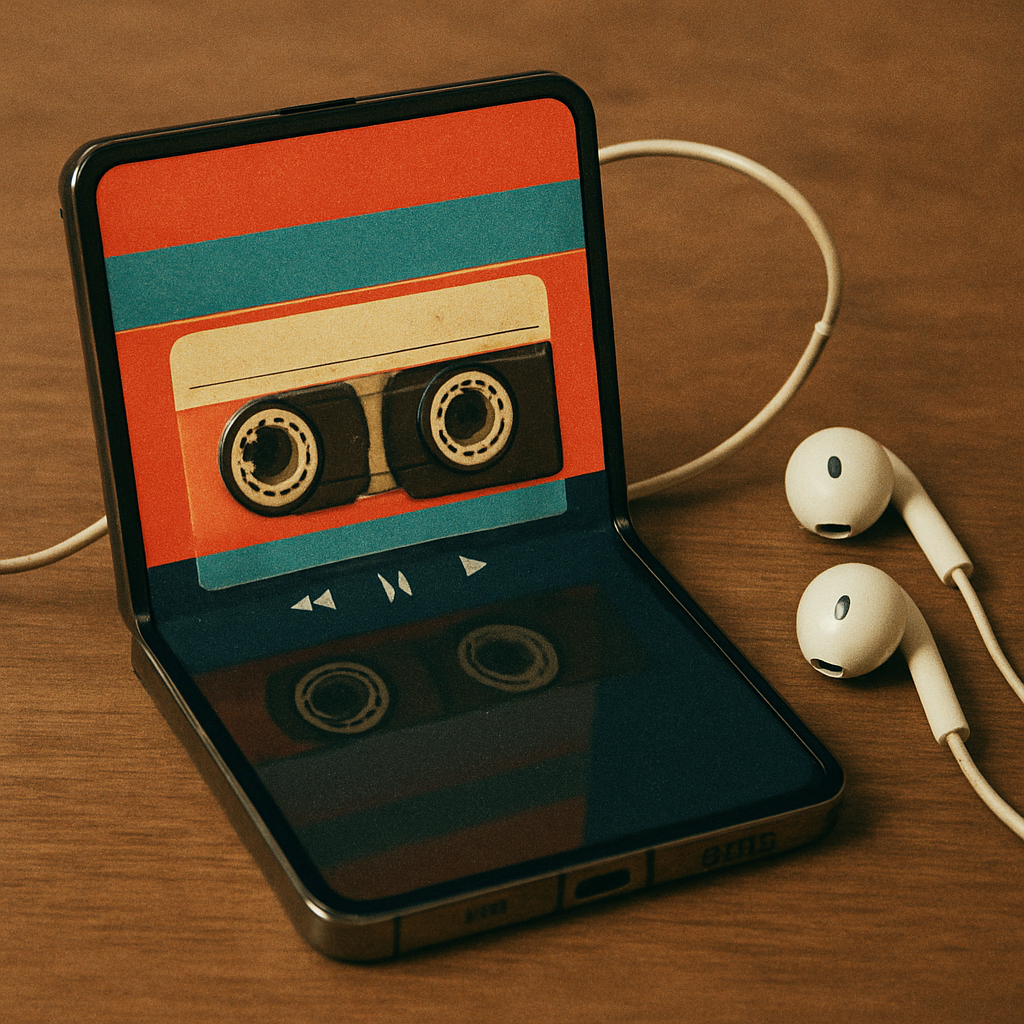
Step aside modern music players—developers are reviving nostalgia with Duo-Man, a new app that reimagines the 1980s Sony Walkman’s charm on Apple’s just-released iPhone Duo. Created by Vidit Bhargava during a hackathon, Duo-Man delivers the look, sounds, and rituals of cassette listening for modern users tapping into Apple Music. It’s more than a skin; it’s a full sensory throwback.
For those who never lived through the Walkman era, it was a compact cassette player made iconic by its design: portable, personal, and filled with character—tape clicks, static, and the tactile act of pressing play by closing the lid. It offered a soundtrack on the go, with physical cassettes as the mode of choosing what to listen to.
The App: What It Does
Duo-Man turns the Duo’s folding form into a virtual cassette deck. When users open the Duo, they can select an album which appears as a cassette to insert. Closing the device triggers playback. The development team even went as far as sampling actual Walkman sound effects—button clicks, tape whirrs, and static fluctuations—for authenticity.
Originally built just for fun, the app got enough interest during its debut at BitRig’s hack day that its author plans to release it publicly. Of all the reactions, what stood out most were the comments from people who remember Walkmans firsthand; a photo of one elicited nostalgia deeply felt by those who grew up with it.
Why It Resonates
This touch of nostalgia speaks to more than retro aesthetics. In an age of digital streaming, Duo-Man taps into tactile longing and the joy of interaction over the purely functional. The flip-to-play motion, the ’80s audio artifacts, the act of choosing albums like physical tapes—all invoke rituals that streaming music doesn’t provide.
Also, it demonstrates the creative flexibility hardware innovations like folding phones offer. A dual-screen, foldable device naturally lends itself to mimic elements of closed media like cassette players; Duo-Man seizes that opportunity, merging design heritage with cutting-edge form.
With vintage fashion, collectables, and even movie remakes riding a wave of revival, apps like Duo-Man aren’t mere nostalgia trips—they serve niches that crave richer, more emotional interactions from technology. As the app prepares for public release, it raises broader questions about what modern device UX might gain by incorporating analog gestures and glitches rather than erasing them.
Analytically, Duo-Man signals that innovation isn’t always about new features—it can be about re-learning value we once lost. It reminds designers and users alike that friction, sensory imperfection, and ritual can deepen experience. As we move forward with even more radical form factors—foldables, wearables, immersive devices—the hunger for heritage may be as strong a driver as the push for speed, resolution, or AI integration.