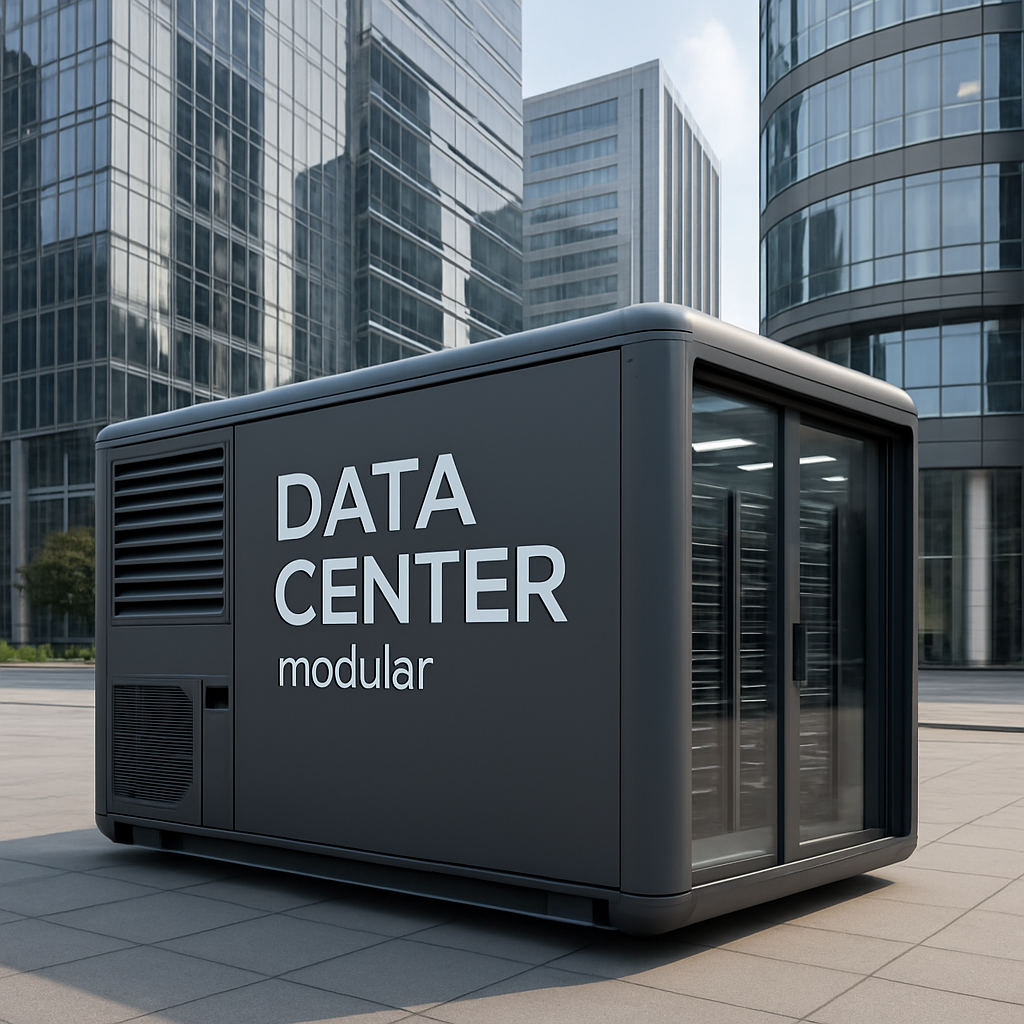
Runware, an AI infrastructure company, has unveiled its latest innovation: the Sonic Inference Pod. This modular data center is designed as a single, transportable unit, offering a flexible alternative to traditional, large-scale data centers.
The Sonic Inference Pod aims to deliver high-quality AI inference at a lower cost compared to existing serverless inference platforms and GPU clouds. Its modular design allows for rapid scalability by adding new pods, eliminating the need for extensive expansion of fixed data centers. This approach aligns with the growing demand for distributed computing, positioned closer to end-users to enhance inference speed.
Flaviu Radulescu, co-founder and CEO of Runware, emphasized the advantages of this system, highlighting its ability to scale quickly, deploy in diverse locations with available power, and adapt swiftly to new hardware releases. Notably, the pods utilize a closed-loop cooling system, avoiding water usage and enabling construction within days, a stark contrast to the months or years required for traditional data centers.
Currently, Runware has deployed ten pods across the U.S., Europe, and the Asia-Pacific region, providing inference services to companies like Higgsfield AI and Wix. With 160 sites ready to support its pods, Runware is poised for further expansion. This development follows the company’s $50 million Series A funding announced in December, aimed at enhancing infrastructure for image generation.
While major AI labs continue to invest in large-scale data centers, Radulescu views the flexibility of the Sonic Inference Pods as a significant differentiator. Each pod operates as part of a unified network, ensuring that requests are directed to available capacity near users. In the event of a pod going offline, traffic is seamlessly rerouted to another, minimizing disruptions. For clients requiring dedicated hardware, entire pods can be allocated exclusively.
Addressing potential competition, Radulescu noted the challenges in developing similar technology, citing the slow pace of hardware development and the limited talent pool for building and maintaining such systems. He highlighted the complexities involved, such as the time-consuming process of circuit board design and the necessity for specialized knowledge in component functionality.
The environmental impact of AI data centers remains a contentious issue, with concerns about resource consumption and rising utility costs in host communities. While Runware envisions a future powered by renewable energy, Radulescu acknowledged that the immediate focus is on meeting the escalating demand for AI inference. He emphasized that this demand is driven by the need for inference capabilities, regardless of the supplier, and that Runware’s approach aims to address this need efficiently.
Runware’s introduction of the Sonic Inference Pod signifies a shift towards more adaptable and efficient AI infrastructure solutions. By offering portable, scalable, and resource-conscious data centers, the company is addressing the pressing needs of the AI industry. As the demand for AI inference continues to grow, innovations like these could play a pivotal role in shaping the future landscape of data processing and deployment.