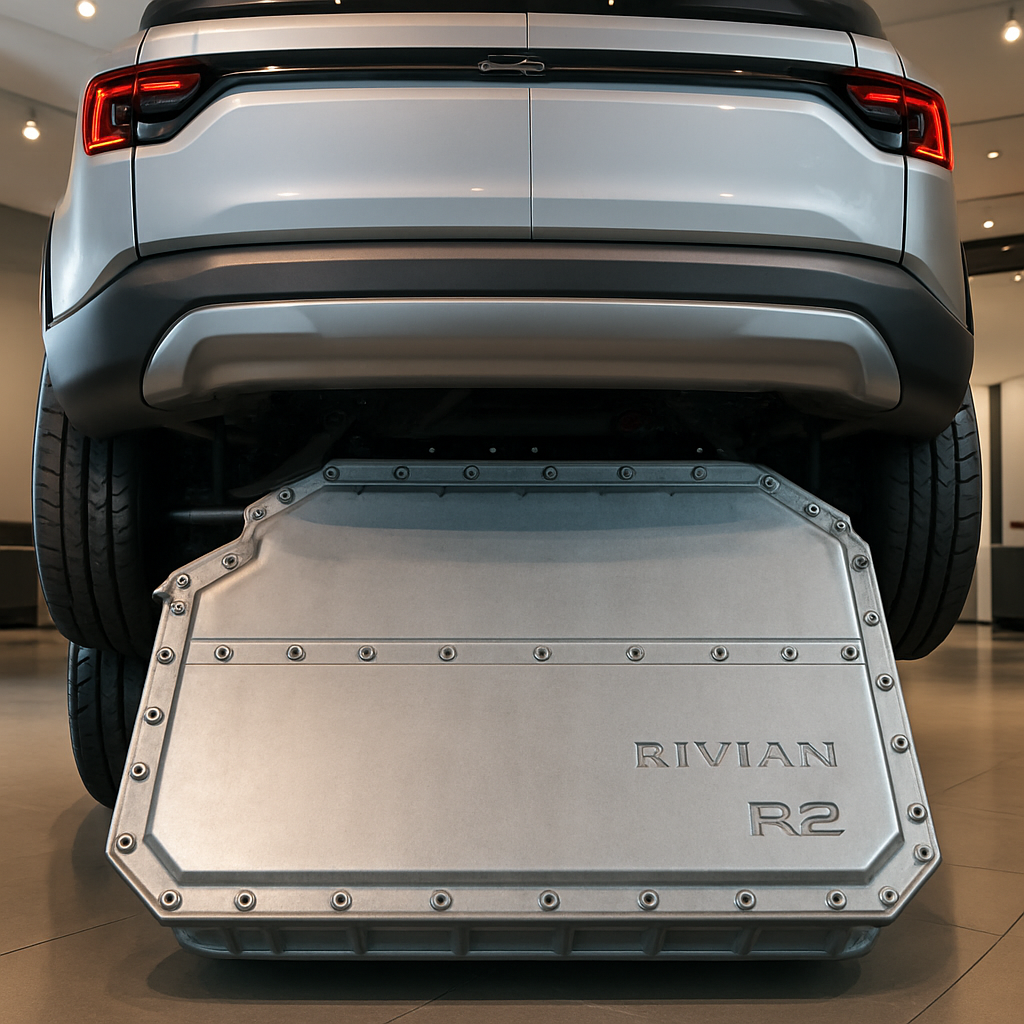
Rivian is recalling select R2 electric SUVs after discovering that some fasteners securing the high-voltage battery pack may not be properly tightened. If these battery-pack fasteners are loose, drivers could lose power while driving. This latest recall underscores early production challenges for Rivian’s R2, a vehicle intended to establish its mass-market traction.
Scope & Discovery
Only about 14 R2 units are believed to be affected by the issue. Rivian will fix any loose or improperly installed components, either repairing or replacing them in customer vehicles as needed. The defect traces back to September 17: a manufacturing worker at Rivian’s assembly facility in Normal, Illinois, noticed one fastener was “under torqued” at an automated station. In response, Rivian reprogrammed that station so it rejects fasteners that don’t meet torque specifications.
Context & Implications
This represents the second recall for the R2 model, which began deliveries in June. The first recall addressed problems with the backup camera visibility and was resolved via a software update. The R2 is pivotal for Rivian’s broader strategy, designed as a more affordable SUV for the mainstream EV buyer, and instrumental in Rivian’s push toward profitability.
The company has ambitious production targets: between 20,000 and 25,000 R2 SUVs by the end of 2026. Achieving this hinges on scaling production—Rivian plans to add a second production shift. Despite the recalls, demand appears strong, but production integrity will be under greater scrutiny moving forward.
According to Rivian, there have been no known customer reports, accidents, injuries, or fatalities linked to the fastener issue. Some owners and EV-watchdog blogs had flagged concerns in recent weeks. In one case, a service center reportedly advised a vehicle owner to stop driving and had the SUV towed in for inspection.
Why This Matters
As Rivian’s first large-scale entry into the more affordable EV market, the R2 carries a lot of weight. A recall so early in its rollout points to quality-control gaps that could affect consumer confidence. Such issues aren’t uncommon in the automotive sector—EV or not—but their timing, risks to safety, and potential impact on Rivian’s brand and financial objectives make them an especially critical test.
Rivian’s efforts to address the issue—including identifying and correcting automated equipment behavior—are positive steps. But long-term success depends not just on resolving isolated defects, but demonstrating consistent build quality as production ramps up, meeting safety expectations, and maintaining momentum in demand while avoiding setbacks.