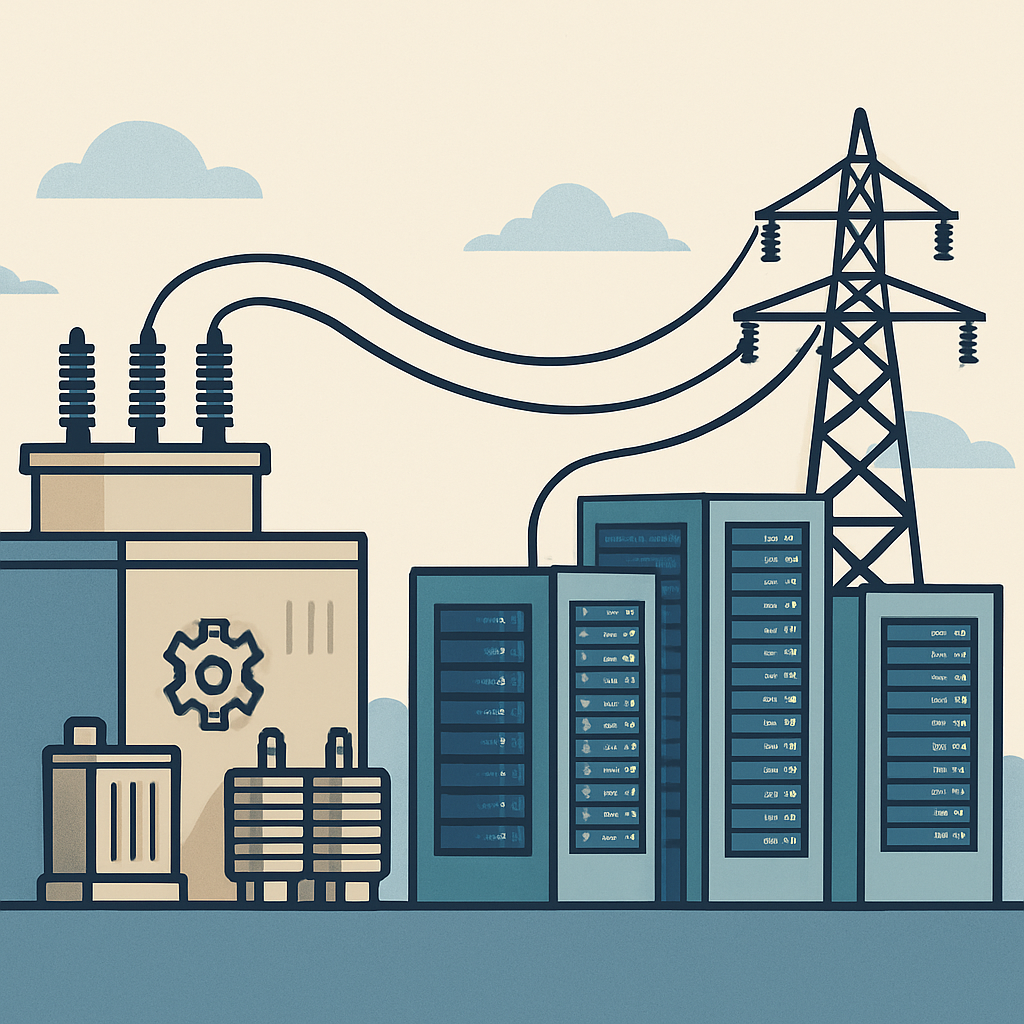
The rapid expansion of data centers across the United States is placing unprecedented demands on the nation’s electrical infrastructure. PJM Interconnection, the largest grid operator in the U.S., has announced plans to implement temporary power curtailments for data centers and other substantial energy consumers during periods of high demand to avert potential blackouts.
Data centers, which are integral to the digital economy, are projected to consume significantly more electricity in the coming years. By 2035, their energy usage is expected to quadruple compared to current levels. This surge is largely driven by the escalating needs of artificial intelligence and cloud computing services.
Beginning in June 2027, PJM will initiate these curtailments, specifically targeting data centers with energy demands of 50 megawatts or more. This measure follows a recent capacity auction that failed to secure sufficient new power generation resources to meet anticipated future demands. To address this shortfall, PJM is organizing another auction aimed at bolstering generating capacity.
Participants in these demand response programs will receive compensation for reducing their power consumption during peak periods. Such programs have been a staple in energy management for decades, traditionally involving large industrial users who receive advance notice—ranging from 30 minutes to several days—before curtailments are enacted.
In response to these developments, many data center operators are likely to invest in on-site power generation solutions to ensure uninterrupted operations. While some may opt for renewable energy sources, others might rely on backup generators, predominantly diesel-powered, due to their availability and reliability. However, the use of diesel generators raises environmental concerns, as they are typically more polluting and expensive to operate. Federal regulations permit the use of such generators for up to 50 hours annually for demand response events and up to 100 hours for emergencies and maintenance.
Recent incidents underscore the challenges associated with backup power solutions. For instance, in Northern Virginia, a significant number of data centers simultaneously switched to backup generators due to a grid equipment fault, nearly leading to widespread power outages. This event highlights the delicate balance required to maintain grid stability amidst increasing energy demands from data centers.
PJM has faced criticism over its management of new generating capacity and the integration of large-scale energy consumers like data centers. The operator’s jurisdiction spans from Virginia to Illinois, serving approximately 67 million customers. Over the past year, wholesale electricity prices within PJM’s territory have nearly doubled, with data centers being identified as a primary factor contributing to this surge.
As the digital economy continues to expand, the interplay between data center growth and grid reliability becomes increasingly complex. Stakeholders must collaborate to develop sustainable solutions that accommodate technological advancements without compromising the stability of the nation’s power infrastructure.