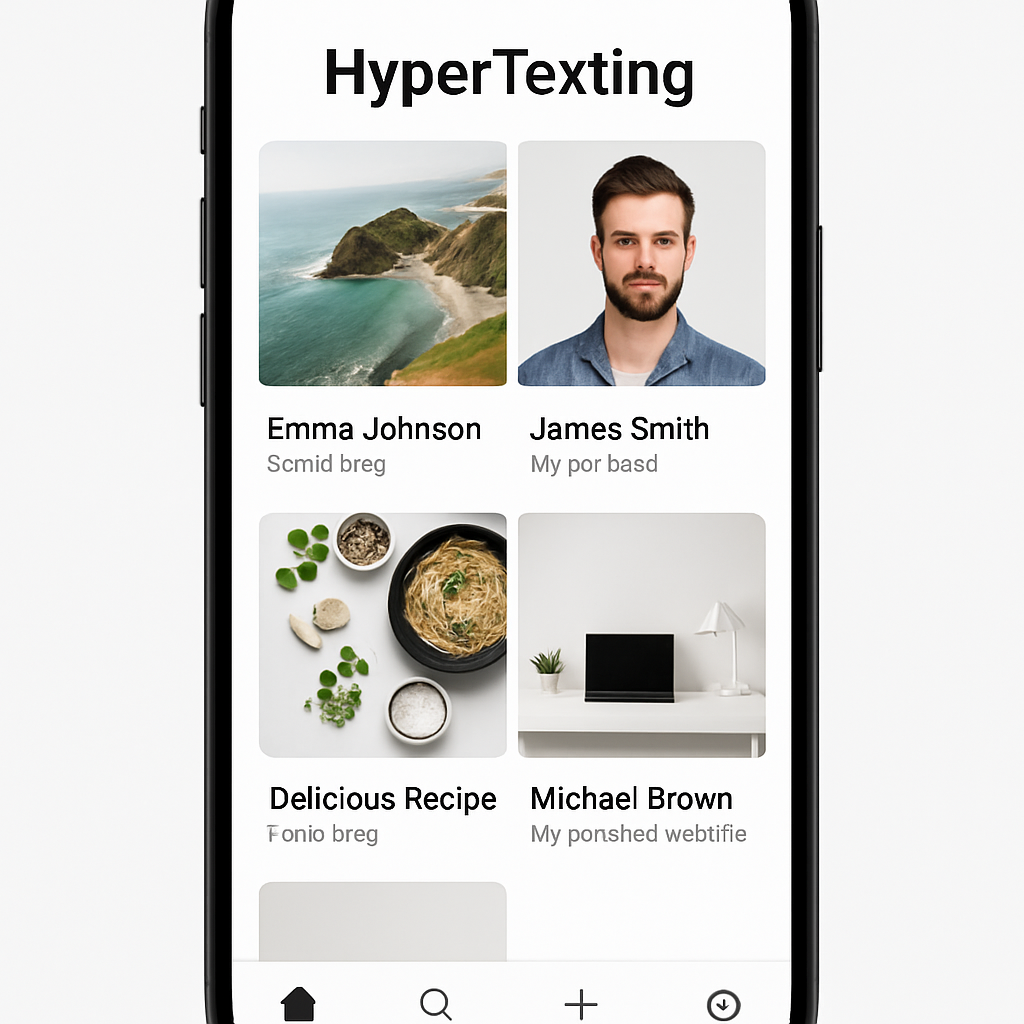
In an era where social media platforms dominate online interactions, a new iOS application, HyperTexting, seeks to reimagine the way users engage with the open web. Developed by tech veteran Caleb Hailey, HyperTexting offers a streamlined, algorithm-free experience that mirrors the familiar scrollable feeds of platforms like Facebook and X, but with a focus on personal websites, blogs, and news outlets.
Hailey, reflecting on the internet’s early days, recalls a time when individuals owned and updated their personal domains. The advent of social media shifted this dynamic, making it simpler to post on centralized platforms than to maintain individual websites. HyperTexting aims to bridge this gap by providing a user-friendly interface where users can follow various web sources and view their content in a cohesive, social media-like feed.
The app’s design incorporates elements such as user profiles, follow buttons, and interactive features like liking and commenting, all tailored to enhance the browsing experience. Users can effortlessly subscribe to content from personal blogs, news sites, and newsletters, creating a personalized feed that updates in real-time.
Hailey’s inspiration for HyperTexting stemmed from his dissatisfaction with the evolving nature of platforms like Twitter. He observed that algorithmic timelines and the de-ranking of external links diminished the platform’s utility for discovering and sharing content. Additionally, the rise of “doom scrolling” during the COVID-19 pandemic highlighted the negative impact of traditional social media on users’ well-being.
Seeking an alternative, Hailey revisited RSS news readers like NetNewsWire to stay informed. This experience, combined with his desire to simplify web publishing, led to the creation of HyperTexting. The app leverages RSS technology to aggregate content but presents it in a modern, accessible format that appeals to a broader audience.
HyperTexting not only facilitates content consumption but also empowers users to publish their own material. The app includes features that allow individuals to update their personal websites as easily as sending a text message, encouraging a return to the decentralized ethos of the early internet.
As the digital landscape continues to evolve, HyperTexting represents a shift towards reclaiming control over online content. By combining the convenience of social media interfaces with the openness of the web, it offers a refreshing alternative for users seeking a more authentic and personalized online experience.
In the broader context, HyperTexting’s emergence aligns with a growing trend of applications aiming to unify and simplify access to decentralized web content. Similar initiatives, such as Tapestry and Surf, have sought to aggregate feeds from various open social networks into cohesive user experiences. HyperTexting distinguishes itself by focusing on personal websites and blogs, emphasizing individual content creation and consumption without the influence of algorithms.
As users become increasingly aware of the limitations and drawbacks of traditional social media platforms, applications like HyperTexting offer a compelling vision for the future of online interaction—one that prioritizes user control, authenticity, and a return to the foundational principles of the open web.