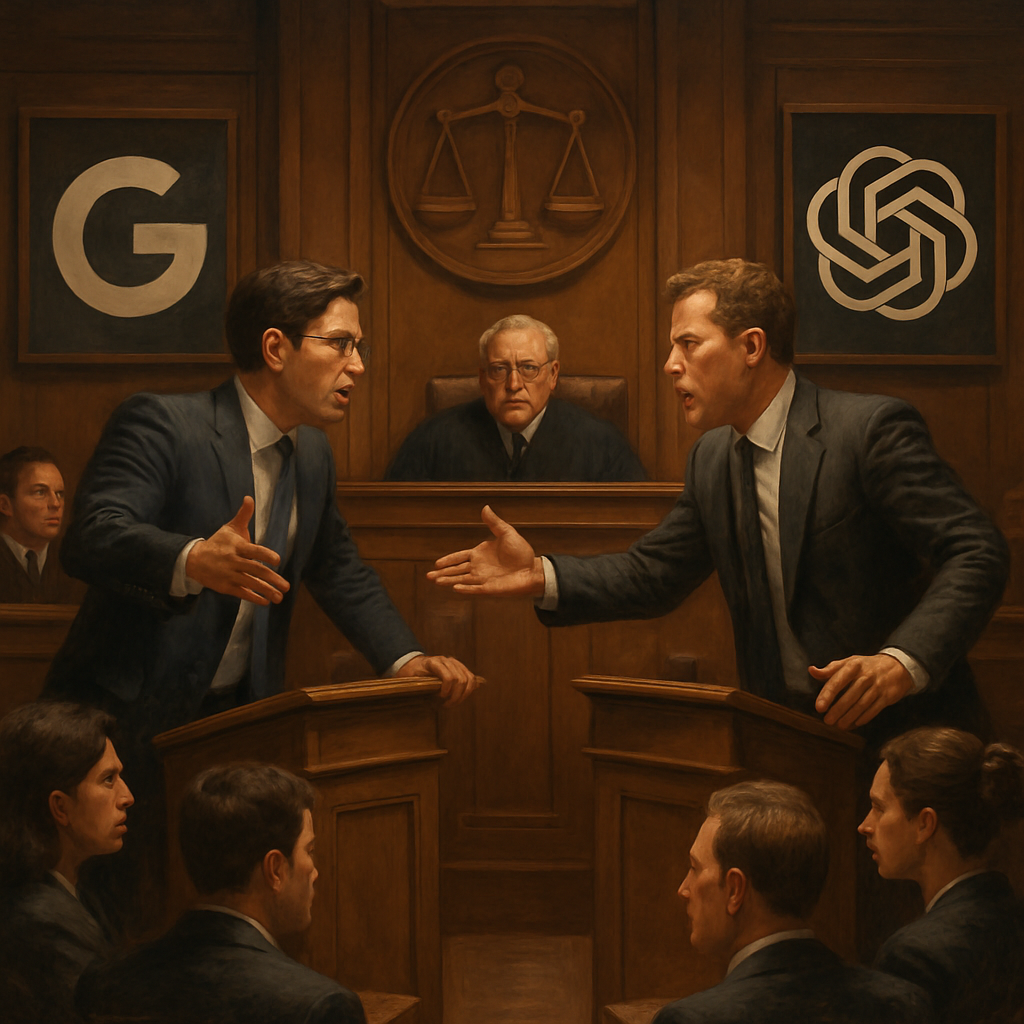
OpenAI has formally requested the dismissal of Apple’s lawsuit, which accuses the artificial intelligence company of misappropriating trade secrets. OpenAI contends that Apple’s allegations are unfounded and misrepresent the actions of its employees.
The legal dispute centers on two former Apple employees now associated with OpenAI: Tang Yew Tan and Chang Liu. Tan, who served as Apple’s Vice President of Product Design for the iPhone and Apple Watch over a 24-year tenure, co-founded io Products with former Apple design chief Jony Ive. io Products merged with OpenAI in July 2025. OpenAI asserts that Tan adhered to standard industry recruitment practices when engaging with Apple staff.
Regarding Liu, Apple alleges that he accessed confidential hardware files by exploiting an authentication bug. OpenAI counters that Liu was merely assisting a former Apple colleague in locating information for their work. To support this claim, OpenAI has released excerpts of text messages that it believes substantiate Liu’s actions as benign.
OpenAI’s motion further argues that Apple has failed to clearly define what constitutes a protectable trade secret in this context. The company emphasizes that it has no interest in Apple’s confidential information, stating that it is developing products that are entirely new and distinct from Apple’s offerings.
Additionally, OpenAI challenges the foundation of Apple’s case, suggesting that Apple’s own security practices contributed to the situation. The company points out that Apple’s policies, such as allowing employees to use personal iCloud accounts for work and subsequently reviewing personal messages on company devices, may have inadvertently granted former employees residual system access. OpenAI posits that these practices, rather than any coordinated effort to steal information, are at the heart of the issue.
The motion also addresses a previous communication breakdown between the two companies. Apple claimed that OpenAI failed to respond to outreach efforts in February and that discussions had taken place with OpenAI’s general counsel. OpenAI refutes these claims, attributing the miscommunication to Apple’s external counsel mistakenly contacting the wrong individual due to similar surnames.
This legal maneuver follows Apple’s lawsuit filed in July, which accuses OpenAI of orchestrating a scheme to extract confidential product information from job candidates and new hires. The outcome of this case could have significant implications for the competitive dynamics between Apple and OpenAI, particularly as both companies vie for leadership in the rapidly evolving artificial intelligence sector.
As the legal proceedings unfold, the tech industry will be closely monitoring the case for insights into how companies protect their intellectual property and manage talent acquisition in an era where AI development is paramount. The resolution of this dispute may set important precedents for how trade secret claims are handled in the technology sector.