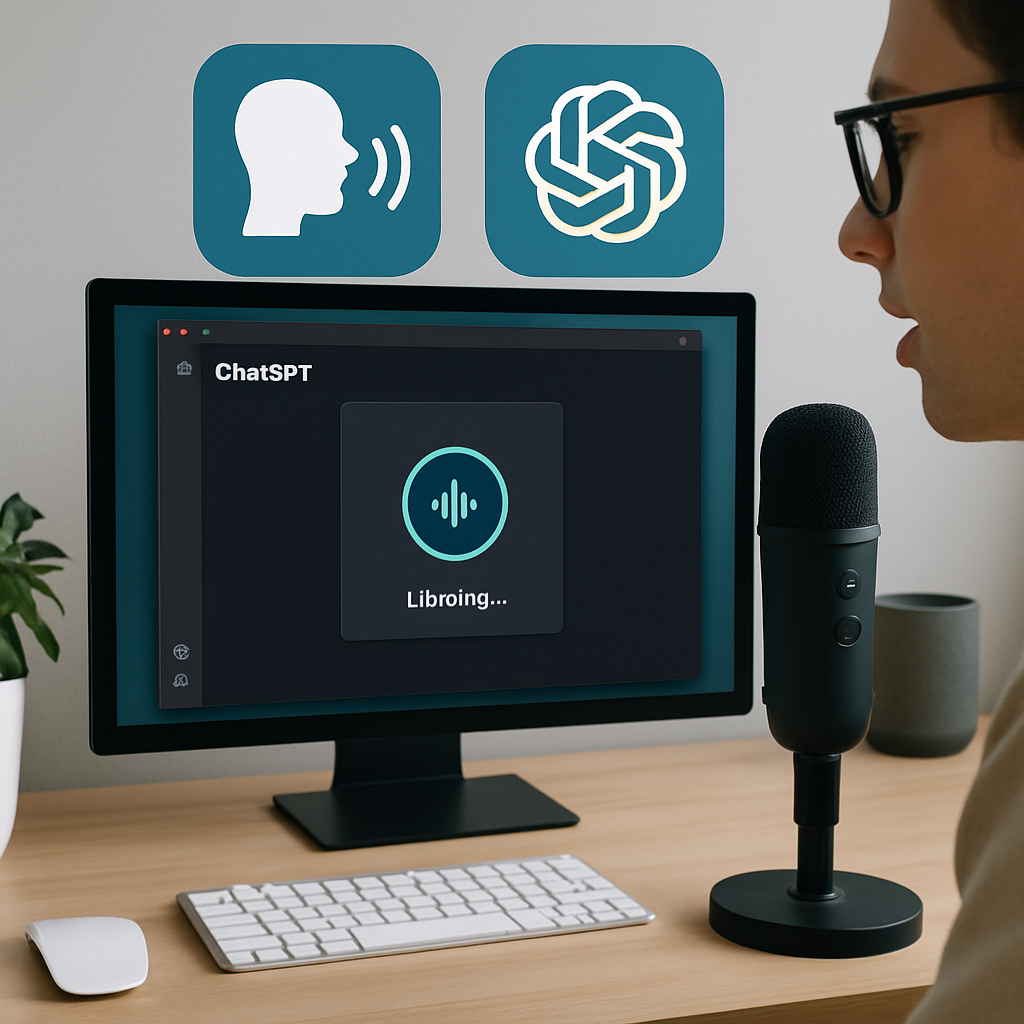
OpenAI has enhanced its ChatGPT desktop application by integrating ChatGPT Voice, enabling users to interact with the AI through voice commands. This update allows for more natural and efficient control over AI agents and task execution directly from the desktop environment.
The voice functionality is powered by OpenAI’s latest voice model family, ChatGPT-Live, which was introduced earlier this month. This advancement facilitates seamless voice interactions, allowing users to dictate complex commands and receive immediate responses, streamlining workflows and enhancing productivity.
ChatGPT Voice is compatible with both ChatGPT Work and Codex, extending its utility across various applications. Notably, on macOS systems, the integration of Appshots permits the application to access on-screen content, including alt-text, providing a more comprehensive user experience.
Initially, the voice feature was available on mobile platforms, offering smoother conversations with improved interruption handling. However, it lacked the capability to perform actions on smartphones. The recent desktop update addresses this limitation by enabling users to issue intricate commands involving multiple steps and to interact dynamically when ChatGPT requires further input.
In a demonstration, OpenAI showcased a developer utilizing ChatGPT Voice to initiate a new thread, create a pull request, and diagnose a bug’s root cause through a single voice command. This exemplifies the potential of voice interactions to simplify complex tasks and enhance efficiency.
Furthermore, users can access ChatGPT Voice in Codex via the iOS app through remote access, expanding the feature’s accessibility and versatility across different platforms.
OpenAI’s integration of voice control into the ChatGPT desktop app signifies a significant advancement in human-computer interaction. By enabling users to perform complex tasks through natural language commands, this feature has the potential to revolutionize workflows, particularly for developers and professionals seeking more intuitive and efficient ways to interact with AI systems. As voice interfaces continue to evolve, they are likely to become an integral component of digital productivity tools.