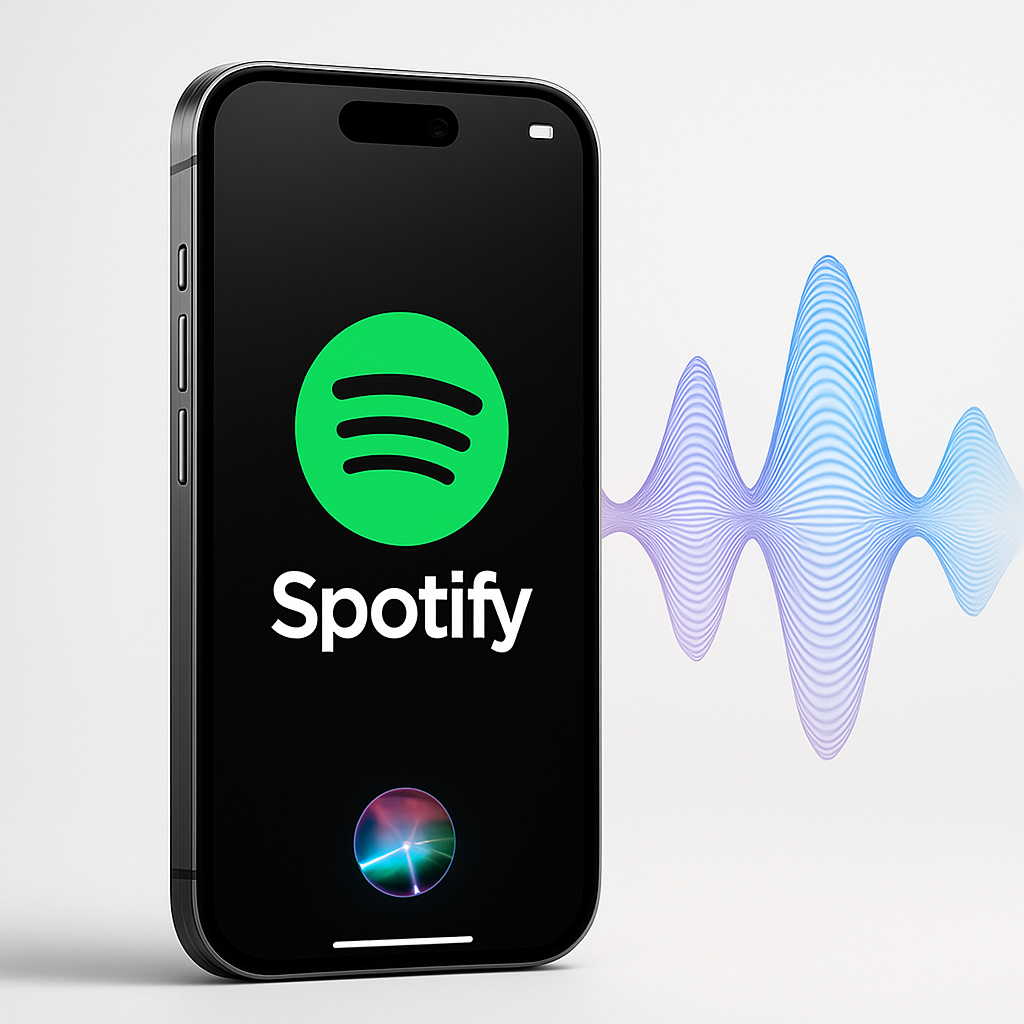
Users with iPhones running iOS 27 can now summon Siri to play content from Spotify without explicitly saying “on Spotify” — a change designed to streamline voice commands and make hands-free listening feel more intuitive.
Previously, whenever you asked Siri to play a song, album, podcast, or any Spotify feature like “Play My DJ,” you had to include “on Spotify” to ensure the request reached the right app. Now, if you’ve been using Spotify frequently, Siri will start routing musical requests to it automatically — as long as you’ve enabled Apple Intelligence in Settings.
Who Gets This Feature & Where
This update is available globally to users who have an iPhone 15 Pro or later running iOS 27, except in the EU. The exclusion stems from regulatory rules that affect how voice-assistant defaults are managed in Europe. For those outside the EU, once Apple Intelligence is active, Spotify can become your default for audio commands without further qualification.
What You Can Ask Siri Now
Removal of the need to say “on Spotify” opens up many commands. Users can now request a specific track, album, audiobook or podcast. Broader moods or activity-based prompts like “play workout music” work too. Spotify’s recommendation tools, your existing library search, podcast resume, and the newer AI-powered Prompted Playlist feature all are covered. The idea is to reduce friction so voice requests focus on what you want instead of how to phrase them.
Spotify characterizes the change as a leap toward more seamless listening. By recognizing your default music app preference, Siri shifts control implicitly rather than making every interaction explicitly command-heavy. In effect, users spend less time defining the transport and more time enjoying the content.
This shift underscores how Apple’s voice assistant platform is gradually opening up. Non-Apple services like Spotify gaining smoother integration hints at a changing ecosystem where app defaults and assistant control matter more for user experience.
What this means, what to watch. For users, it’s a win: fewer verbal hurdles and a more natural voice interaction. But it raises questions about discovery for newer services and how Siri manages conflicts when users switch frequently between apps. Also worth watching is how EU regulations might force Apple to behave differently in domains where regulators insist on stricter choice and transparency. This change is part of a broader trend toward more flexible assistant defaults — Spotify benefiting now may just be the beginning.