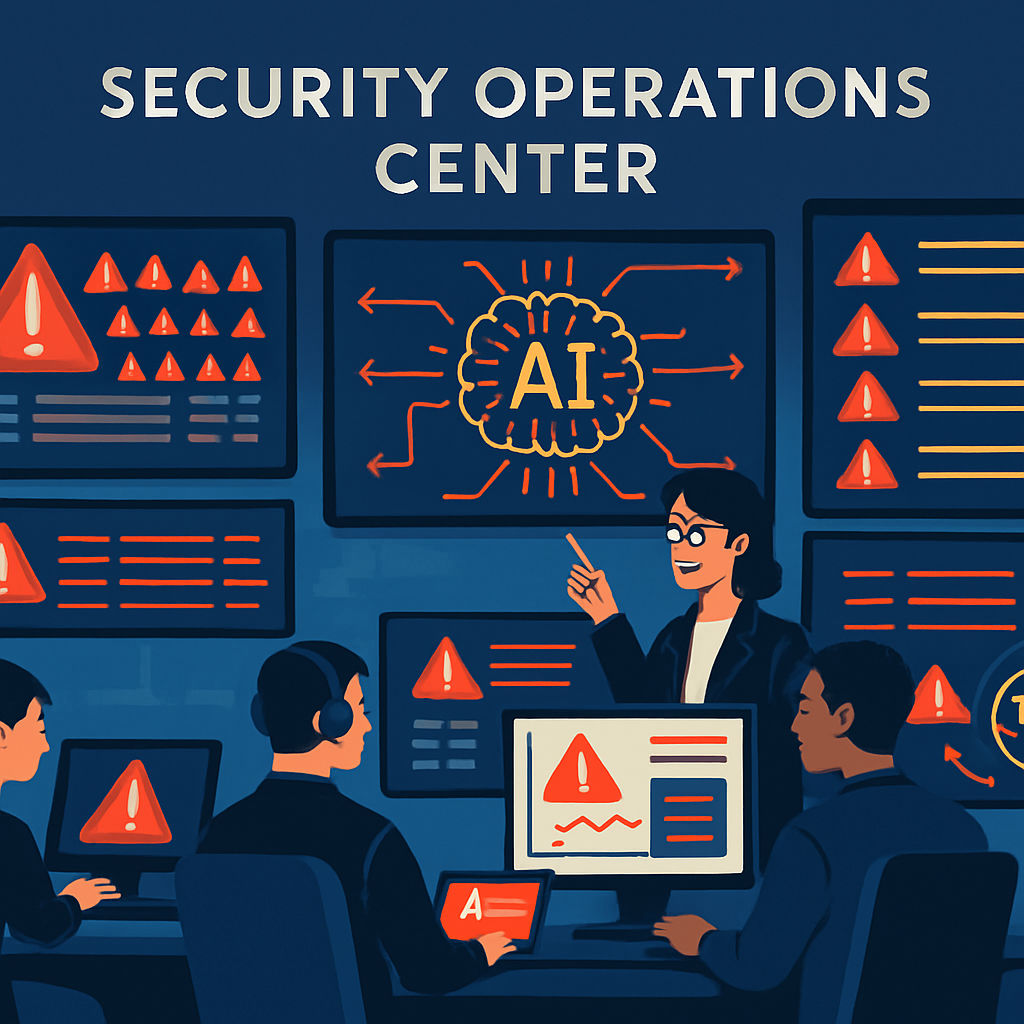
Artificial Intelligence has moved from fringe to front-line in security operations. A recent report based on a survey of over 250 cybersecurity professionals reveals that 40% of teams now rely on AI daily, another 56% are experimenting with its use, and only 4% say they won’t be adopting it anytime soon. That makes AI a central tool in defending digital assets rather than a speculative add-on.
Overwhelmed by Alerts, Transformed by AI
Security teams are being buried under alerts. On average, daily alert loads hover around 100 per team, with larger organizations facing up to 1,000. More than a quarter of teams juggle over 500 alerts a day. But team sizes haven’t scaled accordingly—many security operations centers operate with fewer than ten analysts. The result: Investigating a single alert takes about 75 minutes on average, and alerts often go unreviewed for almost an hour before someone engages. Given attackers can move laterally within networks in under 30 minutes, response delays are no longer a matter of efficiency—they’re a breach risk.
Alarmingly, about 28% of alerts are never addressed. Among surveyed teams, 60% admitted that an ignored or missed alert escalated into a serious issue like a data breach or system downtime. For a third of those, such incidents occurred three or more times in the past year. Many organizations—up to 40%—have even disabled certain alert types because of resource constraints. While tuning non-escalating rules can be sensible, wholesale rule shutoffs leave blind spots that attackers will exploit.
AI Both Threat and Shield
There’s dual use at play: just as defenders are turning toward AI, attackers are doing the same. More than half of respondents saw an uptick in AI-powered exploits over the past year, especially in sectors like finance and healthcare. Common attack vectors include AI-crafted phishing campaigns, deepfakes, credential stuffing, and AI-generated malware. The shift is pushing security teams to make AI not just an advantage, but a necessity.
Security leaders are reprioritizing. Defending AI systems and deploying AI tools now outranks traditional concerns like cloud and data protection. Key operational drivers include reducing detection and response time, improving alert coverage, doing more with the same headcount, and alleviating analyst burnout.
The Reality of AI in the Trenches
AI isn’t just rhetoric—it’s delivering real gains. Among teams using it, 72% reported slashing investigation time by at least 25%, roughly 25 minutes saved per alert. Improvements also include fewer false positives, better 24/7 monitoring, and more bandwidth for strategic work.
Despite that, in-house AI development is rocky. While 72% of AI users have built internal tools, nearly half of those projects were eventually abandoned, never reached production, or were replaced by commercial solutions. The time savings aren’t significantly better for DIY—investigation time reductions are similar to those achieved by teams using off-the-shelf tools.
Trust remains cautious. Seventy percent-plus believe AI’s conclusions often match human experts, yet 57% insist on human review for every AI decision before closing an alert. Most teams (44%) rely on AI to suggest responses; 30% allow it autonomy for low-risk remediation—but none grant fully unsupervised authority.
From Firefighting to Threat Hunting
Where AI reduces workloads, it’s freeing up space for threat hunting. About half of all teams conduct hunts regularly, finding malicious activity that escaped automated systems. Teams that hunt weekly or more have a hit rate near 49%, versus 8% for those that never hunt.
Team sizes aren’t shrinking. Sixty-six percent expect their staff size to stay the same or increase. The change is in roles: analysts are moving away from basic triage and toward roles like incident response, hunting, and testing defenses. This is consistent with applying AI to handle repetitive tasks, shifting humans into higher-impact work.
Privacy, Explainability & the Roadblocks Ahead
Regulation and transparency are major adoption hurdles. Forty-four percent of teams cite concerns about how AI models are trained, especially around data privacy. Forty-one percent struggle with explainability—knowing why the AI reached a given conclusion.
However, there are practices teams follow to mitigate risk: choosing vendors with clear privacy practices, ensuring single-tenant deployments, keeping audit trails, and limiting AI’s autonomy until it earns trust. The path forward is cautious but deliberate.
The overall trend is clear: AI has crossed the threshold—it’s now integral to security operations. Teams succeeding with AI do more than deploy it—they build trust, vet outputs, give it room to learn, and use the time saved not to rest but to hunt smarter.
Why It Matters and What To Watch
AI is no longer optional—security is being reshaped by automation, threat intelligence, and data-driven decisions. But adoption isn’t a silver bullet: privacy, explainability, human oversight, and ethical training of models are making or breaking success. Going forward, what sets leaders apart will be how they integrate AI responsibly and scale smartly—not just how fast they adopt it.