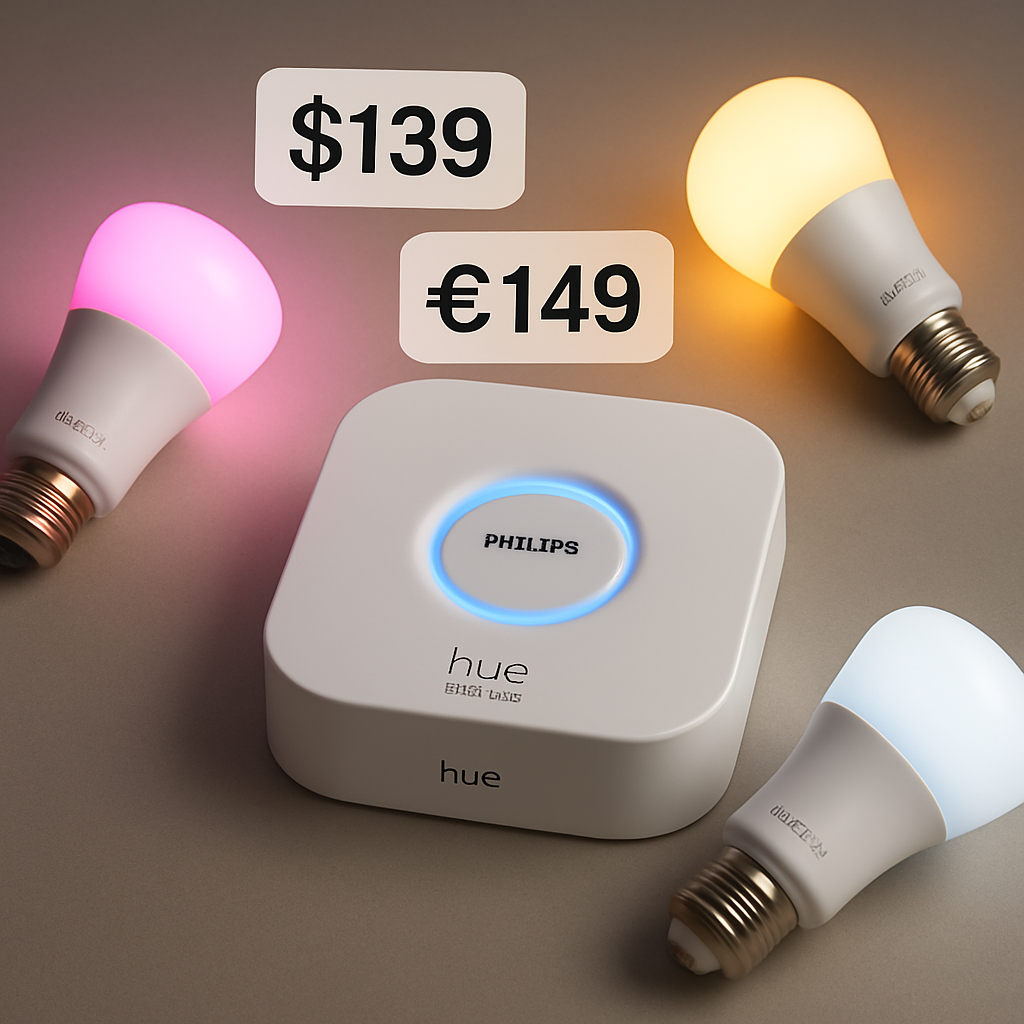
Philips has increased the price of its Hue Bridge Pro smart lighting hub dramatically around the world, with some regions seeing rises as high as 40 percent. In the U.S., the bridge now sells for about $139, up from last year’s $99 MSRP. This new price has already appeared on several major retailers and the official Hue Shop, with changes rolling out in mid to late August. The price inflation reflects rising costs of components, particularly memory—the Bridge Pro features 8GB of RAM.
Europe is facing even steeper increases. Initially priced at €89, the device is now listed at around €149 in many countries. Some shops are still showing the old price, suggesting the shift is still underway in parts of the region. Alongside the Bridge Pro, several other Hue products have also seen price bumps, typically an extra €10–20. For example, a four-pack of Hue Essential bulbs has moved from about €59 to €69.
What This Means for Owners and Buyers
For existing users of the Hue ecosystem, the sharp rise in the Bridge Pro’s price could affect upgrade plans. The Bridge Pro adds capabilities such as faster processing, more responsive performance in controlling large smart lighting setups, and the ability to handle more devices. While product specs haven’t changed, its higher hardware costs, particularly memory, are driving the cost. This isn’t unique to Philips Hue—memory and semiconductor components continue to climb in price, affecting hardware makers across the board.
Prospective buyers in markets with weaker currencies or higher import costs may feel the impact even more. Retailers not yet displaying the increased pricing might be clearing existing inventory, or waiting for updated shipping and customs costs to settle. Those considering purchase across borders should check local pricing to avoid surprises.
Broader Implications in Smart Home Hardware Pricing
The Hue Bridge Pro’s cost explosion connects to larger trends in smart home device pricing. Rising component costs—RAM, processors, sensors—plus logistical and regulatory pressures like shipping, tariffs, and local value taxes are squeezing profit margins. As manufacturers build in more memory, better wireless radios, and local processing, price increases appear nearly inevitable.
Increased prices could dampen adoption of premium smart home hubs, especially as consumers shop for value across open-source or lesser-known ecosystems. Competitive pressure may grow, pushing companies to find ways around rising costs, whether through efficiency, alternative components, or optimizing software to reduce hardware demands.
What to Watch: Keep an eye on whether other hubs and lighting manufacturers follow suit with similar price hikes. Also important is Philips’ response: whether bundle offerings, lower-spec options, or discounts during sales will cushion the impact. How consumers react, especially in price-sensitive markets, will be a key factor in shaping Philips’ strategy going forward.