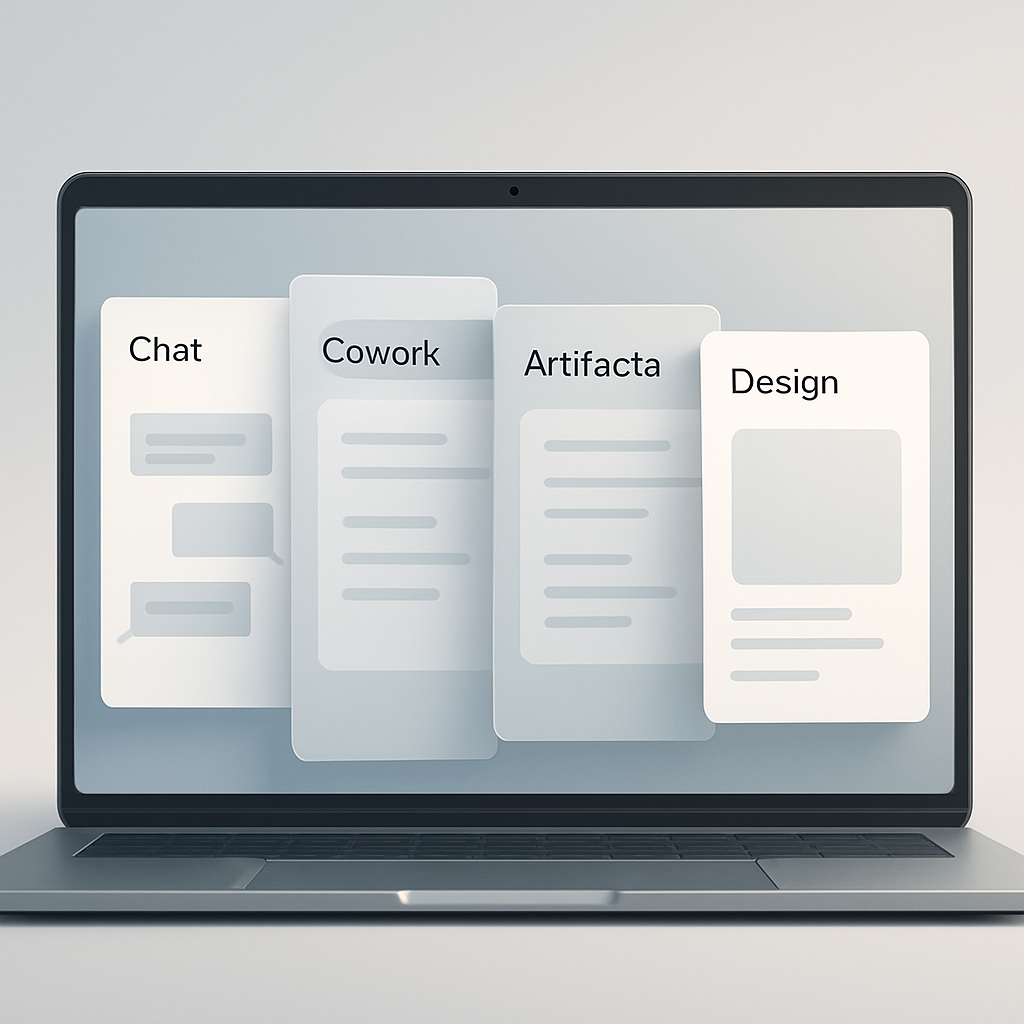
Anthropic has streamlined its AI tools by merging Claude Chat, Cowork, and Artifacts into a single, unified interface. The update reduces friction between navigating separate tabs, letting users launch into different workflows—chat, coworking, documents or interactive workspaces—all from the same place. It also integrates Claude Design, first revealed in April for crafting prototypes and web layouts, so it’s now accessible anywhere within the combined app. The goal is to make switching between feature sets seamless and avoid confusing design split across tabs.
New Presentation & Document Tools
Alongside the unified interface, Claude now includes robust tools for creating and editing both presentations and documents. Users on its Pro and Max tiers will be able to command the assistant to generate, modify, and present slides—and export them as PDF or PowerPoint files. The Docs tool allows users to build out sections, pose questions, and share documents via link with editing available even on phones. Tasks started on desktop can also be monitored on mobile, giving continuity across devices.
Rollout Plan and Memory Upgrade Backdrop
The features will first reach Claude’s Pro and Max users across web, desktop, and mobile over the coming weeks, with free and team-tier users getting access later. This move follows a recent enhancement to Cowork’s memory layer, which boosts how well Claude retains user context across different conversations.
By embedding chat, coworking, and workspace modes into one front-end, Claude now routes requests dynamically—no more guessing which tool to pick for each task. Everything users throw at Claude gets steered appropriately behind the scenes, under a single unified layout.
What this means is less cognitive load for users: instead of juggling tabs and windows, you get one place where all the core tools live, dynamically adapting based on what you need. For teams or creators who switch between designing prototypes, writing documents, hashing out ideas, or building shared context, this is a meaningful step toward fluency.
Why it matters: As AI assistants multiply in capability, interface fragmentation is emerging as a major UX friction. Anthropic’s consolidation mirrors moves by competitors trying to streamline their feature sets—think of how other assistants stitch together chat, workspace, memory, and doc tools. The memory upgrade feeding into this suggests the company isn’t just tidying design—it’s reinforcing context awareness, which is key to usefulness. So for power users of Claude—and anyone watching the AI assistant space—this design integration may set a new baseline.