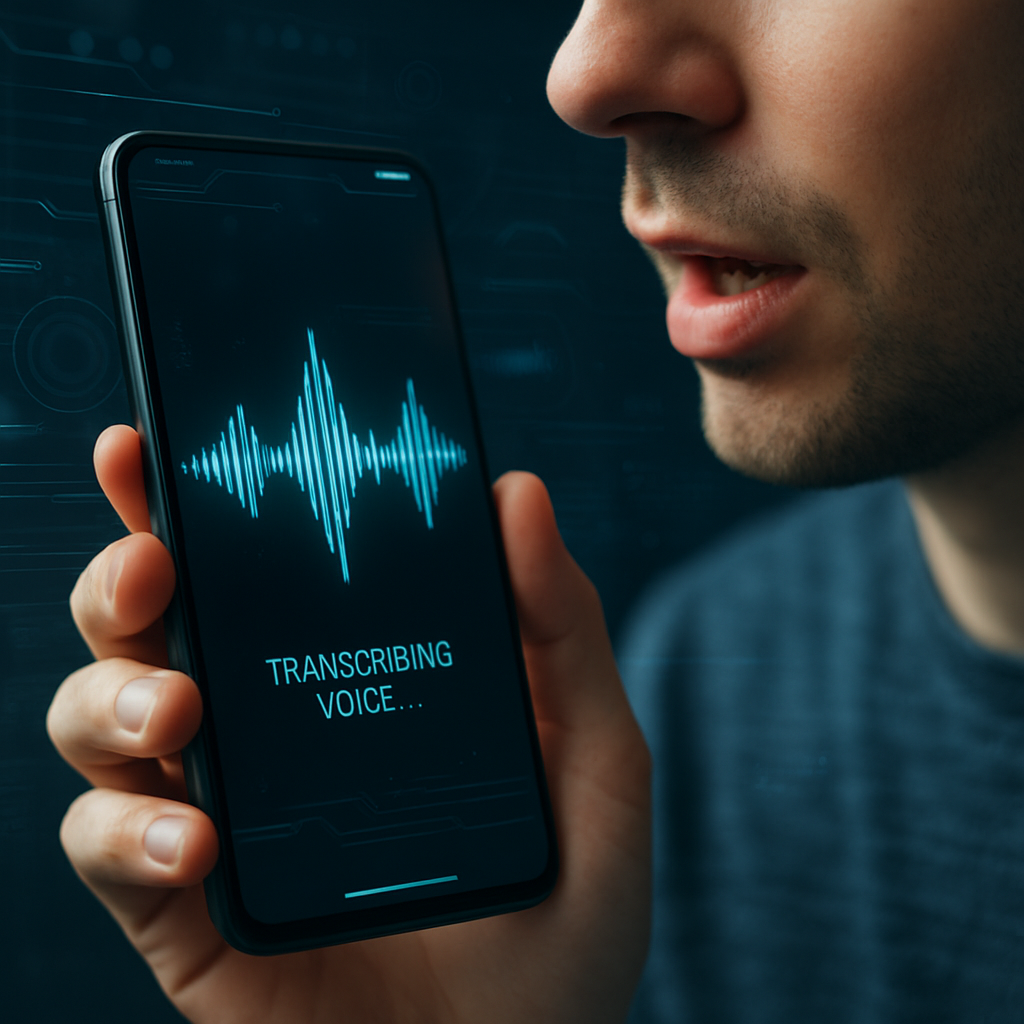
The way we interact with smartphones is shifting. Instead of tapping away at virtual keyboards, more people are speaking their commands—dictating texts, dictating documents, even dictating actions. This springs from big strides in voice-to-text AI technology, together with new tools that don’t just transcribe—they understand, format, and perform tasks based on what’s said.
What’s fueling the comeback of conversational phones
There’s been a resurgence of voice input tools driven by a trio of recent developments. First: AI models are now vastly more capable of real-time transcription—separating filler words, retaining meaning, and restructuring sentences into complex formats like tables, lists, or emails. Second: more apps are embracing dictation and transcription as core features. Free basic tiers offer a glimpse of what can be done, while premium subscriptions ($8–$12/month) unlock smoother, more powerful experiences. Third: big-name players are entering the field in ambitious ways.
OpenAI’s recent GPT-Live model is one such entrant—built for nearly instantaneous two-way voice interaction and layered on a multimodal large language model. Around the same time, Google has introduced Gemini 3.5 Transcribe. It aims to beat GPT-Live in both speed and accuracy, and for those using the Pixel 11 phone, its voice transcription tools are already built into Rambler. GoogleVision’s work is extending much of this into more than just transcription—voice features are being blended into Google Docs, Sheets, Mac and mobile workflows via Gemini Live and Spark, and via APIs for third-party apps, too.
The limits and opportunities of the speaking interface
Despite the momentum, voice input still isn’t universally embraced. Some people find typing allows for more control, reflection, and privacy. Others dislike the idea of being the person talking to their phone in public. But there’s strong upside too—especially for individuals with motor impairments. For them, voice models are almost life-changing in terms of accessibility.
Then there’s productivity. Voice tools today don’t just record; they interpret. A user might tell their phone to write an email, attach a photo from their camera roll, or drop in a map with directions—all in one command. These workflows are enabled by more intelligent AI that understands structure, context, and intent.
Where we go from here
If this trend continues, voice could become a primary input method for many daily tasks—not just messaging, but document editing, task management, maybe even web browsing. Developers integrating voice-input APIs could bring conversational features into apps we don’t yet imagine. Hardware makers might lean harder into microphones and noise cancellation. And privacy concerns will get real: which devices record, how AI handles sensitive voice data, who has access.
This resurgence of voice-forward interaction isn’t about replacing keyboards entirely—rather, it’s about offering another natural, accessible, powerful way to use your phone. Some will switch entirely, others will mix typing and voice. Either way, the era of silently tapping screens might be fading.
Why it matters: As voice tools mature, they’re reshaping what it means to use a phone. These aren’t just niche tools for dictation—they’re becoming full-fledged interfaces. We’ll be watching closely how users adapt, how devices evolve, and how far this voice revolution goes.