Three months after Elon Musk announced Grok would produce a full-length, “historically accurate” movie version of Homer’s The Odyssey, the AI brand has dropped seven minutes from what it’s now calling “Episode 1 of our Odyssey series.” This marks the first public glimpse of the project—an ambitious blend of AI, myth, and grand cinematic scale.
The Preview: What We See
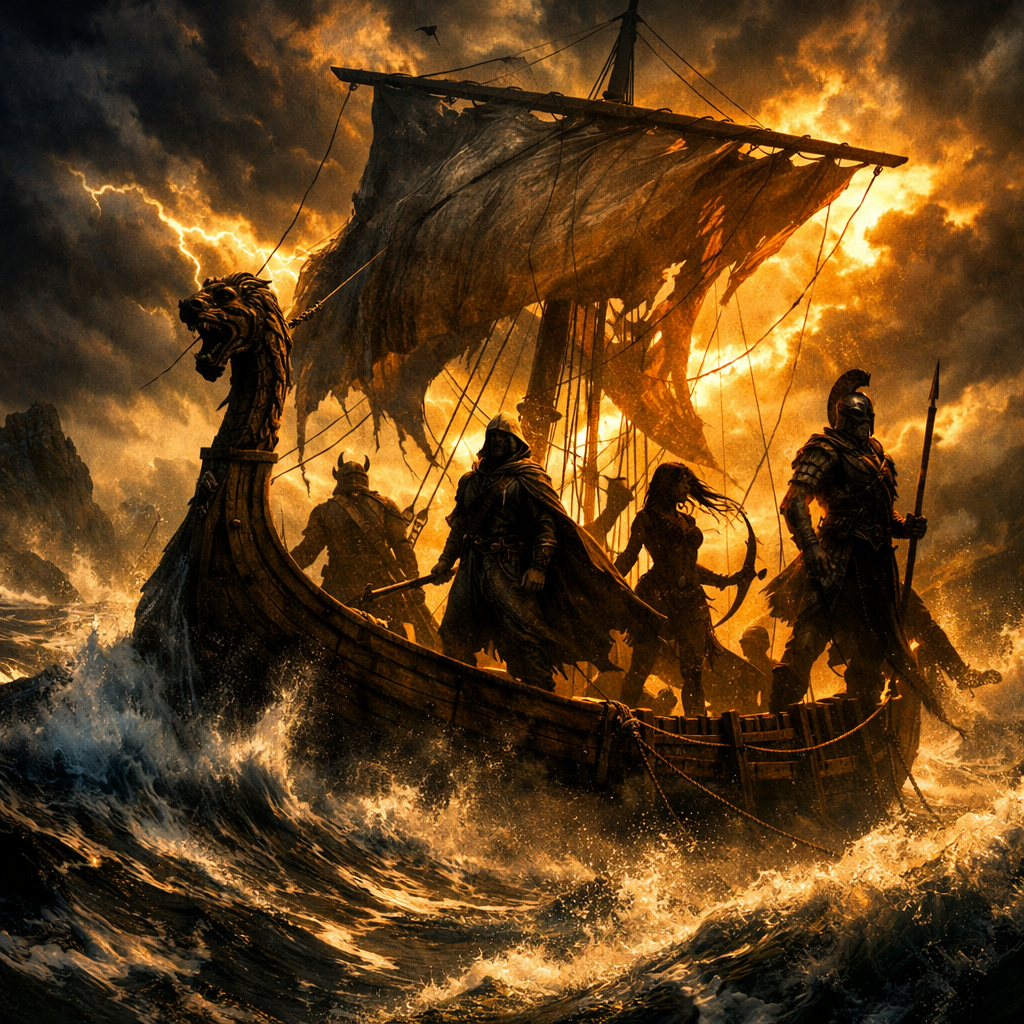
The released footage reveals a richly textured world: characters sailing across storm-tossed seas, a narrator with a British accent weaving mythic narration, and bearded figures delivering lines in rugged, almost epic tones. The visuals show Grok pushing close to photorealism, producing scenery and emotional cues that occasionally feel like watching live actors against a real-sea horizon. Still, the acting and dialogue strike a tone that’s more stilted than poetic, with character delivery often lacking emotional weight.
Despite visual impressiveness, the preview draws criticism for what it lacks: artistry, character depth, and emotional engagement. The voiceover is heavy with exposition, offering backstory that stretches past the visual moment, while characters shout through lines that feel more mechanical than moving. Even for fans of epic storytelling, the first seven minutes struggle to establish stakes or pull viewers in.
The Genesis & Controversy
This version of The Odyssey is a product of collaboration between Grok, Wonder Studios, and director Dev Walker. The project doesn’t stand alone—it’s entering a creative space already occupied by Christopher Nolan’s recent film adaptation. Musk has criticized Nolan’s version for casting non-white and transgender actors, adding a political angle to Grok’s enterprise. In contrast, Grok’s cast appears uniform in skin tone, fitting a more traditionalist vision. The digital narrator’s accent and stylization evoke familiar tropes from fantasy games and Hollywood blockbusters of the last few decades.
While Nolan’s take leveraged massive global shoots, thousands of crew members, and lush practical effects, Grok is removing much of that. AI‐generation allows swift, synthetic creation of entire scenes without the logistical complexity of traditional filmmaking. But with that come trade-offs: texture, depth, emotional resonance, and nuance can slip through the cracks. The preview seems almost tactile in some shots, yet distant and hollow in others.
Why It Matters
This is more than just another AI experiment. Grok’s project is staking a claim in a future where AI studios may reinterpret classics on digital terms—rapidly, scalably, and with very different values around casting, tone, and visual design. It pushes an idea of creative control rooted in a different set of priorities: uniform aesthetics, accelerated timelines, and synthetic authenticity over lived experience.
For Musk, media control and production have long been intertwined with his ventures—from SpaceX to X (formerly Twitter). Grok’s Odyssey adds to his portfolio of projects defining how AI shapes mass media. Its release ignites questions about representation, historical fidelity, and the emotional trade-offs of algorithmic filmmaking.
Where will this go next? If the remainder of the series holds steady to the vision in these seven minutes, its audience may judge it more on concept than connection. A full release will test whether Grok’s AI creation can offer resonance—not just spectacle. Stay tuned for the divergence between myth rewritten and myth felt.
Analytically, Grok’s preview exposes the growing tension in AI-driven storytelling: between technical impressiveness and emotional meaning. As AI tools let makers remake the epic, retaining one’s humanity—through art, character, voice—may prove the hardest chapter.