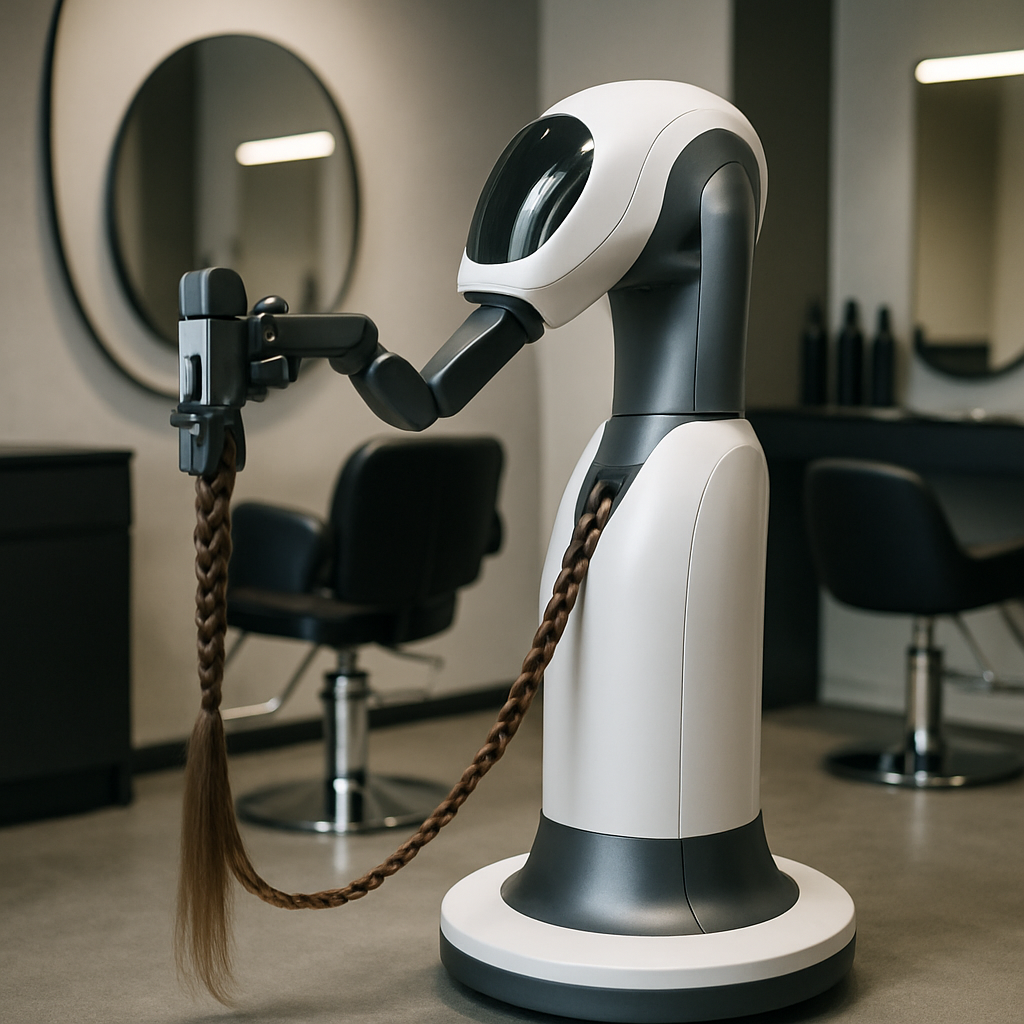
Hair braiding has been a cherished tradition for Black women, often requiring extensive time commitments, sometimes up to 12 hours per session. Recognizing the need for innovation in this space, Yinka Ogunbiyi, an engineer with a Harvard MS and MBA, founded HaloBraid to streamline the braiding process through robotics.
During the COVID-19 pandemic, Ogunbiyi attempted to braid her own hair, a process that took her four days. This experience highlighted the inefficiencies in traditional braiding methods and inspired her to develop a technological solution. HaloBraid’s inaugural device, set to launch later this year, acts as an assistant to professional stylists by completing braids in seconds after the stylist initiates the process. The device is designed to be gentle on hair and is capable of finishing both knotless and box braids.
To support this venture, HaloBraid has secured $7 million in seed funding, led by Seven Seven Six, the venture firm founded by Reddit co-founder Alexis Ohanian. Ohanian, familiar with the lengthy braiding process through personal experience, sees significant market potential for a device that can expedite braiding sessions. He draws parallels to how companies like Dyson have revolutionized hair styling tools, noting the untapped opportunities in technology tailored for textured hair.
Ogunbiyi’s research indicates that approximately 8 billion hours are spent annually on hair braiding. In a survey of 2,000 individuals, 95% expressed a willingness to braid their hair more frequently if the process were faster. Additionally, stylists often endure long hours, leading to health issues such as carpal tunnel syndrome and arthritis. By reducing the time required for braiding, HaloBraid aims to alleviate these challenges for both clients and stylists.
While specific details about the device remain under wraps due to pending patents, the company plans to use the new funding for product development, manufacturing, and establishing salon partnerships. The hair-braiding device market currently has few competitors, with Braidiant being a notable exception. Ogunbiyi acknowledges the complexities involved in automating hair braiding, citing hair’s intricate nature as a challenging substrate to manipulate. To overcome these challenges, she has drawn methodologies from various industries, including material science and inkjet printing.
Looking ahead, HaloBraid envisions expanding its product line to include devices that can undo braids, addressing another time-consuming aspect of hair care. Ogunbiyi emphasizes the company’s broader mission to develop innovative technologies that make textured hair care faster, easier, more comfortable, and more enjoyable.
HaloBraid’s emergence signifies a pivotal moment in the intersection of technology and personal care. By addressing a longstanding challenge with a robotic solution, the company not only aims to enhance efficiency but also to improve the overall experience for clients and stylists alike. As the product approaches its launch, it will be interesting to observe how the market responds to this innovative approach to hair braiding.