Apple’s newly released iPhone Duo is showing a recurring screen flaw. Shortly after its debut, users observed cracks forming along the device’s fold line that often grow horizontally toward the edges. These split-screen patterns aren’t isolated incidents—they appear wherever the hinge is under strain. An internals review now points toward hinge damage as the likely culprit.
What Investigation Reveals
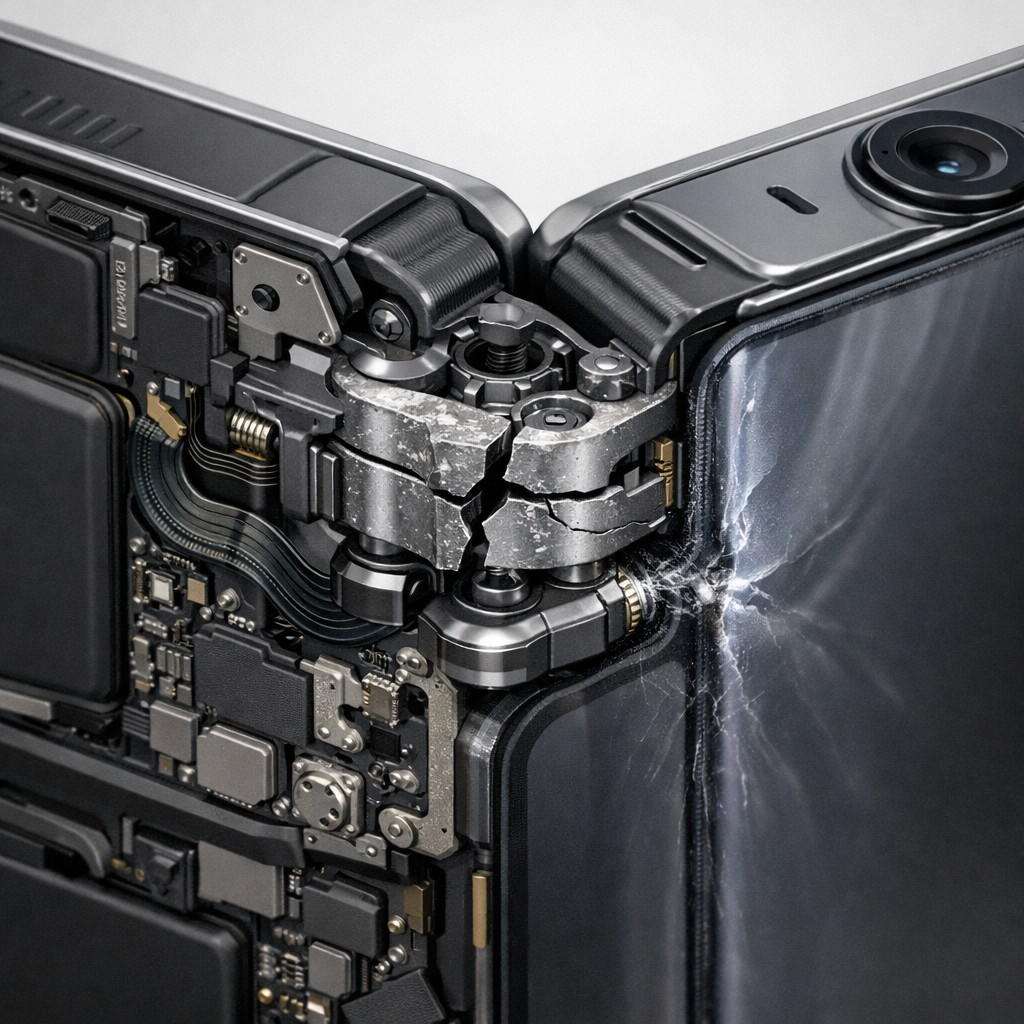
Independent tech testers noticed a hinge element connecting to the upper support plate inside the Duo seemed to fracture along the same axis where the external screen crack begins. During one test, the device wouldn’t close properly, then gave a loud snap when reopened from a partially shut position. Disassembly afterward revealed a thin hinge component had sheared—slightly thinner than the surrounding hardware—causing an internal impact mark on the display’s underside which likely triggered the visible crack. Crush marks on nearby pieces suggest the hinge didn’t mesh correctly before it broke, making contact with the screen.
How Widespread is the Issue?
Despite dramatic clips online, including bend tests from influencers, the hinge‐induced failures appear still rare in actual field reports. A survey of flagship Apple Genius Bar locations found virtually no customer complaints of screen cracks caused by hinge failure—just a single confirmed case across seven major stores. That suggests durability in official usage remains broadly intact, even if internet footage makes the damage seem more universal.
The visible crack damage always seems to begin at the fold, which matches the internal fracture location. Users are warned not to intentionally stress or reverse the hinge, especially beyond its designed range, as such mechanical abuse may accelerate failures—in tests or real life.
Given Apple’s warranty terms, a damage claim might be denied if the hinge is intentionally overstrained or forced backward. But for those with genuine failures, it’s worth reporting them to Apple even if social media chatter outpaces tangible evidence at this stage.
What this means going forward is clear: foldable design imposes new engineering challenges. The hinge region is often the weakest structural point, especially when components are thinner for aesthetic or weight reasons. Apple’s mechanical design must balance sleekness and durability—a damaged hinge underlines that even small design trade-offs can have outsized effects on reliability. What to watch for: whether Apple issues a fix, redesigns the hinge in future batches, or changes repair policy for this flaw. Buyers should test their units carefully and document any issues early.