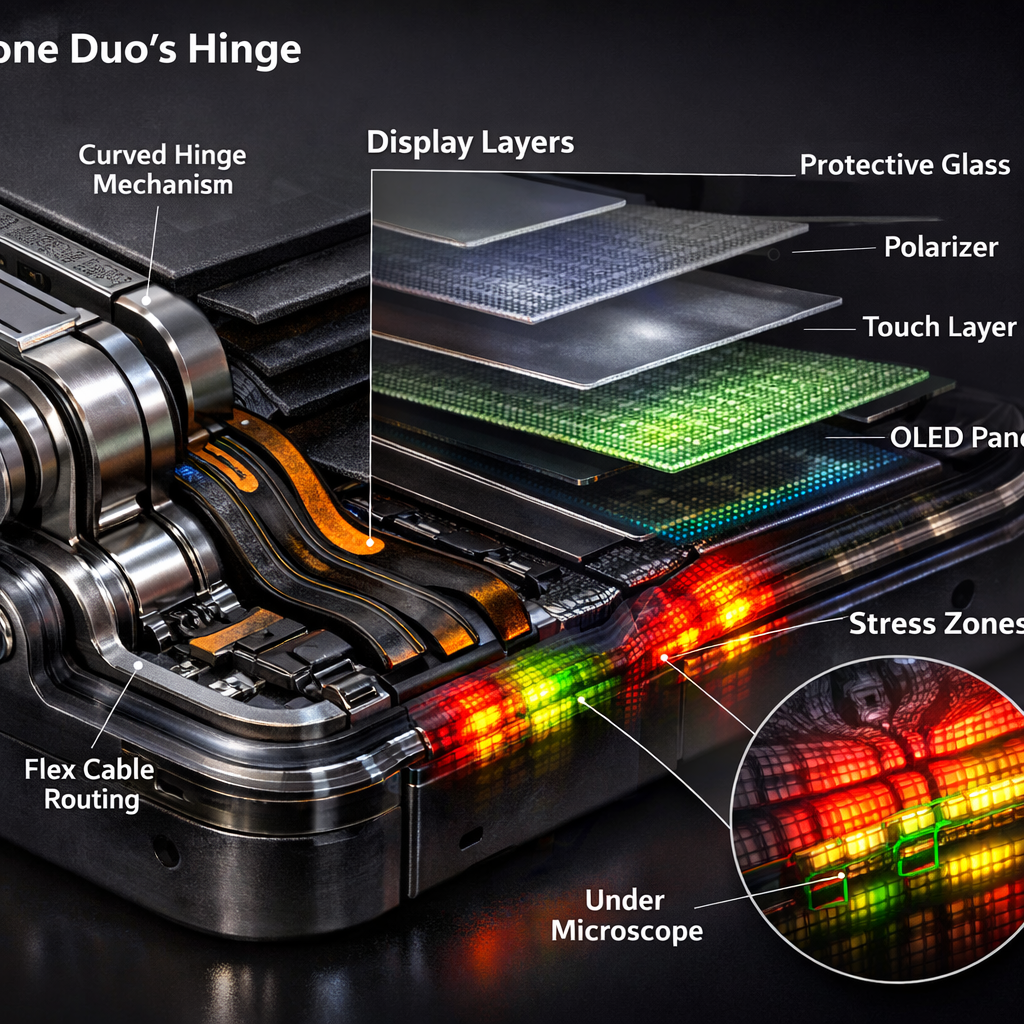
Repair experts at iFixit have torn down Apple’s new iPhone Duo and uncovered clues that may explain why displays on early units are cracking. While many internal components are well built, the hinge assembly and inner screen stand out as key weak spots. Here’s what the hands-on investigation reveals.
Dust intrusion and hinge stress under scrutiny
The iPhone Duo carries an IP68 rating for both water and dust resistance, and iFixit’s lab put it through puppet-dust testing. They found dust settled in external areas such as the USB-C port, speaker mesh, and bezel. Internally, though, the device fared well, with few particles breaching the chassis. But the hinge told a different story: dust accumulated here enough to cause a crunch sound when folding. While dusty hinges aren’t unheard of—similar vulnerabilities were found in the Galaxy Z Fold8 and Pixel 11 Pro Fold—the Duo still collected less debris than those. That said, the findings suggest caution if using the device in sandy or beachy settings.
Repairability: strong steps forward with caveats
Apple’s nano-texture cover layer is designed to be removable so service centers can replace it inexpensively. iFixit noted that the outer display is similarly easy to remove—good news given how many internal repairs require removing it. Inside, there’s a nice surprise: batteries are attached using the same smart adhesive system first introduced with the iPhone 16 series. Applying a small electrical charge loosens the adhesive, enabling easier battery removal—a highlight for repair continuity. But while the outer components promise accessibility, replacing the inner display or dealing with the hinge will be a tougher, more adhesive-intensive task.
Hinge design tied to reported display failures
Apple’s inner display stacks ten layers under the surface. Cracks and display issues seem to cluster around the transitions in the hinge assembly—particularly near the path where the flex cable passes and where multiple edges and parts meet. These transition points may impose uneven stress as the phone is folded, especially in spots where curved hinge rails might lift above flat supports as the device closes. According to iFixit’s 3D hinge model based on teardown footage, CT scans, and patents, these areas of weakness line up closely with fault patterns reported by users.
In terms of repair rating, iFixit assigned the iPhone Duo a provisional 5 out of 10. That beats the Galaxy Z Fold8 and Pixel 11 Pro Fold, which both scored 4. The modern logic board design—unstacked, like those in older iPhones—helps with slimness but also simplifies certain repairs. However, the inner display and hinge score big negative points for fragility and repair complexity, respectively.
This isn’t just another foldable teardown. It adds solid evidence behind ongoing reports of screen fractures—often along the hinge—and highlights where Apple may need to reinforce the mechanics. Users experiencing damage might expect AppleCare+ or post-warranty repair options, but structural design could still be the root issue.
What this means, and what to look out for: The iPhone Duo makes strides in repairability and durability, especially with battery removal and modular outer layers. But hinge pressure and flex cable routing appear to be design decisions that could render its inner screen vulnerable. Moving forward, Apple will likely need to address stress points to avoid repeat reports of display failure. Consumers should be cautious about exposing the hinge to dust, pressure, or unintentional forces—anything that could trigger cracks in weak spots. For would-be fixers or tech enthusiasts, understanding where those stress zones are could make all the difference in maintaining screen longevity.