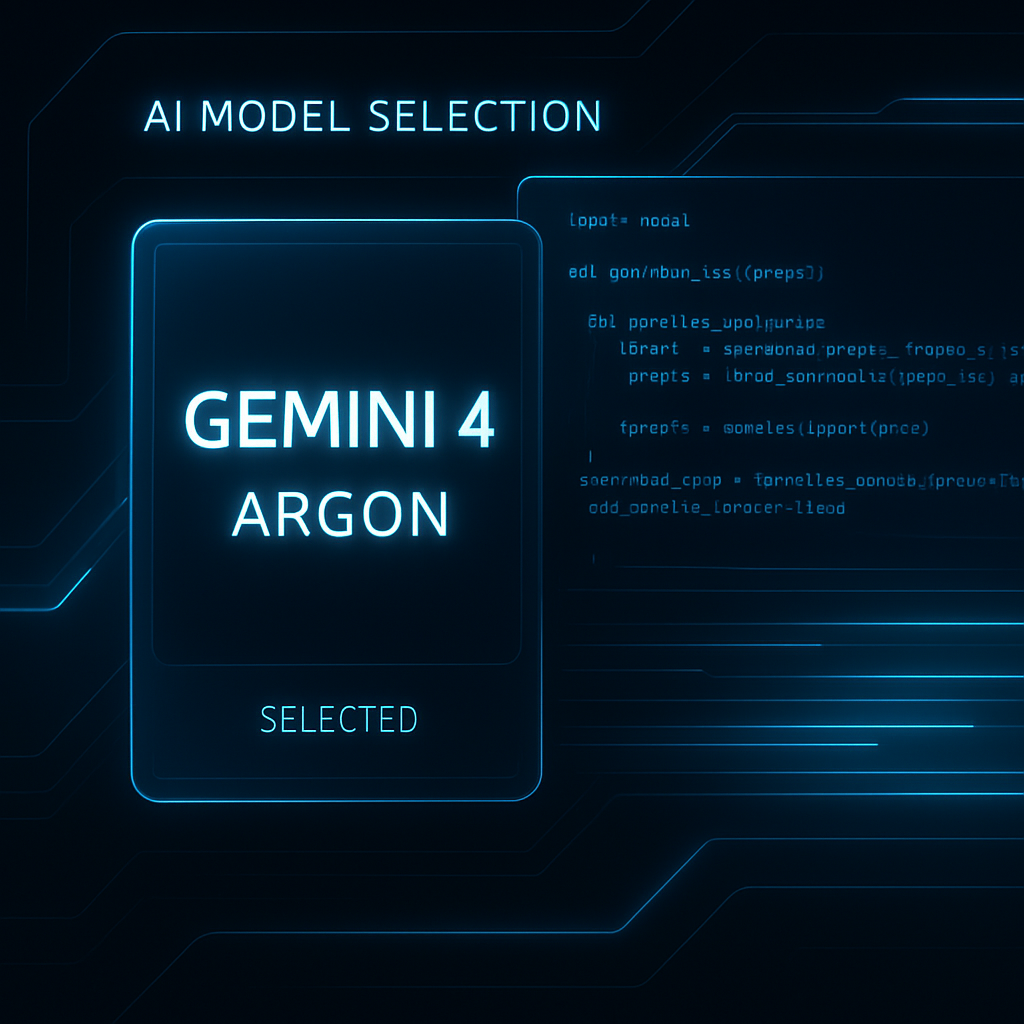
Google is expanding availability of its Gemini 4 Argon model to customers subscribed to its AI Pro tier, in addition to the previously supported AI Ultra tier. This update brings enhanced performance and reasoning capabilities to a wider audience, building on what was once exclusive to higher-end users.
What Gemini 4 Argon Adds
The Argon model is designed to deliver more direct responses with fewer hedges and clichés, and to better follow style instructions than previous versions. It also keeps users informed on progress during longer tasks, making the workflow feel more responsive and transparent. On the performance front, there’s been a major leap in coding abilities: macOS users can now seamlessly switch between chatting and coding within the Gemini app through direct access to Antigravity’s agentic coding interface—perfect for building apps or web experiences.
Access, Tools & APIs Updated
Both AI Pro and AI Ultra users will find a refreshed model picker in the main Gemini app. They can now choose among models like 3.5 Flash-Lite, 3.8 Flash, 3.1 Pro, and 4 Argon, and switch between chat and tasks mode using a new toggle. Outside the consumer app, Argon is also available via Google’s Antigravity desktop app and command-line interface, though access there requires the Ultra tier.
Google provided concrete examples of how Argon boosts productivity internally: the Chrome team used it to streamline site rendering by refactoring large portions of its codebase, reducing modular bloat that once needed overhaul over months into mere weeks. Other improvements include dramatically faster inference speeds—up to nearly 3× higher throughput on certain GPU setups—and optimizations that cut CPU usage and latency for server-side and client-side systems alike.
For developers, Gemini 4 Argon is now provided through Google’s API at an introductory rate of $2 per million input tokens and $10 per million output tokens, valid until November 30, 2026. After that date, pricing for input tokens doubles to $4, while output tokens will cost $20 per million. Meanwhile, Google is offering 10,000 scientists free access at the highest usage tier of Antigravity for six months, under a new application program.
Other tools such as AI Mode, AI Studio, and Android Studio (Canary) are also being updated to support Argon, though some features remain exclusive to Ultra subscribers. The update reflects Google’s push toward more capable, responsive AI models across its entire stack.
This rollout marks a key moment in Google’s AI strategy: Argon refined for both higher accuracy and more natural interaction is no longer confined to its most expensive tier. The pricing window gives developers time to experiment before the higher rates kick in. Watching how users engage with Argon—whether they lean into its improved coding tools or its more conversational tone—will reveal whether this model raises the bar across the board, or simply widens the gap in feature access between tiers.