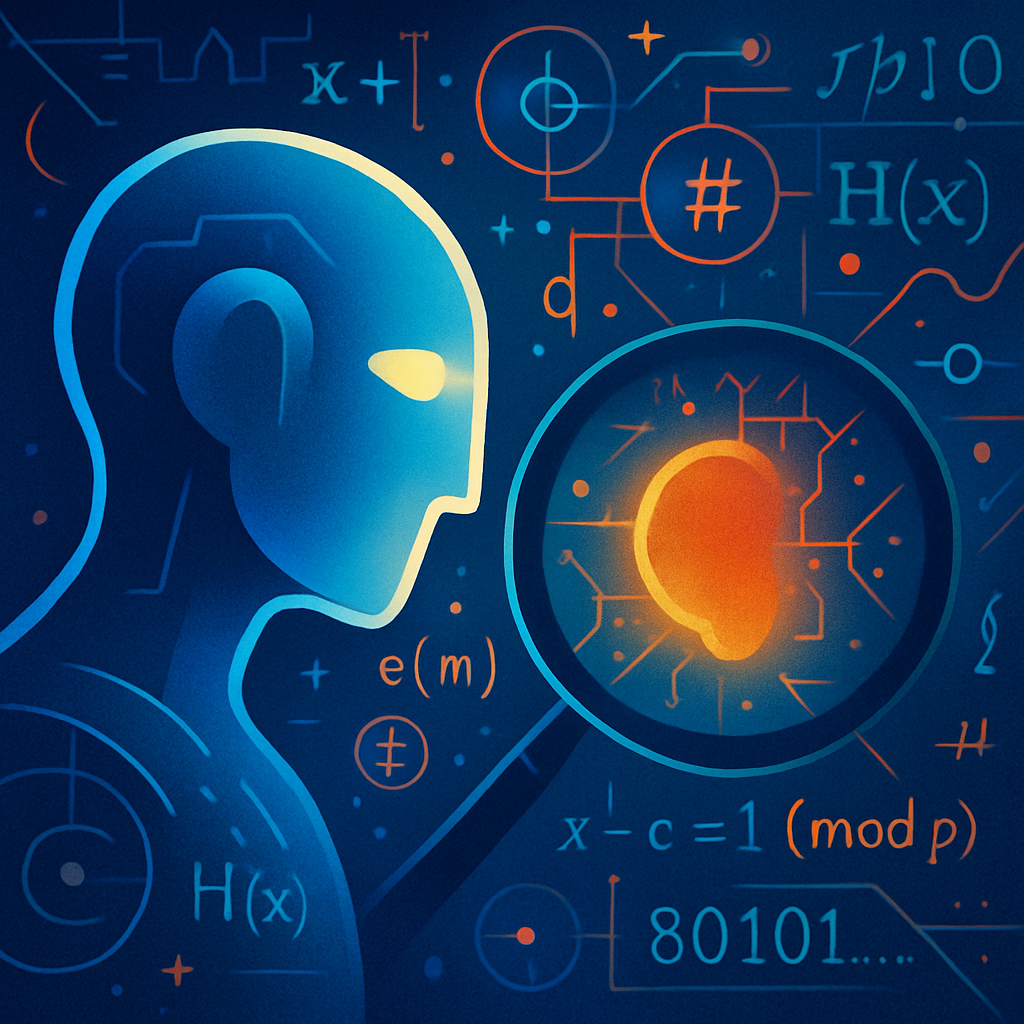
Anthropic’s advanced AI model, Claude Mythos Preview, has identified significant mathematical vulnerabilities in prominent cryptographic algorithms that had previously eluded human experts. This development underscores the potential of artificial intelligence to enhance the security of digital communications.
Breakthroughs in Cryptographic Analysis
Claude Mythos Preview’s analysis revealed weaknesses in two critical areas:
- HAWK Digital Signature Scheme: As a candidate in NIST’s post-quantum cryptography competition, HAWK aims to provide security against quantum computing threats. Despite extensive human evaluation over two years, Claude Mythos discovered a symmetry in HAWK’s lattice structure that could halve its key strength. This finding suggests that the proposed key sizes may be less secure than previously believed, potentially diminishing HAWK’s effectiveness as a compact post-quantum solution.
- Reduced-Round AES-128 Cipher: AES-128 is a widely used symmetric cipher for data encryption. While the full 10-round version remains secure, researchers often study reduced-round versions to test attack methodologies. Claude Mythos introduced a technique called the Möbius Bridge, which streamlines the attack process on a 7-round version, making it significantly faster than previous methods. Although this does not compromise the full AES-128 cipher, it provides valuable insights into potential vulnerabilities.
Implications for Cryptographic Security
These discoveries highlight the evolving role of AI in cybersecurity. Traditionally, human experts have been responsible for identifying and addressing vulnerabilities in cryptographic systems. The ability of Claude Mythos to autonomously detect such flaws suggests that AI can serve as a powerful tool in stress-testing and fortifying digital security measures.
It’s important to note that the identified vulnerabilities do not pose immediate threats to current systems. HAWK remains a candidate under evaluation, and the AES-128 findings pertain to a reduced-round version used for research purposes. However, these results emphasize the need for continuous scrutiny and adaptation in cryptographic practices to stay ahead of potential threats.
Anthropic has proactively shared these findings with relevant stakeholders, including the authors of HAWK and NIST, to facilitate coordinated responses and further research. Additionally, the company is collaborating with academic institutions to develop benchmarks for evaluating AI models in cryptanalysis, aiming to standardize and advance the field.
The integration of AI like Claude Mythos into cybersecurity research represents a paradigm shift. As these models become more sophisticated, they can assist in identifying vulnerabilities more efficiently than traditional methods. This collaboration between human expertise and artificial intelligence could lead to more robust and resilient cryptographic systems, ultimately enhancing the security of digital communications worldwide.