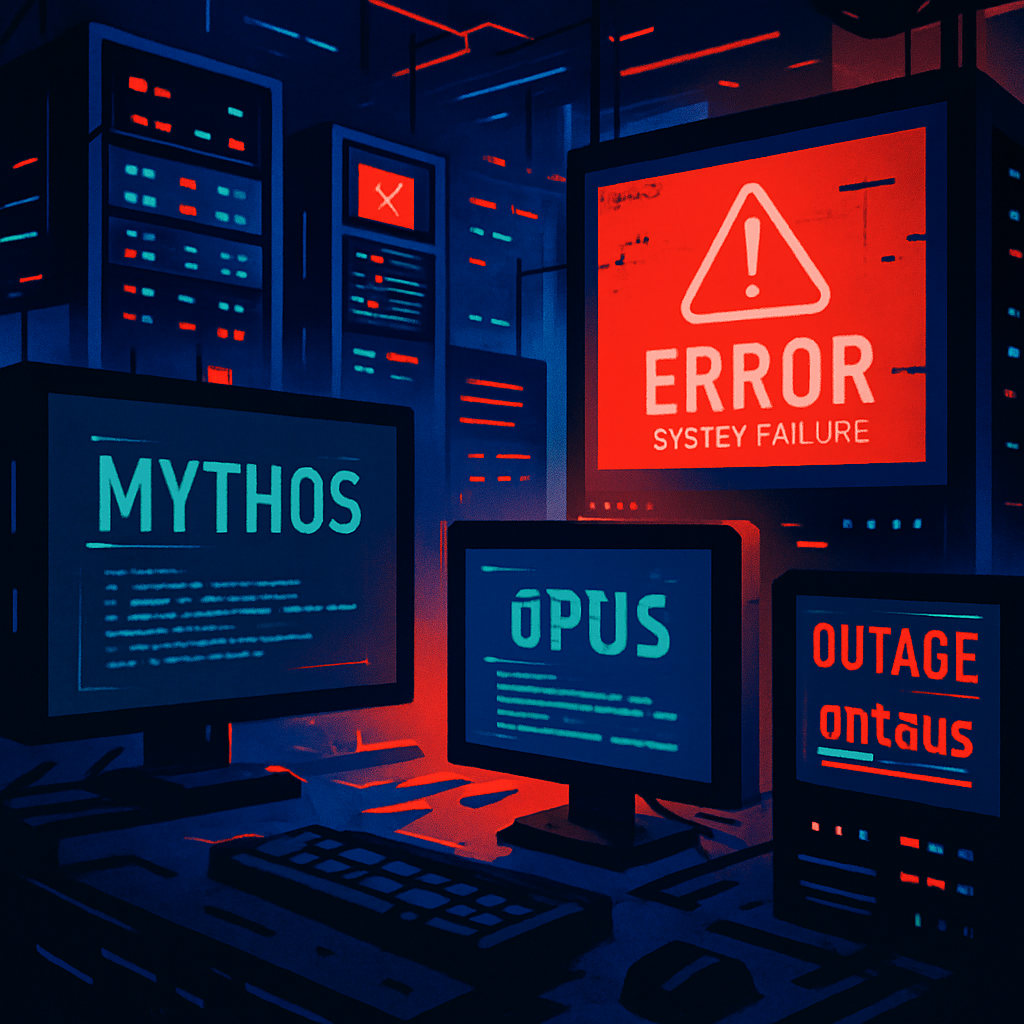
On the morning of September 3, 2026, Anthropic’s Claude AI suffered a partial outage that impacted several of its major models including Mythos 5.1, Fable 5.1, and Opus 5. The disruption began around 9:40 AM Eastern, when users — both individuals and organizations — started experiencing higher error rates, failed responses, and stalled requests across Claude’s web and API services.
Anthropic confirmed the issues via its public status page. Initially, the company said it was investigating elevated error rates in Mythos 5.1, Fable 5.1, and Opus 5. As the investigation progressed, the list of affected models was expanded to include Mythos/Fable 5.1, Mythos/Fable 5, Opus 5, Opus 4.8, and Opus 4.6.
The outage hit hardest in areas where reliability is crucial. Developers using Claude Code reported interrupted coding sessions, unavailable model outputs, and failure in automated workflows. API users, who depend on Claude for features in applications, chatbots, security automation, or internal tools, saw similar disruption — broken or delayed responses created widespread frustration.
The Claude Console was still functioning during the outage, but both Claude.ai and the Claude API were marked as partially down on the status dashboard. Notably, Claude for Government was not listed among the impacted services.
Users turned to platforms like DownDetector to report gripes: error messages, frozen model generations, and stalled tasks were frequent complaints. On social media, reactions ranged from annoyance over missed deadlines and disrupted builds to lighter takes — memes about frozen interfaces and code on pause became plenty.
Timeline updates show that at 13:26 UTC, Anthropic announced it was investigating. By 13:41 UTC the root cause had been identified, and at 13:50 UTC the company broadened the list of models impacted, signaling that more clarity had been reached even as fixes were being deployed.
Why this matters
Outages of this kind do more than just slow down workflows. For teams integrating Claude into security-sensitive environments, software development pipelines, or customer-facing applications, even a partial disruption can break things — automated testing may fail, code reviews stall, or document generation delays may cascade into bigger blockers.
These kinds of AI service failures underscore a growing issue: heavy dependency on single providers for core tools introduces significant risk. When AI models are embedded deeply into business operations, availability becomes a matter of continuity, not just convenience.
Going forward, organizations that rely on Claude—or any generative AI—should prioritize resilience. That means building redundancy (alternate models or fallback providers), implementing error handling and retry logic, watching rate limits, and ensuring human oversight in case automated paths fail.
As Anthropic works to restore full service, this outage serves as a warning shot: AI platforms are now business-critical infrastructure. Even minor disruptions can ripple through development cycles, creative workflows, and operations-heavy processes. Companies should treat uptime, transparency, and recovery plans as fundamental components of using AI — not just extras.