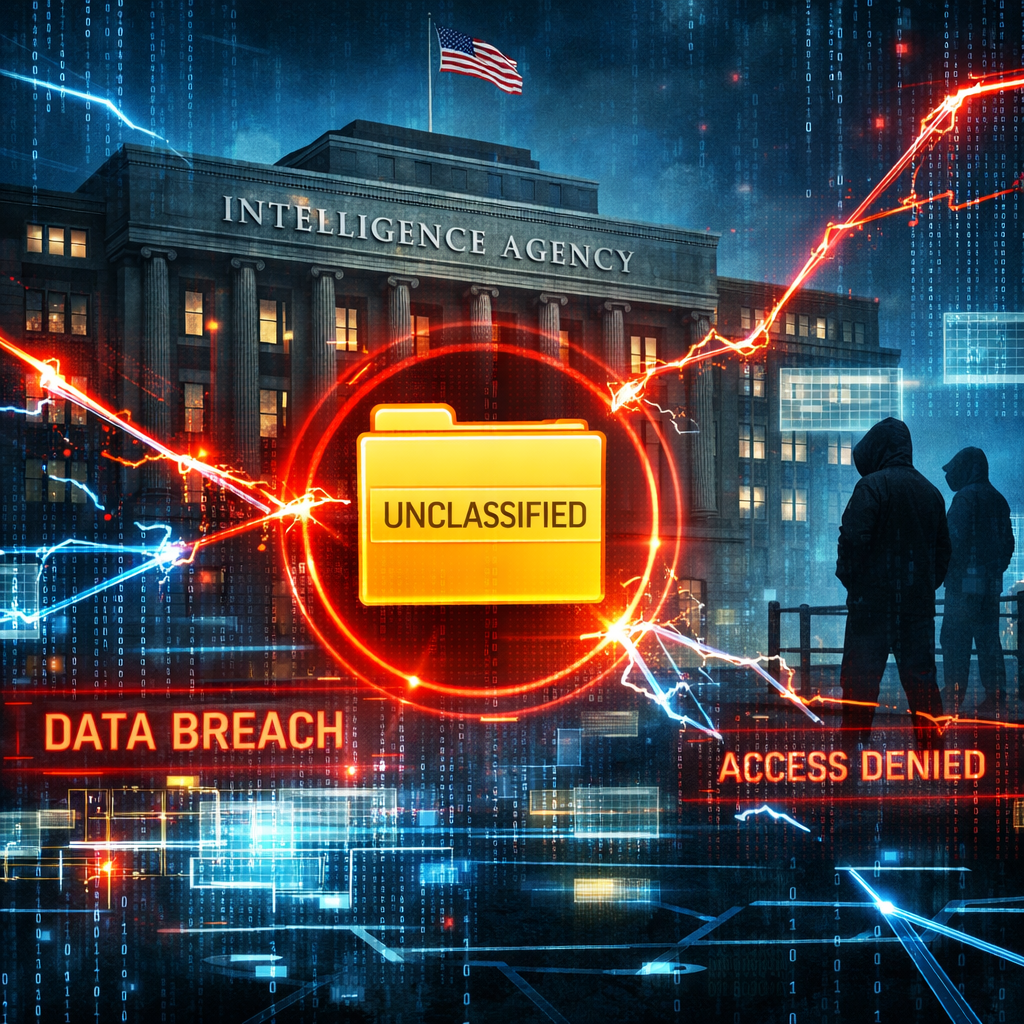
U.S. intelligence agencies recently confirmed a cyberattack that exposed unclassified information stored on a shared network belonging to the CIA and the ODNI. The affected system is used to analyze publicly available materials—known as OSINT (Open-Source Intelligence). While this intrusion did not impact any classified systems, it has stirred concerns about sensitive analytical data being compromised.
What We Know So Far
The CIA and ODNI announced that the breach took place within an unclassified network designed for analyzing public information. Officials emphasized that no classified data or critical mission capabilities were impacted. However, the breach did temporarily disrupt the unclassified system, which has since been addressed.
Among unresolved questions is whether adversaries accessed only raw source material or historical and analytical artifacts such as reports, planned investigations, or intelligence drawn from those sources. The CIA and ODNI have yet to clarify what specific records were exposed, how attackers gained access, and how long the unauthorized access lasted. Attendance of the National Geospatial-Intelligence Agency in the incident was flagged in some reports, but details remain vague.
Context & Broader Implications
Unclassified does not mean risk-free. Agencies commonly share analysis tools and workflows for OSINT so analysts can detail which sources they trust, what they are tracking, and how they reach conclusions. While such systems carry lower classification, they may still expose internal assessments and decision-making patterns that adversaries would find valuable.
This breach follows separate cybersecurity incidents across other U.S. federal entities including a law enforcement database and internal systems at the Department of Agriculture. Although these events all raise concerns about federal cybersecurity posture, authorities believe the CIA/ODNI breach is not connected to those other incidents. Neither a suspect group nor a precise entry vector has yet been identified.
It’s also notable that this incident tests recent U.S. efforts to streamline open-source intelligence operations. In 2024 the CIA and ODNI rolled out a joint strategy to better coordinate how public data is gathered, shared, and analyzed. That strategy aimed to strengthen trust, tool integration, and institutional oversight.
This event reveals that even unclassified systems—especially ones tying together analysis and raw source material—can pose profound risks to national intelligence work. Moving forward, transparency about what data was actually exposed and how it can be safeguarded is crucial. For now, agencies must balance openness with strong internal defenses, paying attention even to the systems often considered lower risk.”
What this means: even unclassified platforms matter. Analysts and agencies alike will need to refocus on assumptions about what qualifies as sensitive data, invest in stronger monitoring and response—even on public-facing channels—and reckon with how leak vectors can undermine U.S. intelligence without ever touching classified networks.