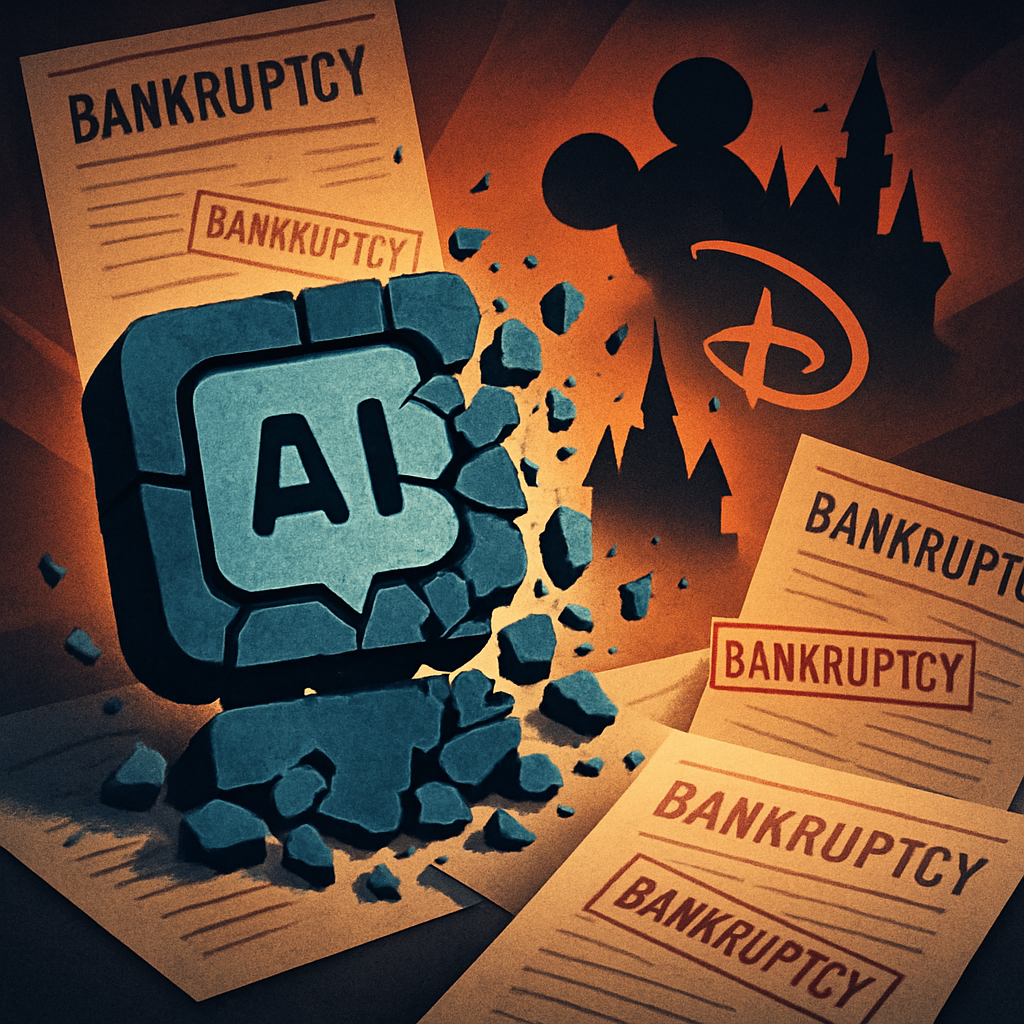
Interactive chatbot startup Character.AI has filed for Chapter 11 bankruptcy, just five years after launching its platform where users design and converse with AI-generated characters. Court documents reveal its total assets and debts are both estimated between $50 million and $100 million.
In a strategic move, Character.AI has agreed to sell part of its assets and grant Disney a non-exclusive, perpetual license to its technology for $20 million. Transition support will be provided by former Character.AI employees who recently joined Disney alongside its former CEO. Until the sale wraps up—slated for late November to early December—the platform will remain operational. The company hasn’t yet secured a buyer for all its assets, and in the absence of acceptable offers, plans are underway to wind down operations.
Rapid Rise, Growing Pains
Co-founded by ex-Google engineers Noam Shazeer and Daniel De Freitas in late 2021, Character.AI initially focused on training foundation models before pivoting to its character-based chatbot model. In September 2022, buoyed by strong demand, it secured a $150 million funding round and was valued as a unicorn when user engagement spiked—over two billion messages exchanged in five months and average daily usage exceeding two hours per user.
The platform didn’t slow down after that. When its apps launched in May 2023, they racked up over 1.7 million installs within a week. By October, it had grown to 20 million monthly active users. Yet massive traction couldn’t forestall serious controversies.
Legal and Safety Headwinds
Among its most serious challenges was a lawsuit tied to the suicide of a 14-year-old Florida boy. The boy’s mother alleged his addiction to one of the platform’s chatbots played a role. Soon after, the state of Texas opened an investigation into whether Character.AI was in compliance with child privacy and safety laws. To address these concerns, the company introduced stronger safety features, prohibited minors from accessing the platform, and settled certain legal claims.
In mid-2025, Character.AI replaced its CEO with Karandeep Singh Anand and shifted away from training foundational models toward features like AI video generation, interactive storytelling, and microdramas. However, despite pouring resources into expanding its products and user engagement, the startup reported that these efforts failed to deliver a sustainable business model.
High engagement turned out to be a double-edged sword. While users spent more time on the app than many rivals—making it one of the top apps by time-on-device—those same usage patterns also escalated operating costs dramatically. Monetizing such deeply engaged users proved more challenging than anticipated.
Over its lifespan, Character.AI raised more than $193 million from backers including Lightspeed, SV Angel, Greycroft, and a16z. At its peak, its valuation and user momentum placed it among the most watched AI startups in the consumer landscape.
But now, faced with lawsuits, safety regulation pressures, scaling hurdles, and a mismatch between growth and revenue, the company has determined bankruptcy offers its best chance to maximize value for investors, employees, and other stakeholders.
Why this matters: The collapse of Character.AI highlights how difficult it remains to build and monetize consumer-facing AI platforms—even when engagement and growth metrics appear strong. As the AI sector evolves, sustainability and legal compliance are becoming just as pivotal as user traction. For any startup chasing viral growth, the lesson is clear: without a robust path to revenue and rigorous safety frameworks, even the most promising platforms can falter.