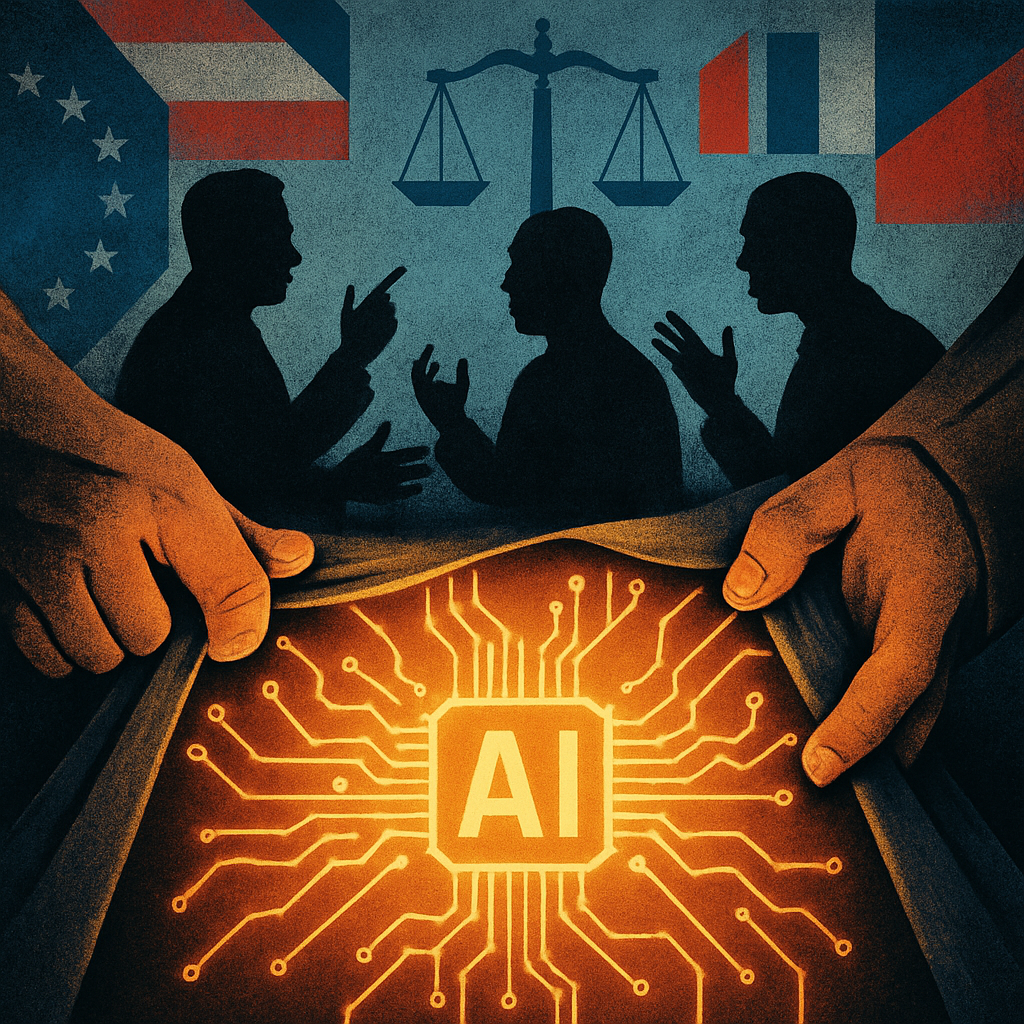
The AI sector finds itself at a crossroads. With rising calls for a slowdown—or more precisely, a **‘paced frontier’**—leaders like Anthropic’s CEO Dario Amodei have laid out proposals for slowing down AI development in areas of greatest risk. On the other hand, voices like Nvidia’s Jensen Huang are more critical: casting doubts on the urgency of regulation and weighing in against the idea that AI’s rapid advance is itself the problem. What’s at stake is not just technological speed, but how safety, oversight, and public trust can be aligned with competitive realities.
What Slowing Down (or “Pacing”) Actually Means
The phrase “slowdown” has been replaced in some speeches by “pace,” indicating a subtle distinction: it’s not about halting innovation, but about **managing its risks**. Recommendations include bringing in independent third-party evaluators to assess safety practices at the world’s leading frontier labs, and coordinated regulatory standards among democratic nations. Also discussed: more robust international cooperation to set expectations and norms. But the specifics—how fast deployment would slow, by how much, and under what conditions—remain vague.
Pushback from Within the Industry
Resistance is stronger than it appears. Jensen Huang openly pushed back at the All-In Summit, framing the current backlash over AI as overblown, and suggesting that many concerns are already being addressed—or are secondary. Others in the industry are more supportive of slowing down in principle, but still question whether broad consensus will translate to substantive change.
Part of the debate hinges on who should enforce whatever rules or norms emerge. The free market, some argue, should deliver consequences for those who make unsafe AI decisions: public reaction, consumer choice, or even enterprise contracts. But others answer that current incentives often blur those lines—many leading players are backed by venture capital, making them resilient to reputational risk, while enterprise clients are less likely to switch suppliers based on safety concerns alone.
Can Existing Tools Carry the Load?
There’s also confidence among some that the current mix of government regulation plus market pressure might be enough—or nearly so. Others suggest these tools are insufficient. One big question: is the U.S. government—or others—willing and able to enforce new rules, especially around frontier AI development? Another: will international alignment become more than aspirational diplomacy? These are hard to guarantee.
For many, even with a general drift toward safety-focused rhetoric, there’s skepticism about whether that actually means slowing down. Language matters: “pace” suggests managing risk, not putting the brakes on innovation. Without benchmarks or thresholds, it could become a symbolic gesture more than meaningful restraint.
On the Equity podcast, Sean O’Kane noted that though names like Amodei, Altman, and even Elon Musk have signaled support for pacing, none have defined precisely what the cutoff points are—when model capabilities become riskier than rewarding, or what criteria trigger oversight. In short: safety conversations are underway, but the roadmap is still being drawn.
Ultimately, it seems clear that the industry is acknowledging concerns—safety, unintended harms, societal impact—but less clear whether this will shift timelines or investment priorities. Will frontier labs adopt internal limits? Will nations impose export controls, licensing, or testing regimes? Or will pressure from competing labs, shareholders, and governments erode the momentum toward restraint? These are the contours being shaped now.
What It Means Going Forward: The tension between growth and caution reflects the larger challenge AI faces today. Growing public concern, potential regulation, and international competition all push for clearer guardrails. But without concrete benchmarks, third-party oversight, or binding rules, “pacing the frontier” risks becoming a talking point more than policy. The eyes now are on what experiments and norms emerge next—and whether they actually slow anything more than just progress on paper.