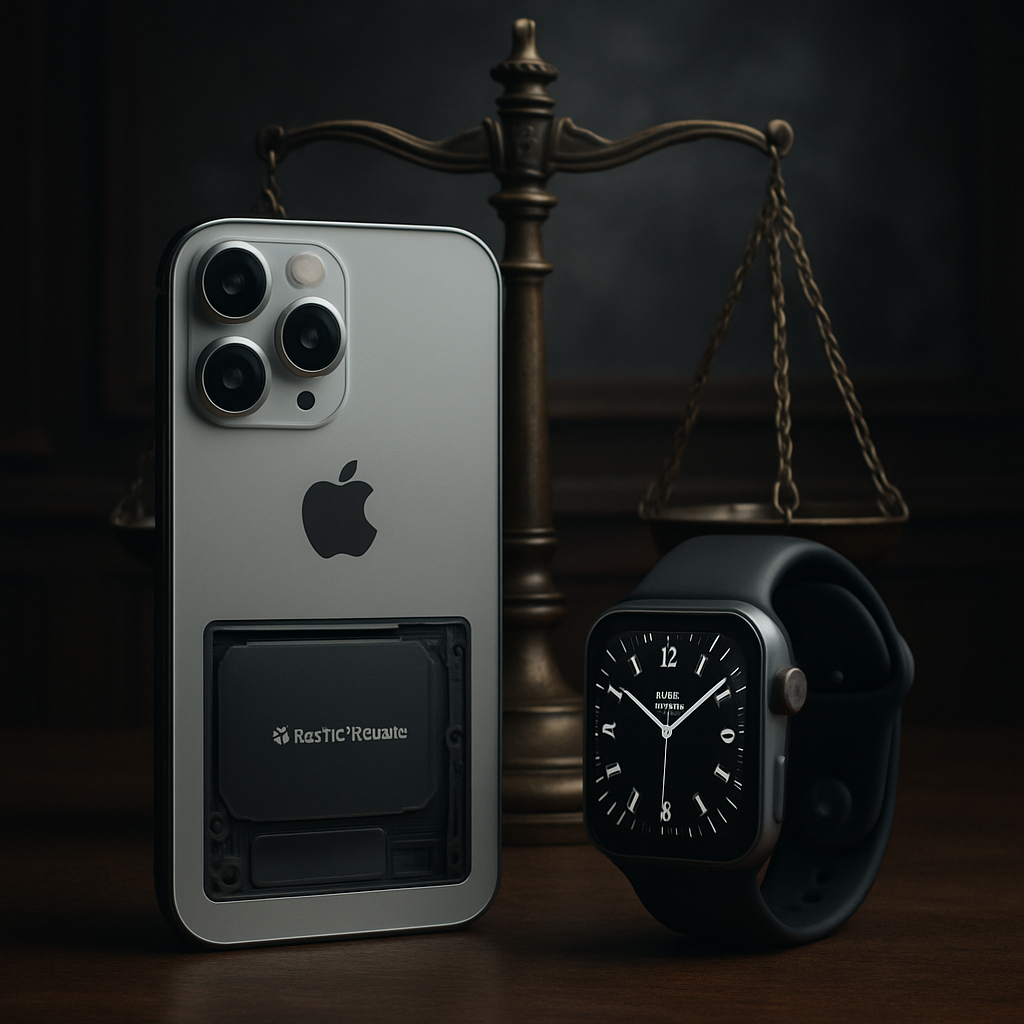
An unresolved legal battle has delivered a major win for litigation funders tied to Apple’s Taptic Engine. A U.S. jury has found that Apple infringed on two patents owned by Taction Technology related to the haptic-feedback mechanism used in Apple Watch and iPhone models, resulting in a $5.7 billion verdict in favor of Taction. Apple announced plans to appeal, rejecting the decision.
Who’s Got Skin in the Game?
Burford Capital, a London-based litigation finance firm, had invested in Taction’s case—through its indirect subsidiary and investment partners—and could collect up to $1.4 billion if the full verdict is upheld. That payout would be split roughly in half between cash on Burford’s own balance sheet and its investment funds. As news of this breakthrough spread, Burford’s stock surged more than 9% in London trading, lifting the company’s market value to about £659.9 million (around $875 million).
The Technology & The Dispute
Introduced in 2014 alongside the first Apple Watch, the Taptic Engine delivers subtle haptic feedback—vibrations for taps and notifications—across Apple’s wearable and mobile devices. Taction first filed suit in 2021, accusing Apple of directly and indirectly infringing patents tied to that core feedback tech in both iPhones and Apple Watches. Taction has hailed the jury’s decision as vindication of its patent rights.
What This Means Going Forward
The $5.7 billion verdict, if enforced in full, would represent one of the biggest patent infringement awards against Apple in recent years. But Apple has signaled it will challenge the ruling on appeal. Meanwhile, Burford’s involvement has put the mechanics of litigation funding in the spotlight—how outside investors can profit when intellectual property disputes settle in their favor.
For Burford, this ruling could be transformational. A payout of $1.4 billion against its typical capital structure is material, even if adjusted for risk and legal costs. For Apple, the case underscores the ongoing challenges tech giants face defending proprietary haptic and interface innovations, especially in an era where many core patents are decades old.