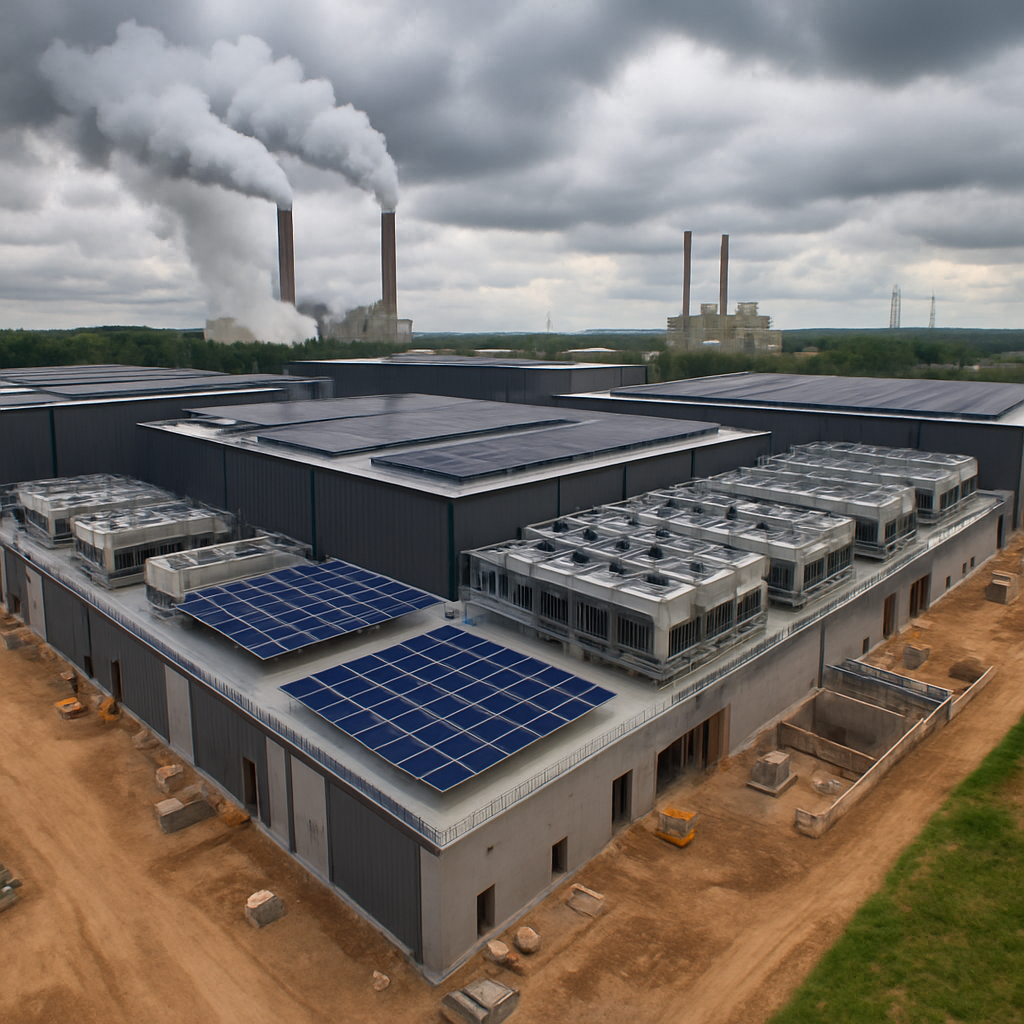
At this year’s New York Climate Week, the AI boom has dominated the conversation — and not everyone is applauding. While many climate tech leaders see AI-driven energy infrastructure as a fast track to cash flow and growth, others are warning that the hype around data-center buildouts is pulling attention and investment away from other climate solutions.
The rise of AI-aligned climate tech
Over the past year, climate tech startups are refashioning their pitches to tap into the surge of enthusiasm (and funding) for AI. Deal volumes in climate tech venture capital have now climbed four straight quarters, with total investment breaking past $14 billion in Q1. Much of that increase is traceable to sectors that support or benefit from AI — areas like power-grid upgrades, the built environment, and forms of dispatchable energy that can quickly supply to energy-hungry data centers.
For companies operating in energy-adjacent spaces, this shift has provided a lifeline. Founders say that aligning with AI trends has helped many survive what’s often called the “valley of death” — the difficult stretch between initial proof of concept and commercial viability.
Uneasy trade-offs and overlooked paths
Even as AI-aligned projects gain favor, there’s growing concern this momentum could crowd out other impactful climate innovations. Sectors already hitting carbon-reduction goals without relying on AI are going underfunded. Some worry that the rush to build natural gas-powered data centers — a common fix for meeting energy demand — may offset climate gains.
During panels, when asked whether they’d prefer AI infrastructure expansion at its current pace or slowing down in the name of climate responsibility, multiple founders answered that “faster” was better. These views largely come from stakeholders deeply invested in AI-driven or infrastructure-heavy climate areas, adding weight to the critique that some segments are being left behind.
There’s also sense of frustration with timing: many startups that struggled for funding just a few years ago now see investors chasing after AI-based deals. Founders report that customers are moving from exploratory discussions to actual demos — but their irritation is palpable: where was this support earlier?
Still, several believe that the current AI-fueled boom, while imperfect, could be long enough to help build durable business models. Once companies become financially stable, the hope is they can circle back to climate-first missions that may not align cleanly with today’s AI boom.
Why this moment matters
The surge in AI infrastructure investment comes during a time when climate grants are being rolled back and investor caution is running high in many clean tech domains. What AI has done is inject both capital and urgency into certain climate-adjacent subsectors. The sectors best positioned — often those delivering energy throughput, efficiency, and capacity — are thriving.
For the broader climate tech ecosystem, however, this clash spotlights difficult trade-offs. Investments are finite, and when one trend dominates, others are squeezed out. Solutions that are low-tech but effective may lose out to ones with flashier AI narratives.
Analysis: The AI wave sweeping through Climate Week isn’t just flash — it’s real business. What’s at stake now is whether the momentum will be sustained beyond infrastructure-heavy projects, and whether other critical climate technology paths will be watered down or abandoned. Keep an eye on how policymakers, long-term investors, and underfunded sectors respond: their strategies will show whether this AI surge is a bridge to broader climate action — or a divergence from it.