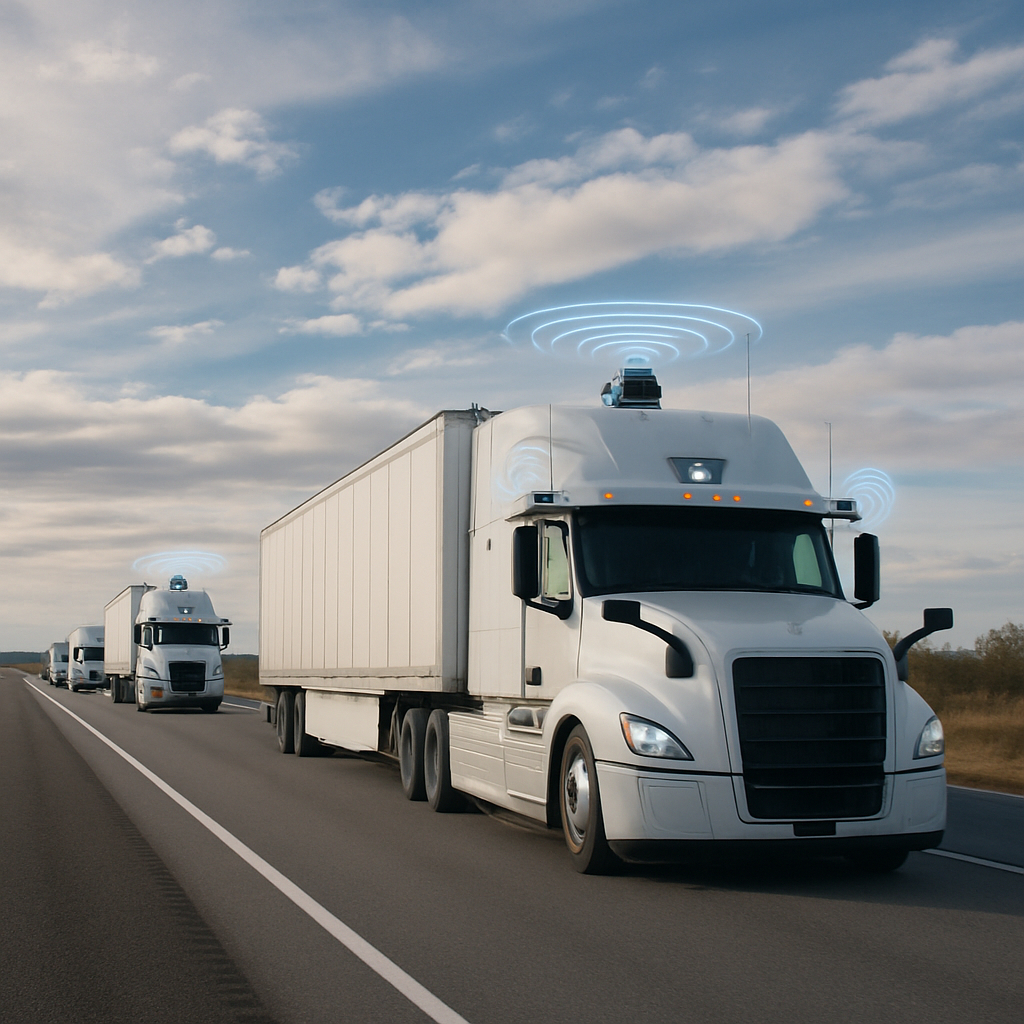
Autonomous trucking startup Aurora Innovation has laid out an ambitious forecast: by the close of 2030, it expects over 30,000 driverless trucks to be operational across the United States, pulling in approximately $5 billion in annual revenue. This bold prediction marks a steep climb from its current scale — by the end of 2026, Aurora anticipates having just 200 self-driving trucks with a run-rate revenue of about $80 million.
The company’s CFO, David Maday, argued that while 30,000 may sound lofty in the autonomy sector, it’s modest relative to the size of the broader truck market. He pointed out that top heavy-duty truck manufacturers produce between 250,000 to 300,000 new trucks each year, suggesting Aurora’s goal represents just a fraction of total production. Maday emphasized confidence in Aurora’s ability to reach the target, rather than viewing it as aspirational.
From 200 to 30,000: Scaling Fast
Investors reacted skeptically. Shares dropped 12.42% on September 28, 2026, closing at $5.29, following Aurora’s annual analyst and investor presentation earlier that week — though management sees 2027 as a pivot year. The company plans to jump from 200 trucks at the end of 2026 to over 1,000 by year’s end. That scale-up includes shifting business models: Aurora currently operates a transportation-as-a-service offering with around 500 company-owned trucks. This model brings in rates comparable to conventional carriers, roughly $2 per mile inclusive of fuel adjustments.
In 2027, Aurora intends to introduce a “driver-as-a-service” approach. Under that system, customers buy the driverless trucks and pay Aurora about $0.85 per mile to use its self-driving technology and hardware. Aurora retains ownership of the autonomy software and related systems while customers handle truck purchase and maintenance.
Hardware, Margins, and National Footprint
An important inflection point arrives at the end of 2027, when Aurora plans to roll out its third-generation autonomous hardware — the engineer-manufactured kit including sensors, CPUs, and supporting components. This gear will be mass-produced by Aumovio (formerly Continental), which is also financing the production. Aumovio will take on servicing and repair duties for this hardware suite.
Addressing profitability, Aurora projects that with approximately 500 trucks deployed, it will reach positive gross margins on a run-rate basis in the first half of 2027. Expansion plans go beyond fleet growth: by 2030, Aurora aims to span the continental U.S., moving from a presence in select Southern states to much broader operations.
Aurora is also keeping its long-term options open. While trucking is its immediate focus, the company still plans to enter the robotaxi space eventually — once its cost base has improved and the hardware is fully scaled. By 2028, Maday expects Aurora’s cost structures to be competitive, enabling even this sort of new market entry.
What this means: Aurora’s roadmap depends on hitting several inflection points — scaling truck count rapidly, transitioning business models, deploying new hardware, and expanding nationwide. Each step involves substantial engineering, regulatory, and logistical challenges. Still, Aurora’s forecast underscores where many in autonomous tech see the biggest near-term payoff: long-haul trucking — not consumer robotaxis. Keep an eye on how hardware production by partners like Aumovio performs, how smoothly the driver-as-a-service model is adopted, and what regulatory headwinds emerge as the fleet grows.