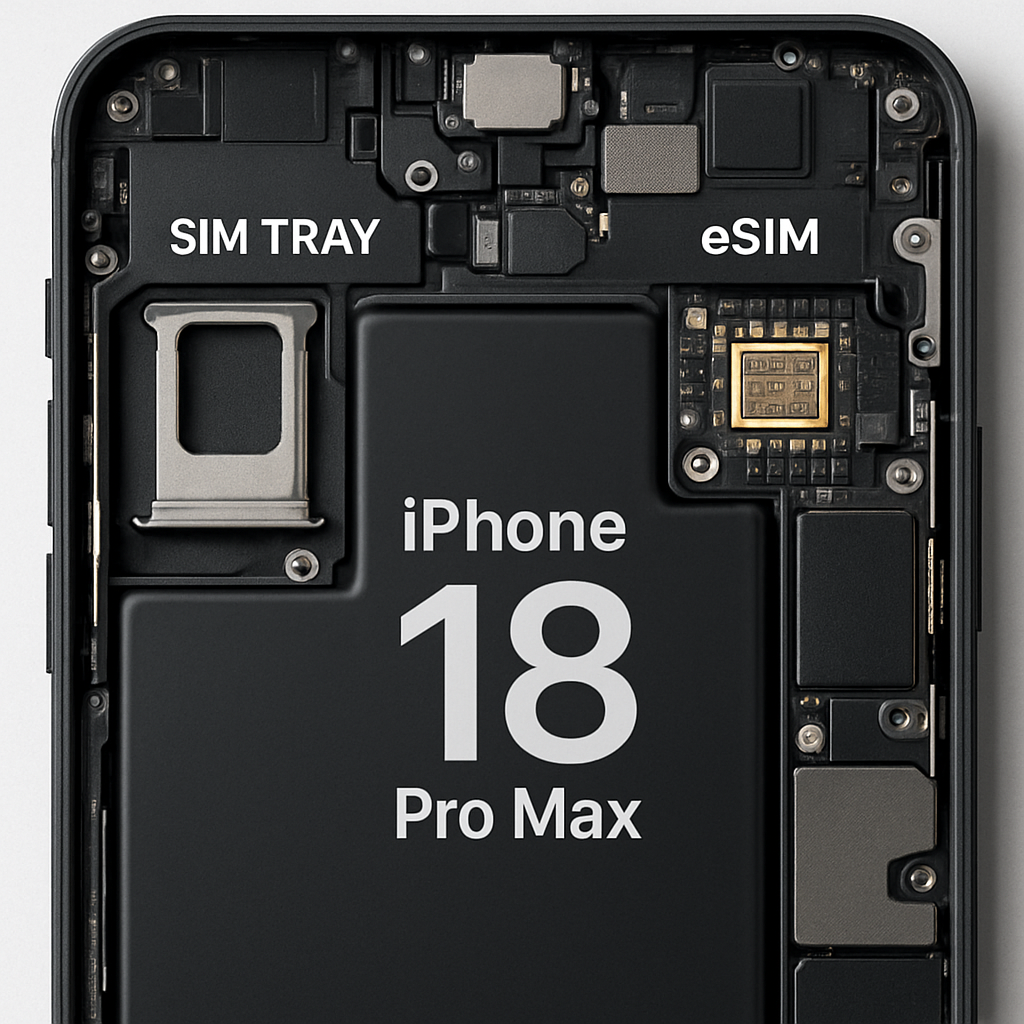
Apple is shipping the iPhone 18 Pro Max in four distinct versions worldwide, each with subtle but meaningful differences in SIM setup, 5G radio hardware, modem tech, and battery size. The trims vary mainly by region—affecting whether the phone comes with physical SIM slots, the type of modem inside, and how long the battery lasts under certain usage.
Regional Variants and Features
In the United States, Apple offers the model A3473, which is eSIM-only and uses both sub-6GHz and mmWave 5G bands. Internally, this U.S. version is unique as it uses Qualcomm’s Snapdragon X80 modem. All the other regions get iPhone 18 Pro Max units running on Apple’s own C2 modem.
Canada, Japan, Mexico, and several markets in the Middle East receive model A3716, which is also eSIM-only but does not support mmWave 5G. Meanwhile, the UK and Continental Europe are getting model A3717, which includes both a physical nano-SIM tray and eSIM functionality. In China, the model A3718 is shipped with a physical nano-SIM option, and Apple has enabled activation using either eSIM or physical SIM in that market.
Battery Capacity Implications
There’s a noticeable battery difference tied to the SIM design. Units that are eSIM-only—specifically the U.S. and Canadian/Middle-Eastern versions—feature a larger battery capacity of around 5,567 mAh. Those with physical SIM slots have smaller batteries, approximately 5,391 mAh. In real usage, the bigger battery delivers about one hour more in general use and up to two more hours of video playback compared to the smaller-battery versions.
Apple hasn’t published an official explanation for why different regions are getting different modems, why some have physical SIM support and others don’t, or what drove the decision for regional variances. Still, these distinctions are more than just technical footnotes—they affect software compatibility, battery life, and wireless performance depending on where you live or buy.
Background: Apple started pushing eSIM support more aggressively in recent models, gradually de-emphasizing physical SIM slots especially in locales where eSIM infrastructure is mature. mmWave 5G, while offering very high speeds, has limited global deployment, so its exclusion in many variants is unsurprising. Meanwhile, battery capacity is always at a premium when designing around physical hardware constraints—removing the physical SIM tray allows a bit of extra space and a modest battery boost.
What This Means and What to Watch For
These regional distinctions mean your iPhone 18 Pro Max experience may differ more than you think depending on where you get it. Before buying, check whether your model supports the right 5G bands, whether you prefer physical SIMs vs. eSIM, and whether the battery performance suits your needs. Moving forward, Apple may push more toward uniformity—perhaps making eSIM-only designs standard, or standardizing modems across all markets—but this could depend on regulatory and supply chain hurdles. Keep an eye on firmware updates or future teardown reports to see whether Apple ever bridges the gap between variants.