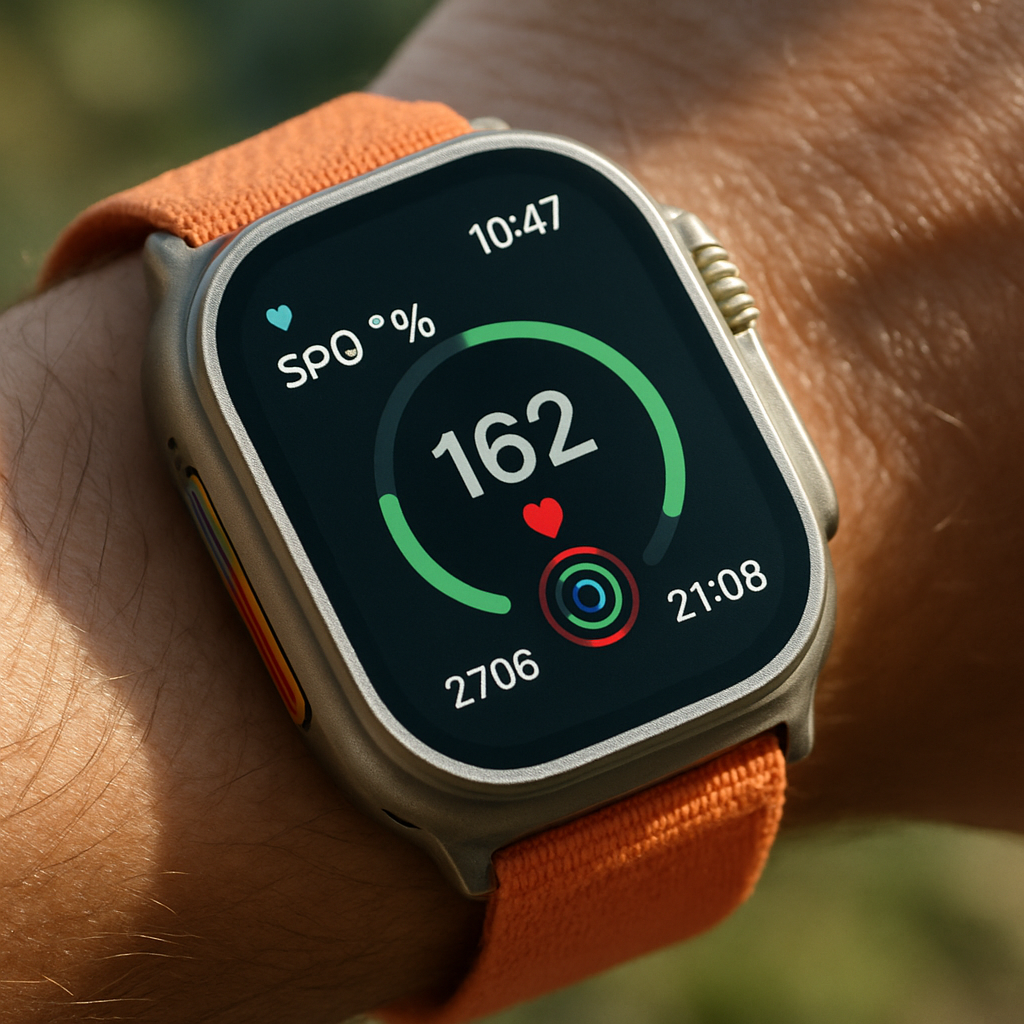
Apple’s latest Ultra model pushes harder than ever into health and AI, trading flashy redesigns for serious upgrades under the skin. The Apple Watch Ultra 4 introduces a new Health Sensing System powered by the S11 chip, adding sensors and capabilities aimed at much more frequent and accurate tracking—without sacrificing battery life.
What’s New & What’s the Same
From the wrist you wouldn’t guess this is a new generation. Apple has kept the same rugged titanium case, orange Action button, dive-ready display, and design elements as Ultra 3. Weights are up slightly—about 1.4 grams—thanks to enlarged electrodes and updated photo diodes in the sensor array. Whether you care about contours or aesthetics, few changes will catch your eye. But in terms of health hardware, the update is significant.
Health, AI & Performance Upgrades
The Health Sensing System unlocks a number of upgraded metrics. Heart rate is sampled every five seconds; HRV (heart rate variability) now updates every five minutes and shows prominently in the Vitals app. Step tracking is more precise, while a second-generation electrical heart sensor and updated optical sensor work together for better results. Also on deck: a new Readiness app (which needs a week of data), an always-on optical heart sensor, and improved background heart rate scanning. These enhancements flow from the S11 chip, which uses AI-derived processing to make them work without chewing through power.
Battery life jumps earnestly. Ultra 4 delivers around 50 hours under regular use—roughly eight more hours than the previous model. That’s past the two-day threshold for many users. Fast charging gets you 18 more hours in just 15 minutes or up to 80% in about 45 minutes.
What’s Still Missing & What’s “Ultra”?
Even with the S11 chip, you won’t see many Ultra-only innovations beyond what existing Ultra models already offer (rugged build, emergency satellite support, depth-rated display, etc.). Audio Intelligence—Apple’s more advanced AI features for the Watch—hasn’t rolled out yet. Single-tap gestures with Smart Stack or button elements are usable, though reliability is variable. The new Siri feels faster, especially with world-knowledge queries or reminders drawn from data like Messages. Still, some promised features remain unavailable for testing.
Your Experience & Final Thoughts
In everyday wear—even if you’re not a climber, diver, or beast of an endurance athlete—Ultra 4 feels manageable. The case size and weight don’t feel overbearing, even for someone at a desk most days. Small improvements like the Action button, improved face customization (Siri Modular, Wayfinder), and deeper integration with the updated Health app make a difference in habit and awareness.
Scoring wise, Ultra 4 lands at 4/5. It excels in health tracking and battery life, but it doesn’t push the envelope in design or introduce defining Ultra-only capabilities. For those coming from Ultra 3 or even Series 12, many of these changes will feel incremental. But if what you want is sharper health analytics, more precise readings, and a wearable that works longer, this is one of the strongest hands Apple’s dealt in recent years.
Ultra 4 starts around $779.99 at launch, depending on retailer deals.
Overall, the Apple Watch Ultra 4 showcases Apple’s shift: less about turn-key redesigns and more about building an end-to-end health platform. Whether that’s exciting or frustrating depends on how much you care about what’s new beneath the glass vs. what you see on the wrist.
Why It Matters & What’s Next
Apple is clearly staking its claim in personalized health tech and wearable AI. By embedding more sensors and leveraging chip upgrades, it’s betting that data frequency and accuracy are the levers that drive value. Ultra 4 may not feel revolutionary in appearance, but its internal evolution is significant. The missing pieces—new Ultra-exclusive features and fully realized AI functionality—are now the gap to watch. If Apple leans heavily into those in 2027, Ultra may finally step out of the shadow of its Series counterparts.