Apple’s freshly launched iPad mini enters this generation with a major screen tech upgrade—moving from LCD to OLED—but it retains a 60Hz refresh rate rather than adopting the smoother 120Hz ProMotion display found on iPad Pro models. The company’s hardware design lead addressed the omission directly, emphasizing display quality over raw specs.
Why No ProMotion?
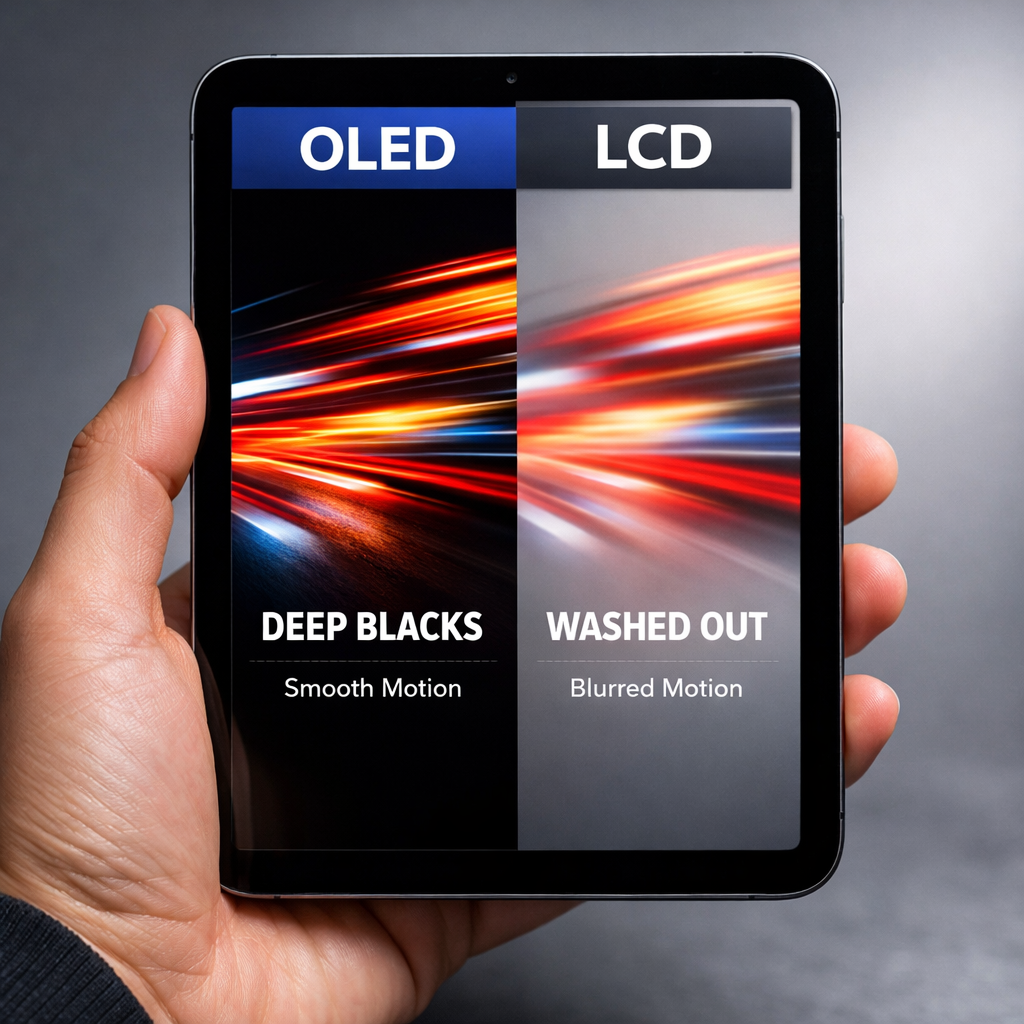
In a recent interview, Apple’s VP of hardware design, David Pakula, clarified that while the display remains fixed at 60Hz, the switch to OLED delivers much faster pixel response times—dramatically reducing motion blur compared to the previous LCD-based iPad mini. With OLED, pixels transition far quicker, making animations, scrolling, and other motion-heavy elements look smoother even without the adaptive refresh rate offered by ProMotion. The company has prioritized contrast, color, and brightness in addition to this enhanced responsiveness.
Display Specs & Context
The new iPad mini features an 8.5-inch OLED panel with specs that go well beyond what its predecessor offered. It sports up to 600 nits of max brightness for standard content, soaring to 1,200 nits in HDR scenarios. The contrast ratio has also been significantly improved, now listed at 2,000,000:1. While the OLED technology also allows an optional nano-texture finish (which diffuses reflections), the key difference remains the lack of ProMotion’s variable rate display, capped between 10Hz and 120Hz on newer iPad Pros.
Rumors leading up to the launch indicated that Apple tested both 60Hz and 120Hz versions of the display. Reports suggest the company evaluated ProMotion‐capable panels during development but ultimately did not include the feature in this iPad mini model. It appears Apple wanted to save ProMotion as a distinguishing feature of the Pro line. Likewise, internal sources—such as supply chain reports—had already indicated that the ‘domestic production’ OLED panels would use LTPS technology, which typically limits refresh rate flexibility compared to LTPO panels required for dynamic refresh rates. This likely played a role in the 60Hz decision.
Pre-Order Details & Pricing
Pre-orders for the device have begun, with U.S. pricing starting at $699. The launch date is scheduled for November 6. For that price, users get OLED’s richer visuals, the upgraded A20 Pro chip, better brightness and contrast, and various improvements—speaker redesign, IP67 water and dust resistance, and more. But the faster refresh rate remains off the table, which could matter to gamers, artists, or anyone sensitive to display latency.
What this means: Apple is clearly drawing a line between its standard and Pro-tier iPads. OLED brings noticeable visual improvements—deeper blacks, more vibrant color, and strong brightness—but the lack of ProMotion limits the iPad mini’s appeal for those who value extremely smooth motion. Buyers should assess how much they care about refresh rate versus overall display quality. Software optimizations and faster chips can only do so much without hardware like adaptive refresh, which remains a Pro-exclusive feature for now.