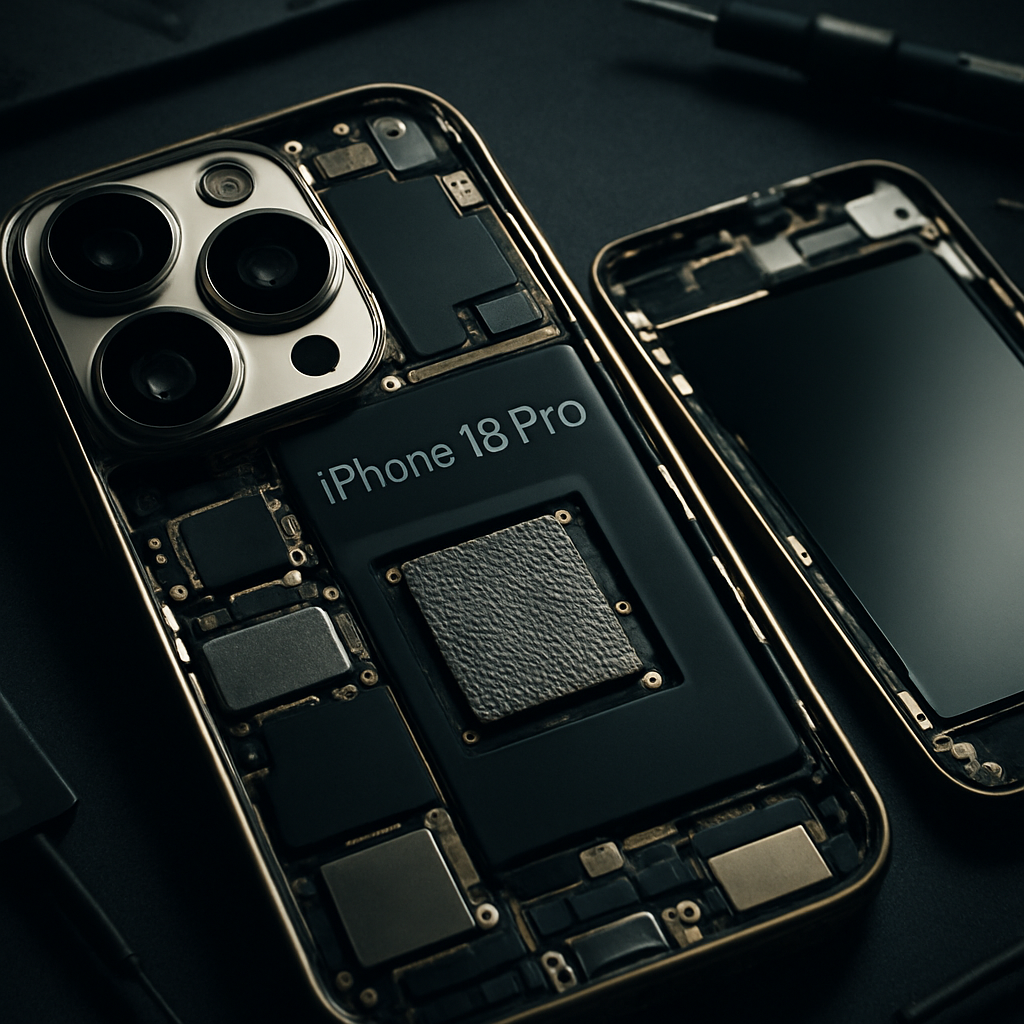
Apple’s newly released iPhone 18 Pro and Pro Max models include a variable aperture camera, but it comes with repair challenges, according to a teardown by iFixit. While many internal parts are modular and more accessible, some critical components—including the camera blades—are ultra-precise and built with tight tolerances, making DIY repair or replacement very risky.
What’s inside the variable aperture camera
The standout addition in the iPhone 18 Pro series is a 6-blade aperture system built from polymer-composite material—each blade nearly as thin as a human hair. These blades overlap to cover the same area used by the previous iPhone 17 Pro’s aperture. Magnetic actuation moves each blade via pins and slots that align with intricate holes in each component. Any misalignment or glue contamination can skew performance, meaning most repair experts suggest replacing the entire module rather than attempting a blade-level fix.
Design changes, thermal updates, and repair scores
The rest of the teardown reveals more familiar trade-offs. To replace the battery, one must detach the display—an assembly glued to the frame—risking damage to adjacent parts. Below the screen, a metal battery tray secured with screws improves access, but the battery itself remains glued into that tray. Meanwhile, the logic board has been rearranged: the A20 Pro chip is now on the outside layer of the board sandwich, and the NAND storage is buried within, making it less accessible for data recovery specialists.
One clever cooling innovation is the inclusion of a thermal pad above the A20 Pro chip designed with a “chainmail” pattern. This mesh-like structure ensures consistent contact with the enlarged vapor chamber to dissipate heat more efficiently. The Face ID infrared camera has also been repositioned beneath the display, with an infrared pass filter installed just below it. Surprisingly, that component can be detached without screws or glue.
iFixit gives the iPhone 18 Pro and Pro Max a 7-out-of-10 repairability rating. Positives include the modular camera and battery tray, but the glued display and hard-to-service NAND storage pull the score down. The grade is still provisional as assessments of part availability and software tools are ongoing.
Why this teardown matters
The iPhone 18 Pro’s camera blades are among the thinnest and most mechanically complex parts seen in Apple’s recent smartphones, illustrating just how small tolerances have become. Such precision enables new capabilities—like adaptable aperture settings—but at the cost of higher repair complexity. The inclusion of a thermal mesh pad also shows Apple pushing more sophisticated heat management as performance demands grow.
Analytical angle: This teardown underscores a growing tension in device design between cutting-edge mechanical innovations and repairability. Beyond manufacturer repair shops, very few users will be able to replace or repair parts like the aperture blades without damaging the system. On the other hand, Apple is making effort with improved modularity and thermal design—both essential for sustaining performance. What to watch next: how long Apple sells service parts for these new complex modules, and whether third-party repair shops will get access to tools and specs needed for quality work.