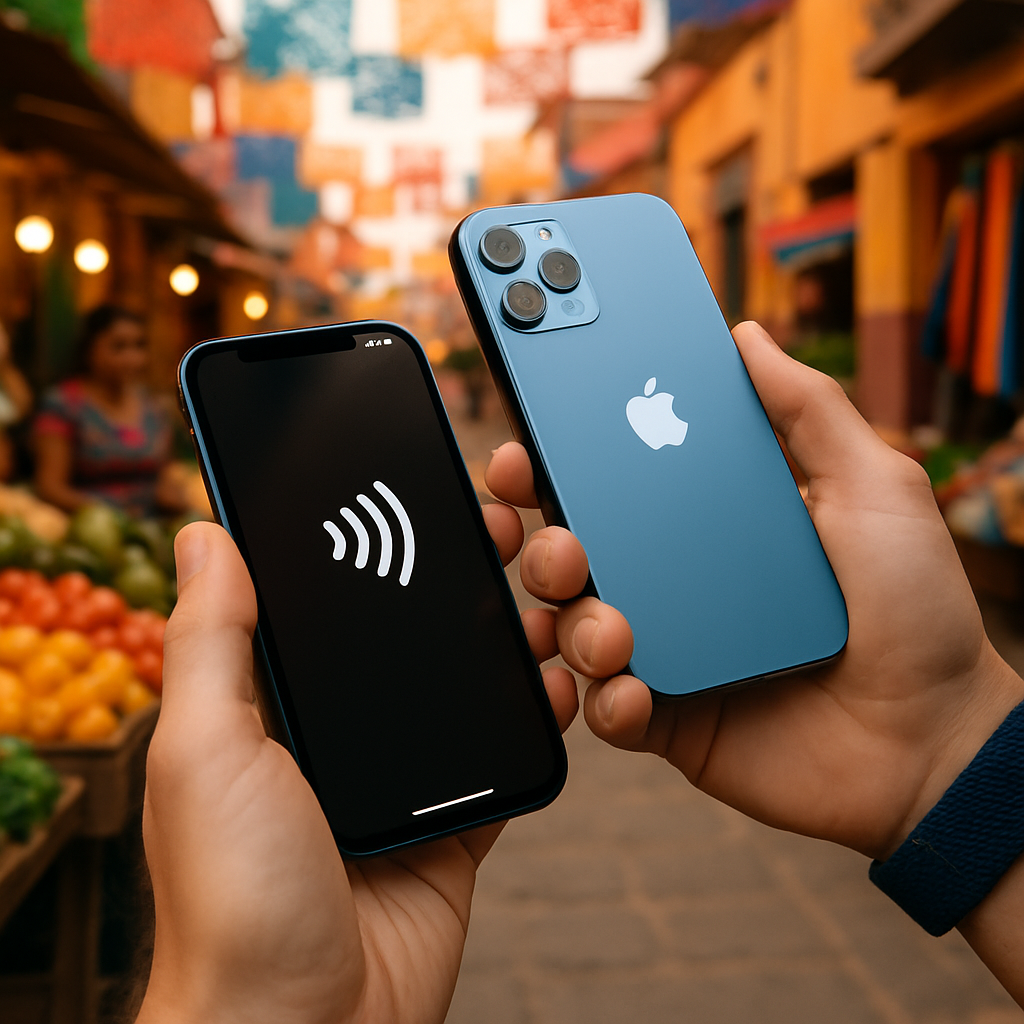
Apple has rolled out its Tap to Pay on iPhone feature in eight additional Latin American nations: Argentina, Colombia, Costa Rica, the Dominican Republic, Guatemala, Honduras, Panama, and Peru. The expansion allows merchants in these countries to accept contactless payments directly using an iPhone, without the need for any extra point-of-sale hardware. Customers can complete transactions using another iPhone or Apple Watch, credit or debit cards, or other NFC-enabled payment options.
How Tap to Pay on iPhone Works
Tap to Pay on iPhone transforms a merchant’s compatible iPhone into a payment acceptance device. Instead of relying on external terminals, sellers can just have customers tap their NFC-capable device or card against the merchant’s iPhone to complete payment. While the exact list of requirements wasn’t detailed for the newly added markets, the feature has previously depended on iPhones equipped with the A11 chip or newer, and running supported versions of iOS.
Why This Matters
For merchants, this update lowers the barriers to entry for accepting digital payments—no need to purchase, install, or upkeep external card readers. It’s especially relevant in areas where businesses are smaller or spread across informal sectors, where investing in dedicated hardware may be cost-prohibitive. For consumers, it offers convenience and flexibility by expanding NFC payment options in different countries. In effect, digital financial inclusion is strengthened. Apple’s move also helps tap into growing demand in Latin America for mobile and contactless payments, which surged during the COVID-19 pandemic and continue accelerating.
What’s Still Unclear
Apple hasn’t yet confirmed if additional countries beyond these eight will gain access soon. It also hasn’t published a full list of compatible devices or minimum iOS versions required in each new country. Another unknown is which banks and payment networks will support Tap to Pay in each market—these vary by location and often determine whether such features are usable locally.
This expansion marks another step in Apple’s gradual rollout strategy for Tap to Pay on iPhone. First introduced in the U.S., then extended to several regions, it now enters new territories in Latin America. For business owners, the elimination of additional hardware could reduce costs significantly. For consumers, it means broader access to frictionless payment methods. Keep an eye on local bank adoption and carrier support—it’s often those that decide how quickly Tap to Pay becomes a daily reality in any country.