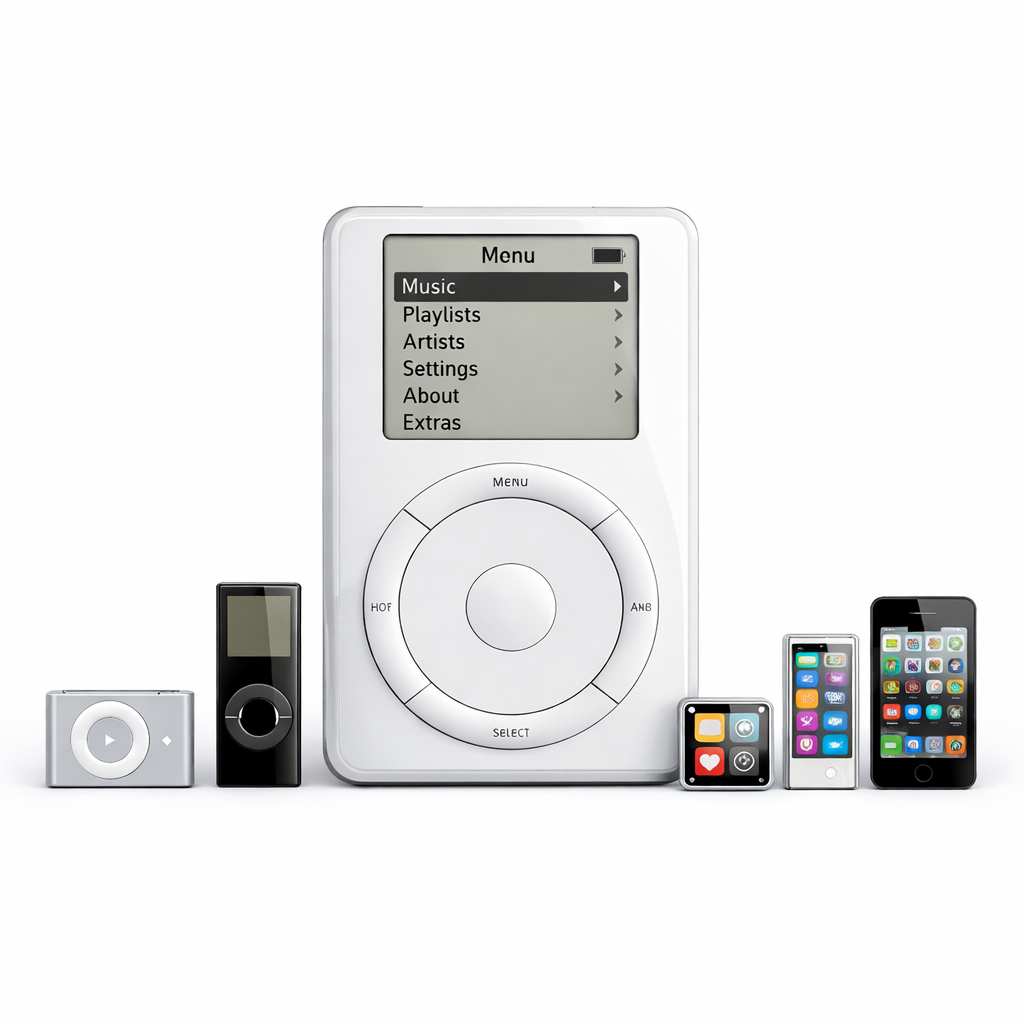
Today marks a quarter-century since the first iPod launched, a device that didn’t just change how we listen to music—it reshaped Apple’s identity. Thirty years ago, on November 10, 2001, the original iPod hit stores priced at $399. This 5GB music player, designed strictly for Mac users, was more than a gadget—it was a declaration that Apple would push beyond computers. It featured a monochrome LCD screen, a mechanical scroll wheel, up to 10 hours of battery life, and delivered on its promise to store 1,000 songs in your pocket. It also let users rip a CD in under ten seconds and sync playlists via iTunes.
The Rapid Evolution
No sooner had it debuted than the iPod evolved. By its second iteration, it swapped the physical scroll wheel for a touch-sensitive one. The third generation introduced the now-iconic 30-pin Dock connector. In 2004, Apple added color displays and video playback to its full-size iPod line, pushing it from music player to multimedia device. Meanwhile, the iPod mini appeared in 2004 with its compact aluminum body and was followed closely by the nano and shuffle models—each stripping away or adding features like displays, cameras, video, or even form factors that could be worn on the wrist.
Peak Success and Market Shift
By April 2007, less than six years after the iPod’s debut, over 100 million units had been sold. By October 2011, sales had topped 304 million. These numbers weren’t just milestones—they signaled that Apple had successfully made music everywhere a core tenet of its ecosystem. Eventually, however, the iPod line was dismantled piece by piece. The iPod classic was discontinued in 2014, followed by the nano and shuffle in 2017. The touch model held on until May 2022, when Apple officially ended the product line.
When it was retired, Apple said the functionality of the iPod lived on through its other products—namely the iPhone, iPad, Mac, Apple Watch, HomePod mini, and Apple TV.
What the original iPod was, and what it enabled, were more than specs and design. It introduced an era—one where portability, integration with a digital library, and seamless syncing (first via FireWire) became expectations. It set the roadmap for iTunes, digital music stores, and eventually, streaming services. It also forced Apple to stretch: rethink hardware, software, user experience.
25 years on, the iPod’s pioneering spirit is everywhere—in AI-powered music recommendations, in always-on streaming, in devices that do far more than play songs. The challenge for Apple now isn’t merely to innovate, but to build what the iPod started: experiences that feel indispensable. As it looks ahead, keep an eye on how Apple weaves together hardware, cloud services, and user behavior. The next 25 years may depend on that.