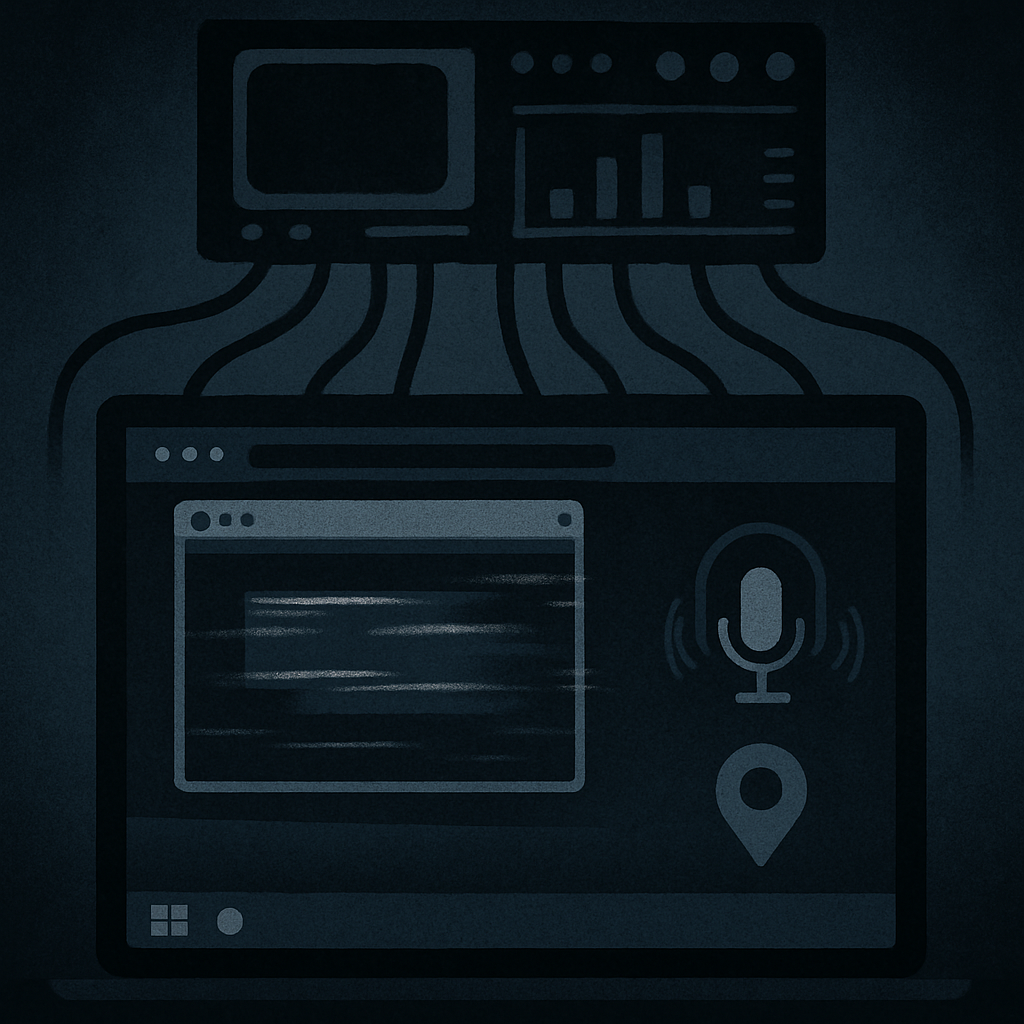
A sharp swell in activity around the XWorm malware has been observed, revealing that attackers are now leveraging more invasive plug-ins to spy through microphones, track location, and hijack browser sessions where the user is already logged in.
Rather than relying on password theft, XWorm now lets adversaries directly control browsers in active user sessions, bypassing many multifactor authentication protections simply by taking over those sessions. The malware acts from inside an authenticated browser tab, allowing attackers to act as though they were the user without triggering fresh login verification.
Since a report mid-2025 by a major threat-research lab, four distinct major versions of XWorm have been confirmed to be in circulation. Detection counts have surged in third quarter of 2026: over 1,200 events across more than 100 organizations—roughly four times the volume seen in Q3 2025. The hardest hit sector is financial services, making up around 35% of affected victims, with the malware actively traced in India, Brazil, Italy, Panama, and the United States.
New Spying Capabilities
XWorm’s “HBrowser” plug-in, added in version 6, is one of its most troubling additions. Operators can issue an “OpenBrowser” command to select and take over a user’s browser—receiving live screenshots and remote input controls like mouse movements, keyboard strokes, scrolling, and clipboard access. All of this happens over an encrypted command-and-control channel. Since the access is to a live session, any logged-in accounts are usable without triggering multifactor authentication—though the malware doesn’t break MFA by cracking it; it simply avoids needing it.
In addition, there’s a microphone plug-in that uses standard components to record audio in half-second chunks. It compresses, encodes, encrypts, and streams conversations continuously back to command servers until operators end or close the session. Webcam capture is also possible on demand, widening the range of what attackers can monitor.
Location & Pluggable Attack Vectors
Another plug-in dubbed “Maps” tricks the system into granting location permissions—by altering the Windows registry consent setting and calling APIs like GeoCoordinateWatcher to fetch coordinates. When GPS isn’t available, it falls back on IP-based location lookups. Meanwhile, malware builders and leaked source code additions have rapidly increased the plug-in library: versions 6.4 through 7.4 added modules such as rootkits, token recovery systems (e.g. Steam token grabbers), HRDP, Cmstp-Bypass, and more—all aiming to bypass detection and gain persistence.
The leak of cracked builder tools in mid-2025, paired with modified source code changes, is correlated with the recent surge in detection activity. New versions include anti-virtual machine checks, NT DLL unhooking, dropper obfuscation, and control channel enhancements—making detection and defense more challenging than before.
Indicators of compromise include changes to the location consent registry, use of distinctive branding domains, and certain file paths tied to NT DLL unhooking. Commands such as ‘OpenBrowser’, ‘MICCM’ (for listing microphones), ‘CLOSEMIC’ and ‘ENDMIC’, as well as clipboard and mouse control signals, form part of the malware’s unique signature.
Defense suggestions emphasize not viewing browser access, microphone capture, and registry hijacking as separate; rather, organizations should treat them as parts of a single intrusion — where valid credentials may not correspond to a valid user. Monitoring for live sessions, examining registry anomalies, and correlating behavioral indicators across plugins are key moves.
Analysts warn that XWorm’s evolving arsenal reflects a broader trend: malware shifting toward live session control and real-time data access, rather than just exfiltration of files or credentials. As defenses mature, attackers are adapting to stay inside environments where they can act in real time and remain undetected.
What this means: cybersecurity teams must escalate beyond perimeter defenses. Live-session hijack detection, cross-plugin behavior analytics, and identity verification inside sessions will be essential to guard against the latest XWorm versions. The threat is no longer hypothetical—its evolution could make any computer the front door into your digital life.