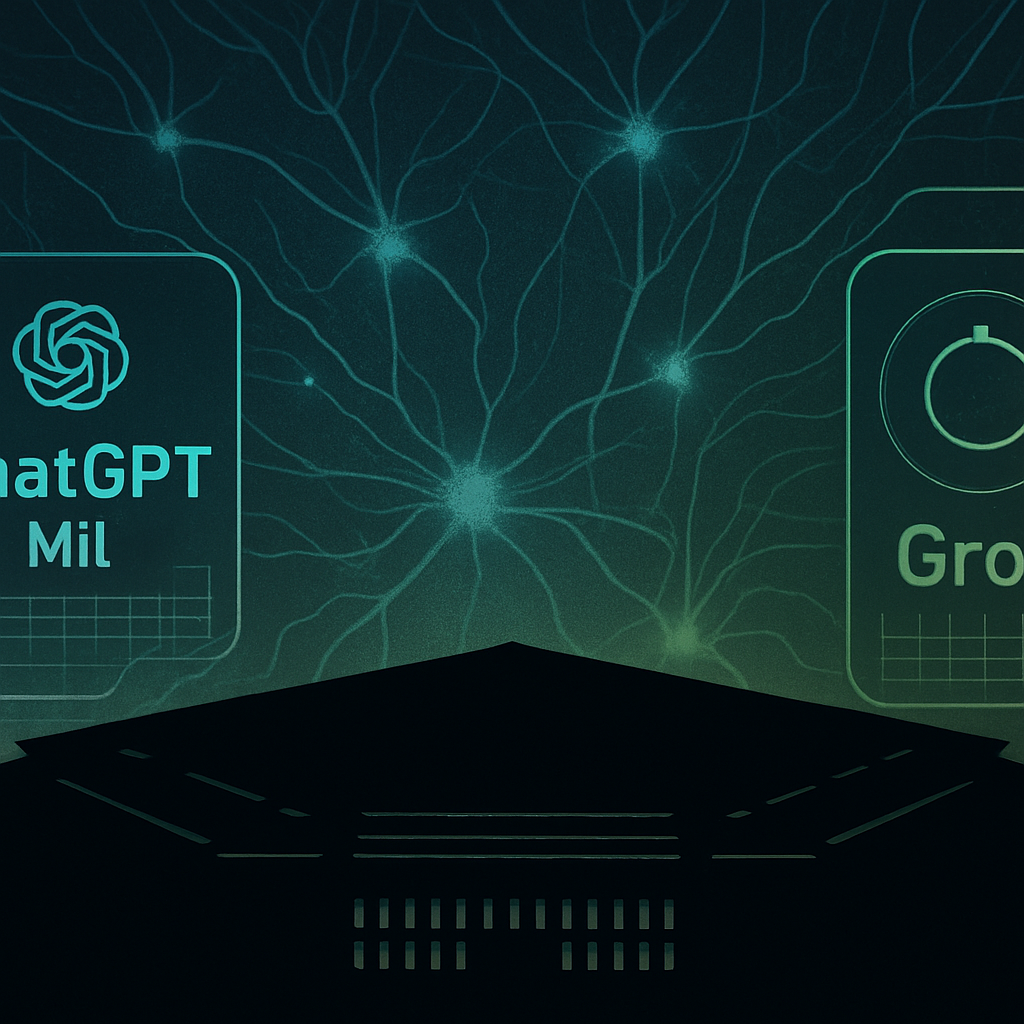
The U.S. Department of Defense has introduced military-grade versions of two leading AI tools—ChatGPT and Grok—designed specifically for warfighting and government workflows. These secure variants, dubbed ChatGPT Mil and Grok for Government, are now available to all 3 million uniformed and civilian DoD personnel through the GenAI.mil platform.
What Is GenAI.mil?
GenAI.mil is the Pentagon’s centralized portal for frontier commercial AI models and was launched last year to give personnel access to powerful AI services while safeguarding sensitive data. From the start, it featured Google’s Gemini model, but now it’s expanding its portfolio. These new offerings come with strict controls so government data isn’t funneled through regular consumer channels—removing many of the risks tied to public or commercial AI services.
Usage is already strong: over 1.7 million DoD employees have registered on the portal, more than half of the workforce eligible to enroll. The effort is meant to grant tools for unclassified, administrative tasks without compromising on security or top-level standards.
Introducing ChatGPT Mil & Grok for Government
ChatGPT Mil aligns closely with the familiar consumer interface but is optimized for official duties. It supports chat interactions, file management, custom GPTs, and everyday, document-centric functions like policy drafting, logistics planning, and administrative work—especially for unclassified needs. Additional features are expected to arrive over time.
Grok for Government, delivered via Starshield AI (a SpaceX-backed secure satellite and defense communications network), is built for higher-stakes operational contexts. Its role spans from helping with market research and acquisition to overseeing supply chain logistics and other mission-critical support tasks. The DoD positions Grok as a force multiplier for productivity gains, enhanced continuity of knowledge, and more secure collaboration in both civilian and field settings.
Strategic Moves & Notable Omissions
The new rollout underscores the Pentagon’s push to harness AI for speed, precision, and efficiency. It also marks a continuation of ongoing negotiations with AI labs—a particularly relevant thread in light of the Pentagon’s strained relationship with Anthropic. That company is currently litigating its “supply chain risk” designation after balking at requirements for unrestricted access.
Meanwhile, the Department of Defense is also expanding its AI ecosystem. Partnerships are now in place with major players including Microsoft, AWS, Nvidia, and startups like Reflection AI, all of which bring specialized capabilities into government hands—another sign that securing AI supply chains is becoming a top priority.
The takeaway: AI tools with commercial roots are now officially weaponized for government work—minus the data exposure. The DoD has moved these technologies off your phone and into a war room wrapped in encryption, compliance, and military context.
Looking ahead, it’s crucial to observe how governance, transparency, and usage policies evolve. Effectiveness will depend not just on technical deployment, but on trust, oversight, and ensuring these tools enhance missions without compromising civil liberties or introducing unexpected risks.