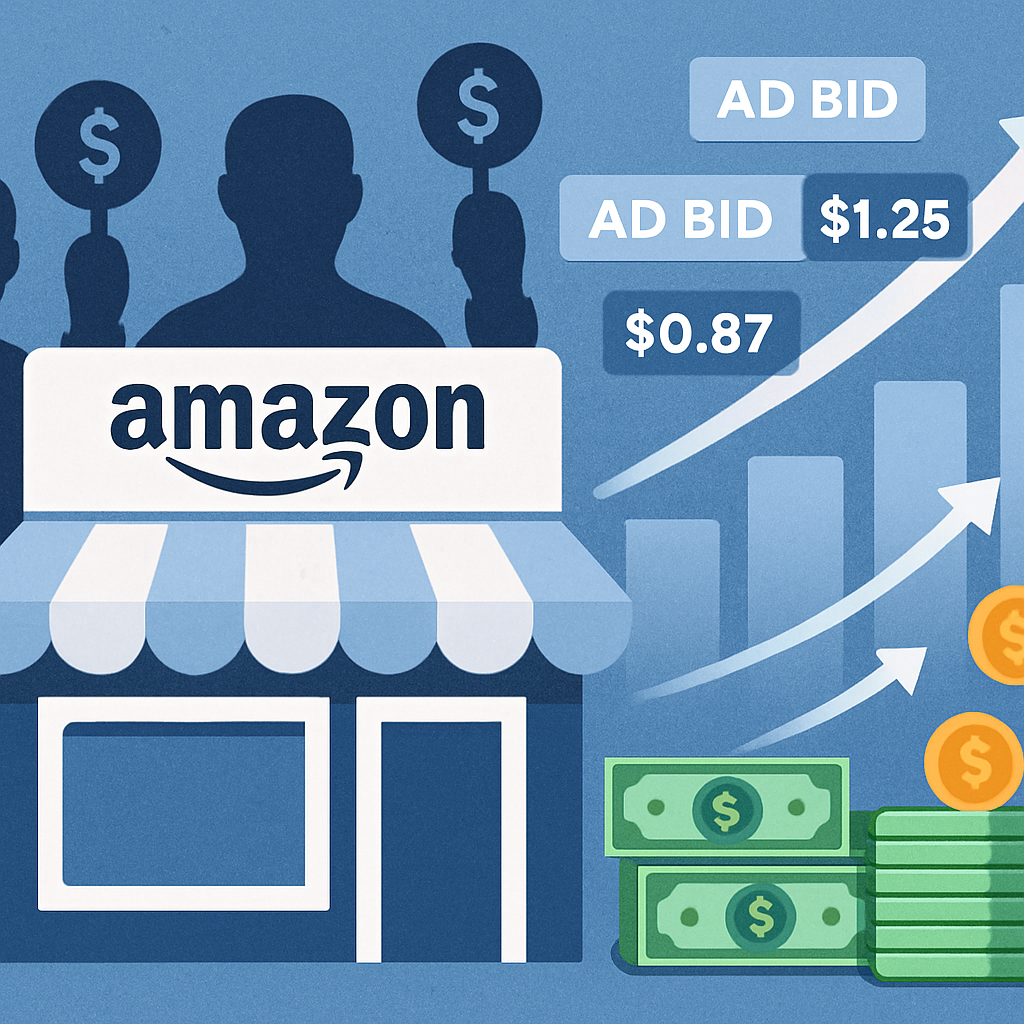
The Federal Trade Commission (FTC), along with 22 U.S. states, has filed a lawsuit accusing Amazon of stealthily inflating the costs advertisers pay on its platform. The case alleges that Amazon misled advertisers about how its ad auctions worked, effectively turning a second‐price auction into a first price setup without disclosure.
What Amazon’s ad system purportedly did
According to the complaint, Amazon allowed businesses to bid on its Sponsored Products, Sponsored Brands, and Display ads with the understanding that the highest bidder would win but only pay one cent more than the second‐highest bid. Advertisers were led to believe this second‐price auction model would limit their costs.
Beginning around 2019, Amazon allegedly introduced a hidden surcharge called a “soft reserve price” and used a sham bidder—an internal or fabricated auction participant—to push up prices beyond what real competition would produce. Internal documents reportedly described the made‐up bidder as an “invented auction participant.” As a result, nearly 80 percent of the time advertisers were forced to pay their full winning bid—mirroring how a first price auction works. The FTC claims this shift was designed to increase Amazon’s ad revenue, and that Amazon concealed it because disclosure would have led advertisers to bid lower.
Scope, stakes, and responses
The lawsuit alleges over one million brands and sellers were harmed over more than seven years. Amazon’s advertising business alone generated more than $68 billion in revenue last year, underscoring what could be tens of billions in undisclosed surcharge profits from advertisers.
The states involved range from California, New York, and Florida to smaller jurisdictions like Vermont and Idaho. All joined the FTC in accusing Amazon of deceptive practices. In response, Amazon issued a statement rejecting the allegations as “misguided,” asserting that its auction system, which processes billions of bids across various formats, naturally produces variable pricing, and that advertisers are properly informed of how it operates.
This lawsuit opens a new front in regulation of digital advertising. The states involved are Alaska, Arizona, California, Colorado, Florida, Idaho, Illinois, Indiana, Iowa, Kentucky, Louisiana, Maryland, Nebraska, New Jersey, New York, North Carolina, Oklahoma, Pennsylvania, Rhode Island, South Carolina, Vermont, and Washington.
Amazon claims advertisers are notified of the auction’s mechanics and that pricing varies due to format and placement differences. The FTC and states argue the lack of transparency around the change from second price to effectively first price is what made the setup deceptive.
This court battle follows a trend of regulators targeting ad tech firms for opaque pricing practices. A first‐price auction is one where the winning bidder pays exactly their bid. Second price means the winner pays a little more than the next highest bid. The alleged switch without clear disclosure is at the heart of the FTC’s case.
Amazon generated more than $68 billion in advertising revenue last year. If the suit holds, advertisers may be eligible for compensation. Amazon maintains the change was merely due to evolving formats and placements.
What to watch now: Amazon must respond in court, possibly showing internal documents, bidding data, and how it communicated changes to advertisers. Regulators will probe whether advertisers were in fact misled, and whether this practice violates federal trade laws.
Why this matters: Amazon’s size makes any surcharge scheme massive in scale. Businesses of all sizes depend on clear pricing when bidding for ads. A ruling in favor of the FTC and states could reshape how digital advertising platforms disclose auction mechanics and pricing. This case will be a bellwether for transparency across ad tech—watch for changes in how ad platforms describe bidding models, reserve prices, and auction structures.