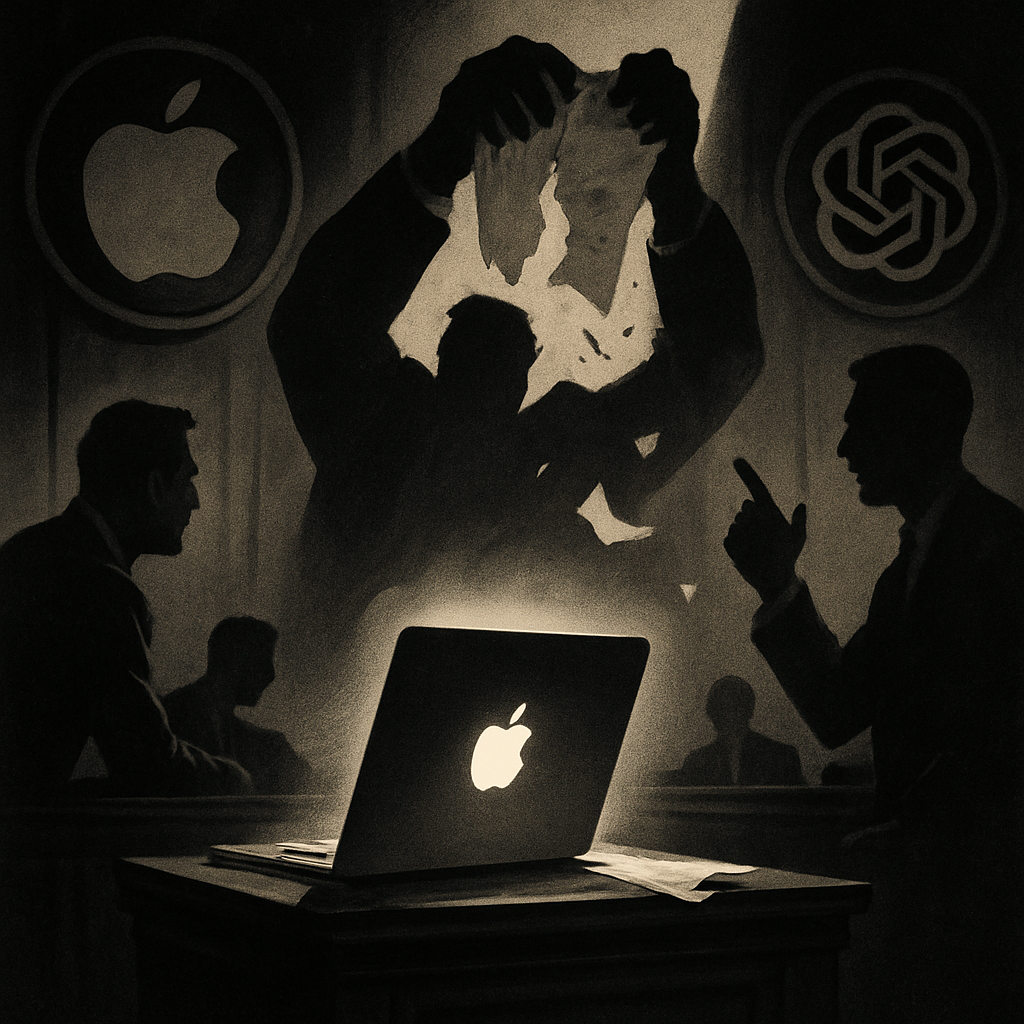
Apple has taken the legal offensive against OpenAI, presenting fresh claims that OpenAI employees actively deleted or concealed crucial evidence in an ongoing trade secret lawsuit. The accusations center on behavior tied to a work-issued MacBook once used by former Apple engineer Chang Liu, whose access to confidential data now reportedly forms the backbone of Apple’s latest complaint.
What Apple States: Key Allegations
In filings submitted Monday, Apple says Liu’s MacBook, recently turned over to Apple, harbors a deep trove of evidence. That includes: the downloading of a private circuit schematic which Liu allegedly reused at OpenAI; awareness among OpenAI’s workforce of Liu’s access to Apple’s third-party cloud storage; and communications suggesting Liu instructed a colleague to erase documents once Apple began investigating him. Apple also identifies an internal MacBook tool carrying the same name as an Apple engineering app, implying overlap or possible code misappropriation.
Apple is pushing for expedited discovery in the case, warning that every delay grants more opportunity for destruction or tampering of evidence—leaving essential proof irretrievable even if wrongdoing is established. So far, Apple claims OpenAI has resisted efforts toward more rapid information exchange—something the company now connects directly to concerns about potential evidence spoliation.
Legal Context & Stakes
The lawsuit, filed in July, accuses OpenAI of sly recruitment practices and misusing internal Apple secrets in developing its AI models. Over 400 ex-Apple employees are said to have defected to OpenAI, and Apple singled out at least two whose conduct allegedly breached trade secret protections. As discovery progresses, Apple argues legal urgency is justified by evidence uncovered on Liu’s devices—evidence it says was overlooked or ignored until now.
OpenAI, meanwhile, has questioned whether the lawsuit is a competitive tactic aimed at slowing its AI progress. In particular, OpenAI disputes that it needs access to Apple’s proprietary information and challenge the relevance of the data Apple claims Liu accessed. These rebuttals are standard in trade secret litigation, but Apple is raising the stakes by alleging more than simple breach—it claims obstruction and evidence destruction.
What to Watch Next
The most immediate battle will be over expedited discovery. If Apple wins that motion, it could force OpenAI to hand over more data—potentially exposing sensitive internal tools or communications. If not, Apple warns vital evidence could disappear forever.
This case taps into larger themes—how tech firms guard trade secrets, the ethical boundaries of hiring and hiring away talent, and how legal frameworks are keeping pace with AI’s rapid growth. For OpenAI, the allegations threaten both its development process and its reputation. For Apple, it’s a defensive effort to protect IP central to its competitive moat.
Analytically, this matter highlights the fraught intersection of intellectual property, AI accelerations, and workforce mobility. As AI firms bulk up by hiring talent from traditional tech giants, questions about secrecy and ownership are bound to intensify. What this dispute may ultimately set is a precedent: how courts demand transparency and accountability when evidence destruction is alleged—and how those battles are fought when innovation and secrecy collide.