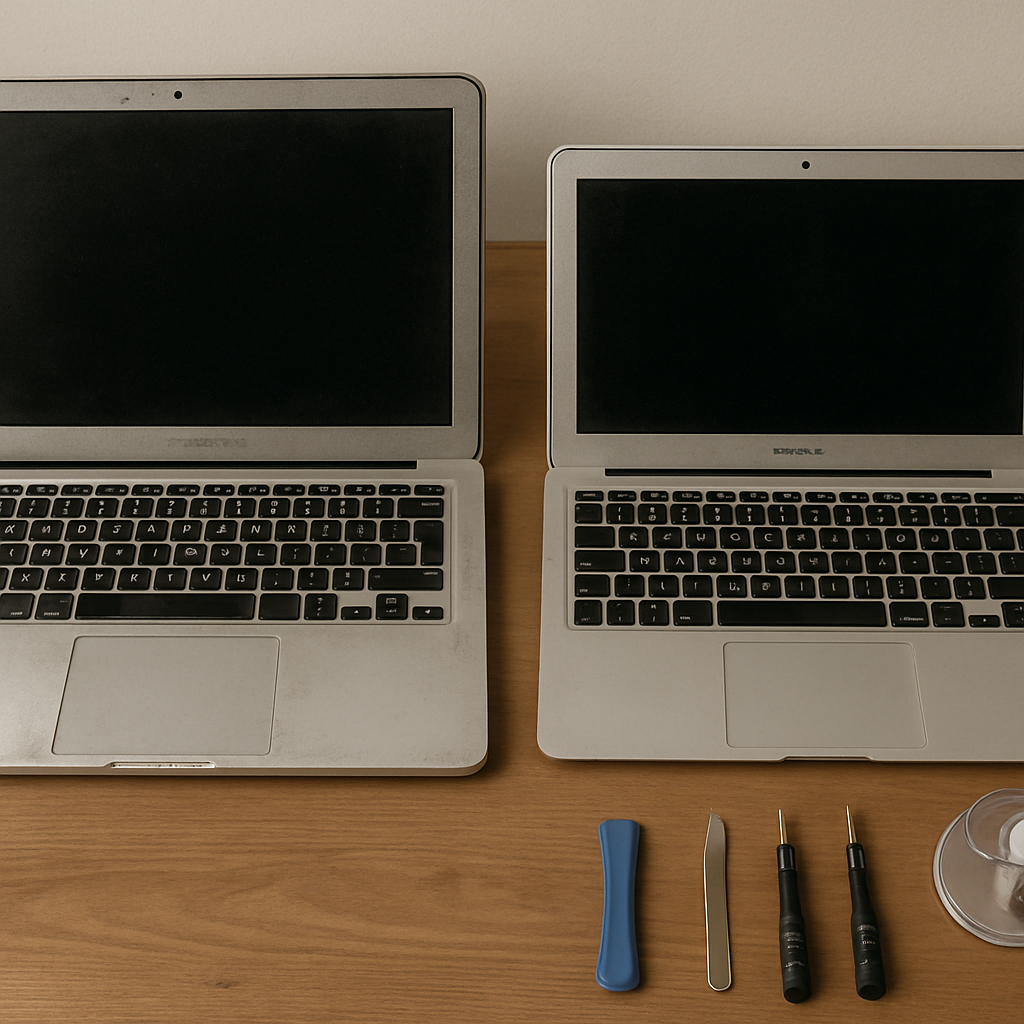
Apple has placed three Intel-based MacBook models on its obsolete list, ceasing all hardware repair options and official service support for these aging machines. The move affects the 13-inch 2017 MacBook Pro with two Thunderbolt 3 ports, the 2018 Retina MacBook Air, and the 13-inch 2018 MacBook Pro with four Thunderbolt 3 ports. Owners of these models must now rely solely on third-party repair vendors if their hardware fails.
Which Macs Are Affected?
Here’s a breakdown of the models losing official hardware service:
- 2017 13-inch MacBook Pro (two Thunderbolt 3 ports). Its final supported operating system was macOS Ventura, released in 2022.
- 2018 Retina MacBook Air. Its most recent compatible OS is macOS Sonoma, placing it two releases behind the current version.
- 2018 13-inch MacBook Pro (four Thunderbolt 3 ports). This one was last supported with macOS Sequoia, one OS behind at present.
Understanding Apple’s Vintage vs. Obsolete Policy
Apple classifies a product as “vintage” when it’s been off the market for between five and seven years, meaning parts and service are still available while supplies last. Once a product hasn’t been sold for over seven years, it becomes “obsolete,” which removes all official repair and service support.
With these three MacBooks now officially obsolete, Apple will no longer offer replacement parts or service. For owners, this makes it unclear whether repair costs will be feasible or worthwhile, especially given the age of the hardware.
Anyone with one of these MacBooks won’t be able to use Apple’s hardware support resources moving forward. Despite industry-wide repair restrictions tightening, Apple’s policy clearly draws a line: once a device is declared obsolete, support stops entirely.
Final thoughts: This change signals Apple’s ongoing shift away from Intel Macs as its Apple Silicon transition deepens. For users still relying on these 2017-2018 machines, now’s the time to plan ahead — whether that means sourcing parts via independent repair shops, budgeting for a replacement device, or evaluating whether keeping older hardware is still viable.