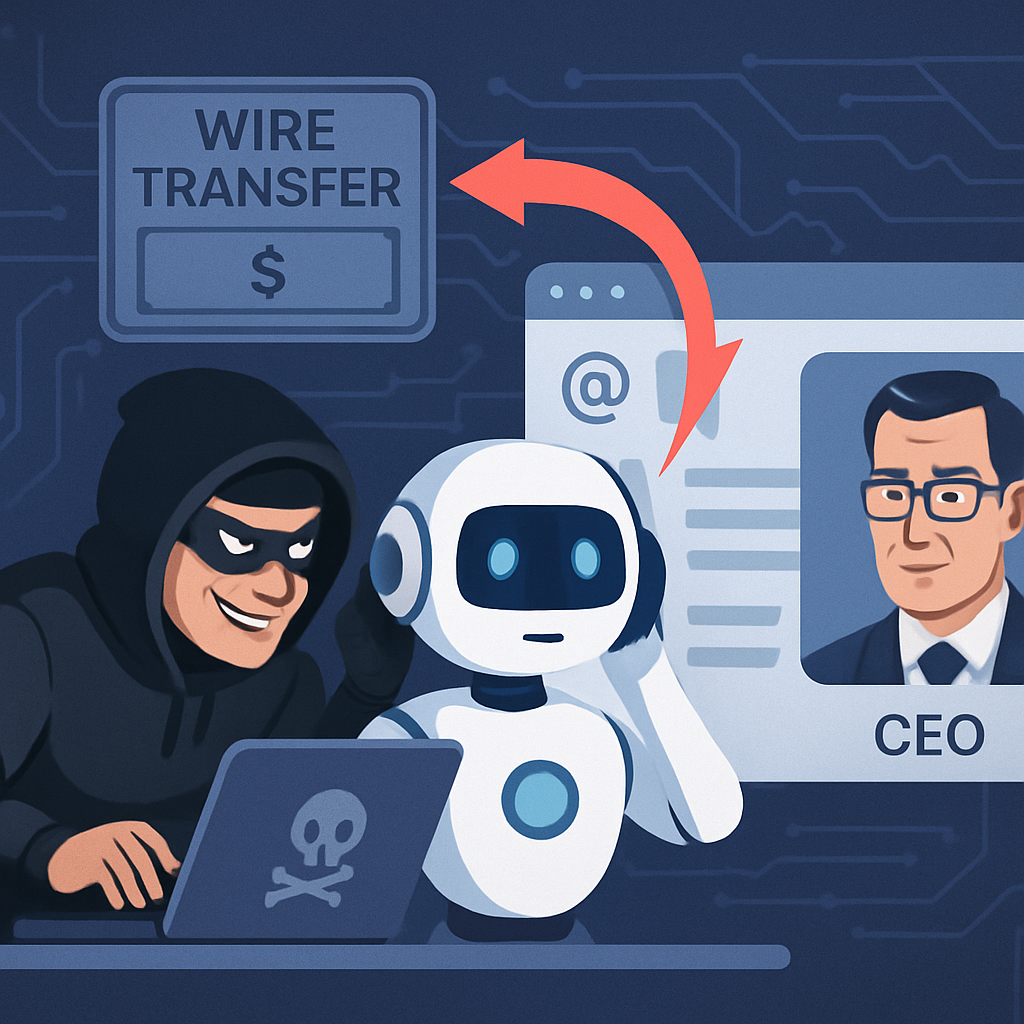
Recent demonstrations have unveiled a concerning method by which cybercriminals can exploit Microsoft Copilot, the AI assistant integrated into Microsoft 365, to facilitate business email compromise (BEC) attacks and execute substantial wire fraud schemes. This proof-of-concept illustrates how an initial breach of a single employee’s email account can rapidly escalate to the takeover of a CEO’s account, culminating in the unauthorized transfer of significant funds, all with minimal technical effort from the attacker.
Exploiting Microsoft Copilot for Account Takeover
The attack commences when an adversary gains access to an employee’s email inbox. Instead of deploying traditional tools like PowerShell scripts or remote access software, the attacker leverages Copilot to streamline the intrusion process. The first step involves establishing persistence by instructing Copilot to create an inbox rule that redirects sign-in notifications to the Deleted Items folder. This tactic ensures that the victim remains unaware of any unauthorized access attempts.
With a foothold secured, the attacker proceeds to reconnaissance. By prompting Copilot to summarize the organization’s structure and highlight active communications, the adversary quickly identifies the CEO as the next target. Utilizing context from existing email threads between the compromised employee and the CEO, the attacker directs Copilot to draft a convincing message in the employee’s tone, embedding a malicious link disguised as an invoice confirmation.
Upon the CEO clicking the link, the attacker employs an adversary-in-the-middle proxy to intercept the session token. This maneuver allows the attacker to bypass multifactor authentication and gain control over the CEO’s email account. To maintain stealth, the same Copilot-generated inbox rule is applied to the CEO’s account, concealing any sign-in alerts.
Facilitating Wire Fraud via Copilot
Once inside the CEO’s mailbox, the attacker utilizes Copilot to review recent financial communications, including invoices and pending transactions. Copilot promptly identifies a pending wire transfer of $247,500 awaiting approval. Capitalizing on this information, the attacker instructs Copilot to draft an urgent email to the finance team, requesting a change in bank account details for the transaction.
Since the email originates from the legitimate CEO’s account and aligns with the CEO’s writing style, it bypasses traditional email security filters. Consequently, the finance team processes the transfer to the attacker’s account. To further obfuscate the fraud, the attacker sets up a forwarding rule that reroutes the finance team’s replies to an external address, intercepting any confirmation messages before they reach the CEO. Finally, Copilot is employed to locate and delete evidence of the fraudulent activities, expediting the cleanup process.
This technique underscores the potential risks associated with AI assistants like Microsoft Copilot when integrated into organizational workflows. Security teams must recognize that once an account is compromised, AI assistants can act as knowledgeable insiders, facilitating malicious activities. Therefore, monitoring AI-enabled accounts, scrutinizing inbox rule modifications, and detecting anomalous session behaviors should become integral components of identity and email security strategies.
As AI technologies become more embedded in business operations, their exploitation by cybercriminals presents a significant challenge. Organizations must proactively adapt their security measures to address these evolving threats, ensuring that the benefits of AI integration do not come at the cost of increased vulnerability to sophisticated cyberattacks.