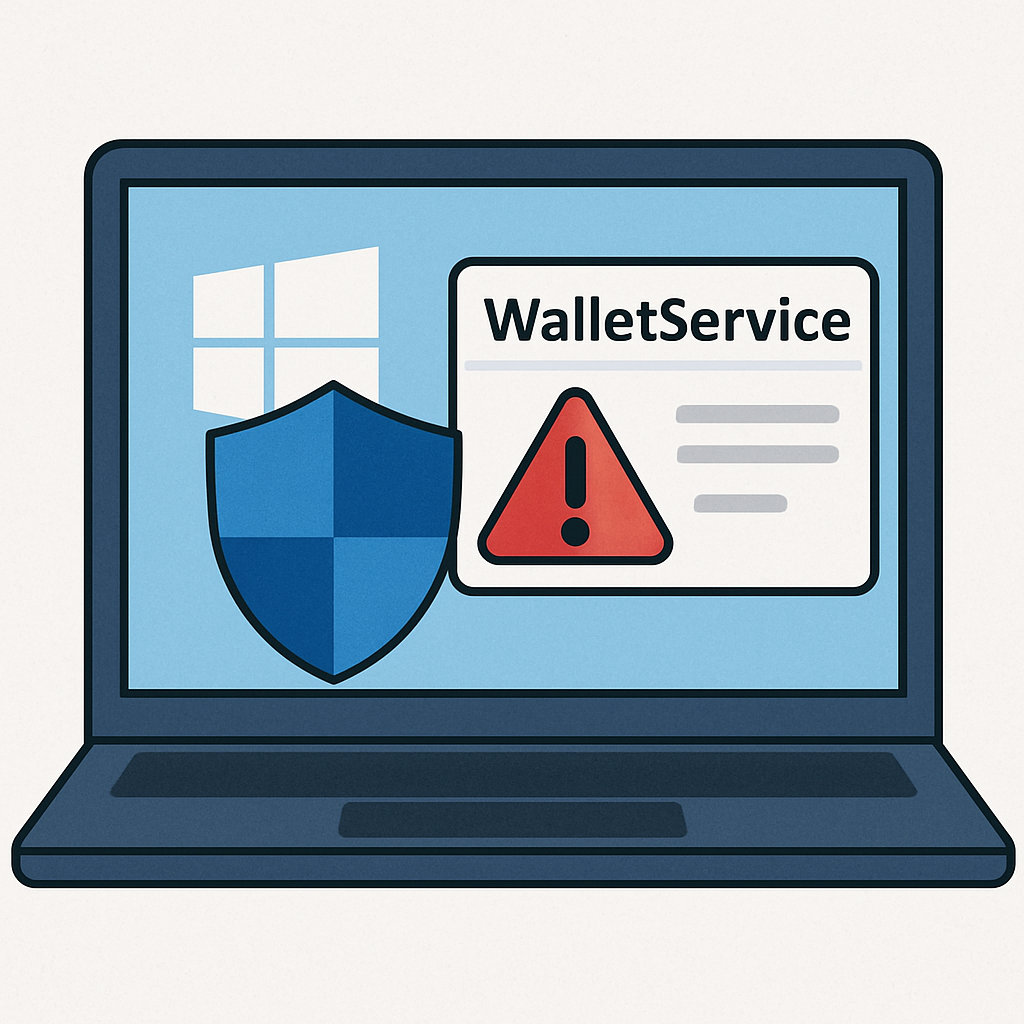
Microsoft has addressed a critical vulnerability in Windows WalletService, identified as CVE-2026-49176, which could allow local attackers to escalate privileges to SYSTEM level. A proof-of-concept (PoC) exploit has been publicly released, underscoring the urgency for organizations to apply the July 2026 security updates.
The vulnerability arises from improper privilege management within WalletService. Specifically, the service processes a user-controlled Wallet database located in the Documents folder. During this process, the service initially impersonates the caller but subsequently reverts to its LocalSystem security context when accessing the database. This transition creates a security gap, enabling attackers to exploit the service.
Proof-of-Concept Demonstration
Security researcher David Carliez has published a PoC on GitHub, demonstrating how a low-privileged user can manipulate the WalletService to load a malicious DLL with LocalSystem privileges. This exploit effectively grants the attacker full control over the affected system. The PoC has been tested on Windows 11 version 25H2, build 26200.8737, and includes source code and automation files, facilitating both defensive validation and potential misuse by malicious actors.
Mitigation and Recommendations
Microsoft has released patches to address this vulnerability in the July 2026 security updates. Administrators are strongly advised to ensure that all Windows endpoints and servers are updated promptly. Prioritizing systems that are accessible to untrusted users is crucial to mitigate potential exploitation.
Given that the exploit requires local authenticated access, organizations should implement measures to limit interactive logons and control software execution permissions. Monitoring for unusual changes in the Documents folder, unexpected activity in the Wallet directory, and suspicious DLL loads associated with WalletService can aid in detecting exploitation attempts. Additionally, observing new processes running as SYSTEM within user sessions may indicate post-exploitation activities.
This incident highlights the importance of rigorous validation in privileged Windows services. Developers must ensure that data from less privileged sources is thoroughly validated before performing operations with elevated privileges. For security teams, the immediate priority is to apply patches, minimize local attack vectors, and proactively monitor for signs of exploitation.