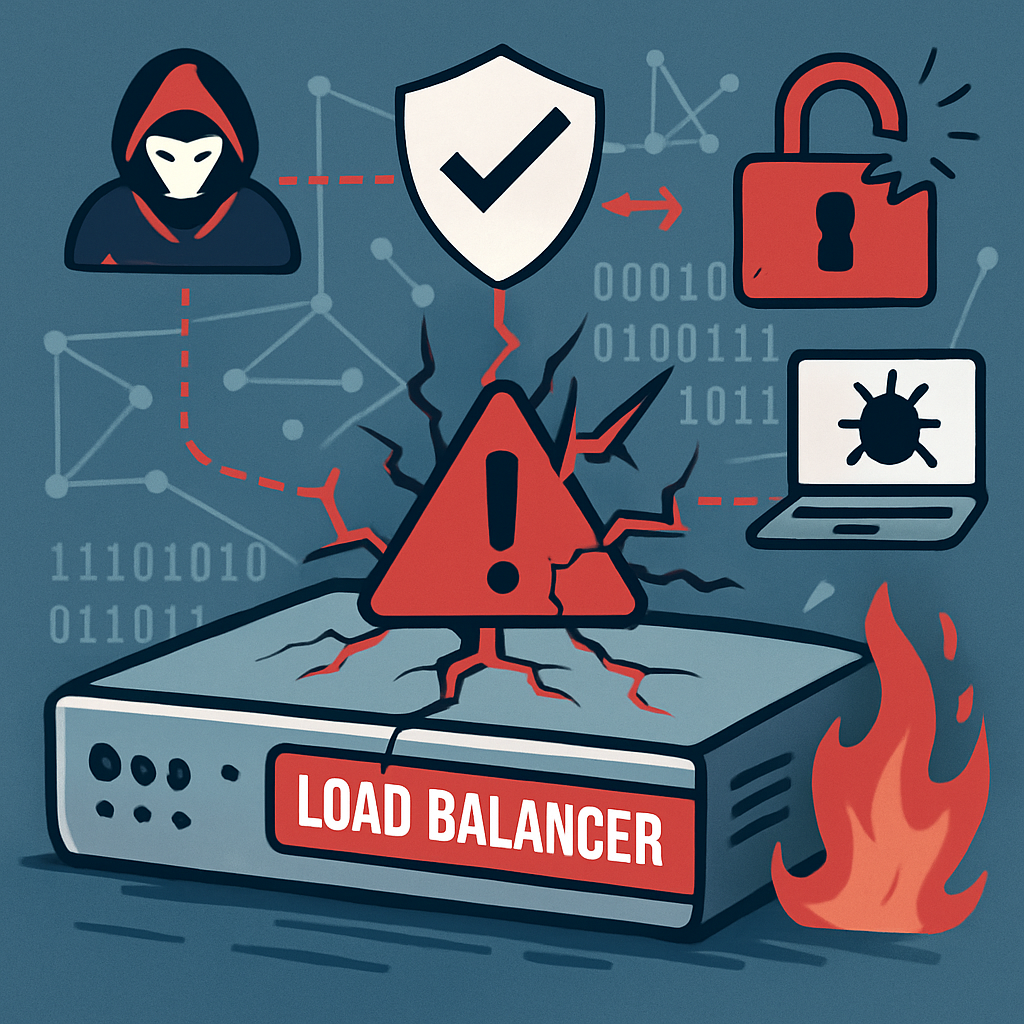
The Cybersecurity and Infrastructure Security Agency (CISA) has recently added a critical vulnerability affecting Progress LoadMaster and Progress ADC products to its Known Exploited Vulnerabilities catalog. Identified as CVE-2026-8037, this command injection flaw allows unauthenticated attackers to execute arbitrary commands on vulnerable LoadMaster appliances. With a CVSS severity score of 9.6, it is classified as a critical security issue.
Progress LoadMaster serves as an application delivery controller and load balancer, essential for managing, distributing, and securing network traffic within organizations. Given their strategic position in network infrastructures, these appliances are prime targets for attackers seeking unauthorized access to organizational environments.
Details of the Vulnerability
The vulnerability arises from improper input sanitization across multiple command endpoints within the LoadMaster system. Attackers can exploit this weakness by sending specially crafted data to these endpoints, thereby injecting and executing operating system commands without requiring authentication. This flaw is categorized under CWE-77, which pertains to the improper neutralization of special elements used in OS commands.
Initially disclosed by security researchers on June 4, 2026, functional proof-of-concept exploit code became publicly available by June 29, 2026. Shortly thereafter, eSentire’s Threat Response Unit detected attempts to exploit this vulnerability. Although initial activities did not confirm post-compromise actions, the availability of working exploit code significantly heightens the risk of widespread exploitation.
Reports indicate that attackers have made numerous attempts to exploit this flaw, originating from various IP addresses across multiple countries. This pattern suggests that threat actors are actively scanning for vulnerable LoadMaster deployments to achieve remote code execution.
Recommendations and Mitigation
In response to the active exploitation, CISA added CVE-2026-8037 to its Known Exploited Vulnerabilities catalog on August 7, 2026, setting a remediation deadline of August 10, 2026, for U.S. federal civilian agencies. While there is no confirmed evidence of this vulnerability being used in ransomware campaigns, remote code execution flaws in network appliances are often exploited by initial access brokers and ransomware affiliates.
Organizations utilizing Progress LoadMaster are urged to promptly review vendor guidance and apply the recommended security updates. Security teams should:
- Identify all LoadMaster appliances within their infrastructure.
- Verify the software versions in use.
- Assess whether management interfaces or APIs are accessible from the internet.
If immediate patching is not feasible, administrators should:
- Restrict access to trusted networks.
- Disable unnecessary external management services.
- Monitor logs for suspicious API requests or unexpected configuration changes.
Additionally, conducting incident triage to detect potential compromises before and after remediation is advisable. CISA recommends adhering to Binding Operational Directive 26-04, which emphasizes risk-based patching requirements. Organizations should evaluate each asset’s internet exposure and discontinue the use of affected products if effective mitigations are unavailable.
Given the critical nature of this vulnerability and the active exploitation attempts, it is imperative for organizations to act swiftly. Ensuring that all LoadMaster appliances are updated and properly configured will help mitigate the risk of unauthorized access and potential system compromise.