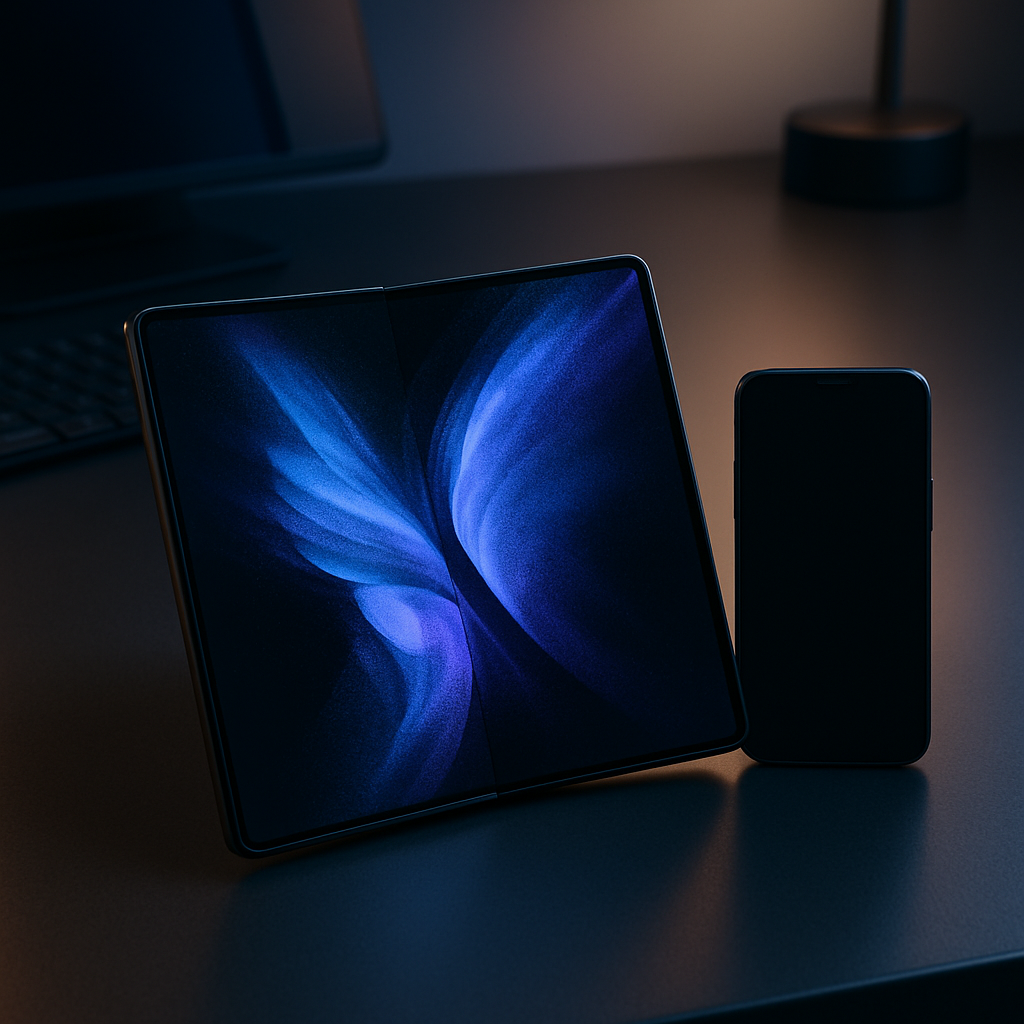
Samsung’s latest foldable flagship, the Galaxy Z Fold 8, isn’t just another Android powerhouse—it’s inadvertently making the strongest case yet for an Apple iPhone Fold. While Samsung has pushed foldable design for years, the Fold 8 marks a turning point: its wide-body layout delivers the long-promised promise of “a phone + tablet in one” with a polished user experience. It’s advanced enough that many who previously dismissed folding phones are now begging to see what Apple will bring.
What makes the Fold 8 different
Previous foldables often felt like compromises: thin when closed yet awkward in hand, awkward aspect ratios, and underwhelming app behavior when opened. The Fold 8 flips that script. It leans into the entertainment value—think video watching, reading, multitasking—with a wider display that feels both natural and capable. It’s more tablet-like without being a clunky hybrid, offering a premium experience in both closed and open modes.
Samsung still faces challenges unfamiliar to Apple. Android apps, though better than ever with folding devices, remain hit-or-miss in optimizations across the varying screen sizes and aspect ratios. Yet the hardware on the Fold 8 feels mature; it’s not an experiment anymore. It’s as close as the foldable space has come to hitting the sweet spot between a phone you carry and a small tablet you want to use.
The Flip side: how this helps Apple
Here’s where things get ironic. In perfecting its own foldable formula, Samsung has become a walking billboard for the iPhone Fold. When consumers see the Fold 8 in stores or online, the obvious question isn’t “Why go Android?” but “What will Apple do with this format?” The Z Fold 8 proves to people that folding phones are no longer fragile curiosities—they’re reliable, premium devices. But it also highlights what many believe Apple can uniquely do: sweeping in with a cohesive ecosystem, developer alignment, and refined app support from day one.
Apple’s entry into this space has been long expected. Observers speculate that offering a folding iPhone could have been delayed by concerns about overlapping with iPad Mini sales, or ensuring the hardware and software meet Apple’s bar. With the market now primed and the Fold 8 raising the bar, the conditions seem right for Apple to take the leap.
Sitting with the Fold 8 feels good. It’s powerful, refined, and finally demonstrates what wide-body folding phones can truly be—devices designed for immersive content, multitasking, and a never-before-seen middle ground between phone and tablet. And while Samsung earns praise for getting here, it may be Apple that reaps the benefits of setting expectations so high.
Samsung’s Galaxy Z Fold 8 is more than its specs: it’s the foldable flagship that works so well, many non-Android users will now watch Apple’s foldable move with genuine anticipation. And that might be Samsung’s biggest contribution to this category—making everyone else want in.
Analysis: The Galaxy Z Fold 8 doesn’t just represent Samsung’s engineering peak—it serves as a benchmark for Apple’s inevitable iPhone Fold. It shows that the hardware is ready, the public is curious, and that stakeholder expectations—developers, competitors, and consumers—are now aligned. Moving forward, the pressure is on Apple to match or surpass this momentum without sacrificing its core strengths in user experience, ecosystem control, and design polish.